
Introduction
Becoming a pilot is a dream for many aviation enthusiasts, but starting a flying career requires more than learning aircraft controls and flight procedures. One of the most important steps before beginning professional flight training is completing a pilot medical test. Aviation authorities require pilots to meet specific health and fitness standards to ensure they can safely operate aircraft and handle the physical and mental demands of flying.
For beginners, understanding pilot medical requirements early can help avoid delays in flight training and provide better career planning. A medical examination evaluates different aspects of health, including vision, hearing, cardiovascular fitness, general physical condition, and overall medical history.
A pilot medical certificate confirms that an individual meets the required aviation health standards. The type of medical certificate needed depends on the pilot license being pursued, such as private flying or commercial airline operations.
This guide explains everything beginners need to know about pilot medical tests, including the examination process, requirements, preparation tips, common challenges, and important considerations before starting flight training.
Real-world examples:
- A student pilot completes a medical examination before joining a flight school to confirm eligibility for training.
- A commercial pilot maintains regular medical certification throughout their career to continue flying professionally.
- Early medical assessment helps aspiring pilots identify potential issues before investing significant time and money in flight training.
What Is a Pilot Medical Test?
A pilot medical test is a specialized health examination designed to evaluate whether an individual is physically and mentally fit to operate an aircraft. Unlike a regular health checkup, aviation medical assessments focus on conditions that could affect flight safety.
The examination is conducted by an approved aviation medical examiner who follows aviation authority guidelines. The goal is not only to check general health but also to determine whether a pilot can safely perform aviation duties under different operating conditions.
A pilot medical evaluation typically reviews:
- Vision and eye health
- Hearing ability
- Heart and cardiovascular condition
- Blood pressure levels
- General physical fitness
- Medical history
- Mental and psychological wellbeing
Completing this examination is an essential step for anyone planning to obtain a pilot license.
Why Is a Medical Test Required for Pilots?
Flying an aircraft requires concentration, decision-making ability, physical coordination, and the ability to manage stressful situations. A pilot’s health directly impacts flight safety.
Aviation medical tests are required because they help:
Maintain Passenger Safety
Pilots are responsible for the safety of passengers, crew members, and aircraft. Good physical and mental health reduces the possibility of medical problems affecting flight operations.
Identify Health Conditions Early
Medical examinations can detect conditions that may require treatment or additional monitoring.
Meet Aviation Regulations
Aviation authorities establish medical standards to ensure pilots meet professional requirements before receiving authorization to fly.
Support Long-Term Aviation Careers
Regular medical assessments help pilots maintain fitness throughout their flying career.
Types of Pilot Medical Certificates
The required medical certificate depends on the type of flying a person plans to do.
Class 1 Medical Certificate
A Class 1 medical certificate is generally required for professional pilots, including those planning careers with commercial airlines.
It focuses on higher medical standards because airline pilots operate complex aircraft and carry passengers professionally.
It usually evaluates:
- Detailed physical health
- Vision standards
- Cardiovascular health
- Hearing ability
- Overall fitness for commercial operations
Aspiring airline pilots usually complete this medical assessment before beginning advanced professional training.
Class 2 Medical Certificate
A Class 2 medical certificate is commonly associated with private pilots and recreational flying activities.
The medical requirements may differ from Class 1 certification, but the purpose remains the same: ensuring that pilots are medically fit to fly safely.
It may be suitable for individuals pursuing:
- Private pilot licenses
- Personal flying activities
- Non-commercial aviation operations
Pilot Medical Test Requirements for Beginners
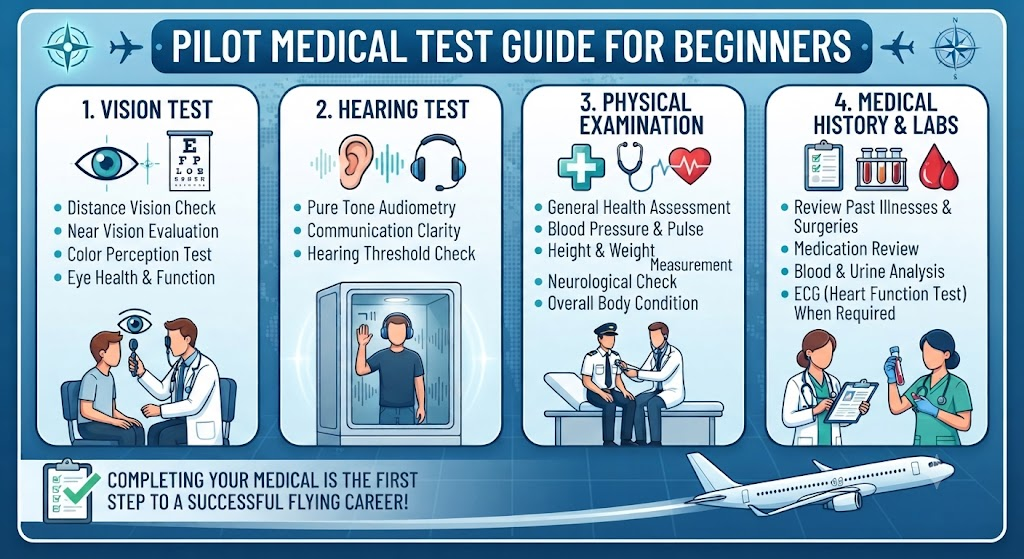
A pilot medical examination includes several important health assessments.
Vision Test
Good vision is one of the most important requirements for pilots because flying involves reading instruments, identifying aircraft signals, and maintaining visual awareness.
Vision testing may include:
- Distance vision assessment
- Near vision evaluation
- Color vision testing
- Eye health examination
Many pilots who use corrective lenses may still qualify if they meet aviation standards.
Hearing Test
Clear communication is essential in aviation. Pilots must communicate effectively with air traffic controllers, crew members, and other aviation personnel.
A hearing evaluation checks whether an applicant can:
- Understand communication clearly
- Detect important sounds
- Maintain safe cockpit communication
Physical Examination
A general physical examination helps evaluate overall health condition.
It may include checking:
- Height and weight
- Blood pressure
- General body condition
- Medical history
- Previous health concerns
The examiner reviews whether any condition could affect flight performance.
Heart and Cardiovascular Tests
The cardiovascular system plays an important role in pilot fitness because flying can involve stress, workload changes, and irregular schedules.
Possible evaluations include:
- Heart health assessment
- Blood pressure monitoring
- ECG testing when required
The purpose is to identify conditions that may impact safety during flight.
Blood and Urine Tests
Some aviation medical examinations include laboratory tests to evaluate general health indicators.
These tests may help assess:
- Blood sugar levels
- General health conditions
- Kidney function indicators
- Other medical factors
Requirements vary depending on aviation regulations and medical standards.
Mental Health Assessment
Mental fitness is an important part of aviation safety.
Pilots need:
- Strong decision-making skills
- Emotional stability
- Stress management ability
- Good concentration
Medical evaluations may consider psychological wellbeing and mental health history when required.
Pilot Medical Test Process: Step-by-Step Guide
Understanding the process helps beginners prepare properly.
Step 1: Understand Your Medical Requirement
First, determine which type of medical certificate you need based on your aviation goal.
For example:
- Airline career → Higher-level medical certification
- Private flying → Different medical requirements
Step 2: Choose an Approved Aviation Medical Examiner
Pilot medical examinations must usually be completed by an authorized aviation medical examiner.
The examiner understands aviation-specific health standards and certification procedures.
Step 3: Prepare Required Documents
Before attending the examination, prepare necessary documents such as:
- Identification documents
- Medical history information
- Previous medical reports if required
- Vision-related documents if applicable
- Aviation medical application forms
Step 4: Complete Medical Examination
During the appointment, the examiner performs required health checks and reviews medical information.
The examination process depends on the certificate type and aviation regulations.
Step 5: Receive Medical Certification Decision
After reviewing examination results, the medical examiner determines whether the applicant:
- Meets medical standards
- Requires additional evaluation
- Needs further medical information
Documents Required for Pilot Medical Examination
The required documents may vary by country and aviation authority, but commonly include:
- Government-issued identification
- Medical history details
- Previous medical records
- Eye examination reports if applicable
- Required aviation forms
- Details about existing medications or treatments
Preparing documents in advance helps avoid unnecessary delays.
How to Prepare for a Pilot Medical Test
Good preparation can make the medical examination process smoother.
Maintain a Healthy Lifestyle
Regular exercise, balanced nutrition, and healthy habits support better overall fitness.
Get Proper Sleep
A good sleep schedule before the examination helps ensure accurate health assessment.
Avoid Unhealthy Habits
Smoking, excessive alcohol consumption, and poor lifestyle choices may negatively affect health.
Carry Medical Records
Bring previous reports if you have a medical history that requires review.
Be Honest About Your Health History
Providing accurate medical information helps aviation doctors make proper assessments.
Common Reasons Medical Certification May Be Delayed
A delayed medical decision does not always mean permanent rejection. Sometimes additional information or testing is required.
Common reasons include:
Vision Concerns
Some applicants may need additional eye reports or evaluations.
Uncontrolled Health Conditions
Certain medical conditions may require treatment or monitoring before certification.
Missing Documents
Incomplete paperwork can slow down the approval process.
Additional Medical Evaluation
The examiner may request specialist opinions or further tests.
Pilot Medical Test Cost and Validity
The cost of a pilot medical examination depends on several factors, including:
- Country regulations
- Medical examiner fees
- Type of medical certificate
- Required tests
The validity period of a medical certificate depends on factors such as:
- Pilot age
- Certificate category
- Aviation authority regulations
Beginners should check the requirements applicable to their intended aviation career path.
Evaluation Checklist Before Starting Flight Training
Before enrolling in a flight school, beginners should consider the following checklist:
- Understand which medical certificate is required
- Complete medical examination early
- Select an approved aviation medical examiner
- Prepare medical documents
- Review personal health history
- Understand aviation medical standards
- Confirm eligibility before making major training investments
Frequently Asked Questions
1. What is a pilot medical test?
A pilot medical test is an aviation-specific health examination that checks whether a person is physically and mentally fit to fly. It evaluates areas such as vision, hearing, cardiovascular health, and overall fitness.
2. Is a medical certificate required before flight training?
Many flight training programs require students to complete medical certification before beginning certain stages of training. Completing it early helps confirm eligibility.
3. What medical certificate does a commercial pilot need?
Commercial pilots generally require a higher-level medical certificate because professional flying involves greater responsibility and operational demands.
4. Can someone with glasses become a pilot?
Many pilots can fly with corrective lenses if their vision meets aviation medical standards. Requirements depend on aviation regulations and individual assessment.
5. What happens if a pilot fails a medical examination?
If medical standards are not immediately met, additional tests, treatment, or evaluations may be required before a final decision is made.
6. How long is a pilot medical certificate valid?
The validity period depends on factors such as certificate type, pilot age, and aviation authority rules.
7. Where can beginners complete aviation medical tests?
Beginners should complete examinations through approved aviation medical examiners recognized by their aviation authority.
8. What health conditions affect pilot eligibility?
Certain medical conditions affecting vision, heart health, neurological function, or overall fitness may require additional evaluation.
9. Is a psychological test included in pilot medical exams?
Some aviation medical assessments may consider psychological fitness depending on regulations and certification requirements.
10. Should students complete medical tests before joining flight school?
Completing a medical examination early is recommended because it helps students understand eligibility before committing to flight training.
Conclusion
A pilot medical test is one of the most important steps for anyone beginning an aviation career. It ensures that aspiring pilots meet the required health standards needed for safe aircraft operation.
Completing medical certification early allows beginners to plan their flight training journey with confidence. By understanding requirements, preparing properly, and maintaining good health, students can take their first steps toward becoming successful pilots.
Aviation is a profession built on responsibility, discipline, and safety. Meeting medical standards is not only a regulatory requirement but also an important foundation for a long-term flying career.

