
Introduction
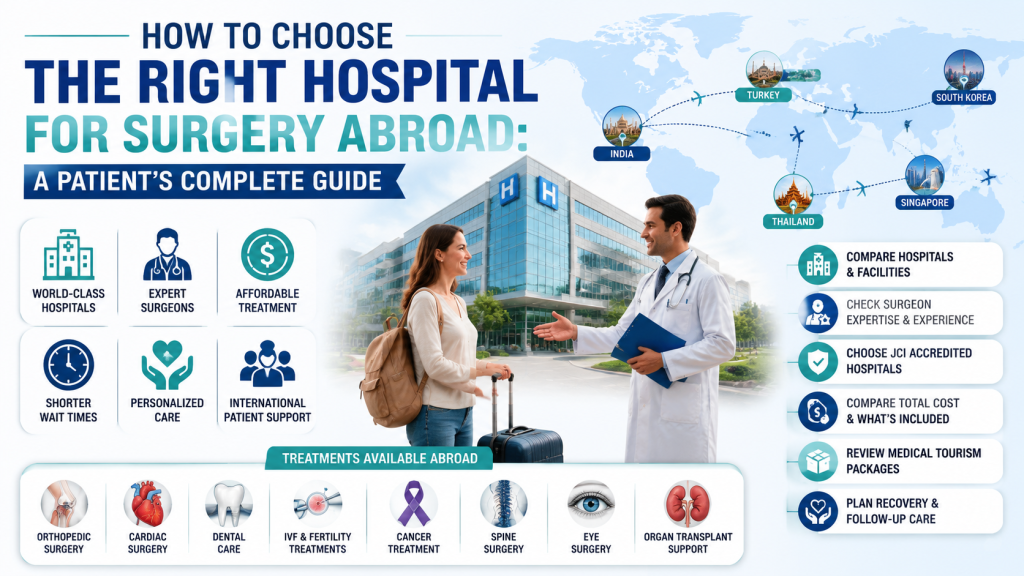
Choosing a hospital for surgery abroad is one of the most important healthcare decisions a patient can make. Medical tourism gives patients access to experienced specialists, modern hospitals, competitive treatment costs, and shorter waiting times. However, the quality of care, surgeon expertise, hospital accreditation, recovery support, and total treatment cost can vary significantly between providers.
Patients should never select a hospital based only on the lowest advertised price. A successful medical journey requires careful comparison, proper documentation, clear communication, and realistic recovery planning.
SurgeryPlanet.com helps international patients compare hospitals, surgeons, treatment destinations, estimated procedure costs, medical tourism packages, and travel support services. The platform brings essential information together so patients can make safer and more informed healthcare decisions.
Whether you are considering orthopedic surgery, cardiac surgery, cosmetic treatment, dental care, IVF, cancer treatment, bariatric surgery, spine surgery, eye surgery, or organ transplant support, this guide explains the most important factors to consider before selecting a hospital abroad.
Understanding Medical Tourism
Medical tourism refers to travelling to another country to receive medical, surgical, dental, or fertility treatment. Patients often consider international healthcare because treatment may be more affordable, accessible, or available sooner than in their home country.
Many international hospitals now have dedicated departments for overseas patients. These departments may assist with medical consultations, treatment quotations, visa documentation, airport transfers, accommodation, language support, hospital admission, and follow-up care.
Common medical tourism treatments include:
- Orthopedic surgery
- Cardiac surgery
- Cosmetic surgery
- Dental treatment
- IVF and fertility care
- Spine surgery
- Cancer treatment
- Bariatric surgery
- Eye surgery
- Organ transplant support
Although medical tourism can provide valuable treatment opportunities, patients must carefully evaluate the hospital, surgeon, treatment package, and recovery plan before travelling.
Why Patients Choose Surgery Abroad
Patients travel internationally for many different reasons. For some, the main concern is affordability. For others, it may be access to an experienced specialist, advanced treatment technology, or a shorter waiting period.
Affordable Treatment Costs
Cost is one of the biggest reasons patients explore medical tourism. The price of surgery can vary greatly from one country to another because of differences in hospital expenses, labour costs, insurance systems, and local healthcare pricing.
Patients frequently research terms such as:
- knee replacement surgery cost in India
- heart bypass surgery cost in Turkey
- dental implants abroad cost comparison
These comparisons can help patients identify affordable treatment options. However, the quoted amount should be reviewed carefully to confirm what is included.
A low surgery price may not include diagnostic testing, implants, medicines, hospital stay, rehabilitation, hotel accommodation, or follow-up care. Patients should compare complete packages rather than looking only at the procedure fee.
Access to Experienced Specialists
Many medical tourism destinations have highly trained surgeons who regularly treat international patients. Some specialists have completed medical education or fellowships in several countries and have extensive experience performing complex procedures.
Before choosing a surgeon, patients should review:
- Medical qualifications
- Professional certifications
- Specialist training
- Years of clinical experience
- Number of similar procedures performed
- Hospital affiliations
- Communication ability
- Patient feedback
- Treatment outcomes where available
A surgeon’s relevant experience is often more important than the hospital’s marketing claims.
Reduced Waiting Times
Patients in some countries may face long waiting lists for elective surgery, diagnostic procedures, or specialist consultations. Medical tourism can provide faster access to treatment.
International hospitals may arrange an online consultation, treatment evaluation, quotation, and proposed surgery date within a relatively short period. This can be particularly helpful for patients whose health, mobility, comfort, or quality of life is being affected by delayed treatment.
Advanced Medical Facilities
Hospitals that regularly serve international patients often invest in modern medical infrastructure.
Facilities may include:
- Robotic surgery systems
- Digital imaging
- Advanced diagnostic laboratories
- Modern operating theatres
- Intensive care units
- Cardiac care units
- Rehabilitation departments
- Infection-control systems
- Telemedicine services
Patients should confirm that the hospital has the equipment, specialist teams, and emergency support required for their specific procedure.
International Patient Support
Travelling for surgery involves more than medical treatment. Patients may also need support with visas, transportation, accommodation, translation, and local coordination.
International patient services may include:
- Visa invitation assistance
- Airport pickup
- Hotel arrangements
- Language interpreters
- Hospital admission coordination
- Local transportation
- Medical documentation
- Recovery accommodation
- Follow-up consultation
- Telemedicine support
These services can reduce stress and make the treatment journey easier to manage.
Popular Medical Tourism Destinations
Different destinations are known for different medical specialties. Patients should choose a country based on treatment quality, specialist experience, hospital standards, travel requirements, legal considerations, and total cost.
India
India is widely considered a major destination for international healthcare. The country has large multispecialty hospitals, experienced surgeons, modern medical technology, and comparatively affordable treatment costs.
India is commonly considered for:
- Orthopedic surgery
- Cardiac surgery
- Cancer treatment
- Spine surgery
- Bariatric surgery
- Cosmetic surgery
- Eye surgery
- Organ transplant support
Patients often research the knee replacement surgery cost in India because the country offers access to orthopedic surgeons, modern implants, rehabilitation services, and comprehensive treatment packages.
However, patients should compare hospitals carefully because costs may vary based on the implant brand, surgeon, room category, length of stay, diagnostic needs, and rehabilitation plan.
Turkey
Turkey has developed a strong international healthcare sector supported by modern hospitals and specialised medical centres.
The country is commonly considered for:
- Cardiac surgery
- Cosmetic procedures
- Bariatric surgery
- Dental treatment
- Hair transplantation
- Orthopedic procedures
- Eye surgery
Patients comparing the heart bypass surgery cost in Turkey should also examine the hospital’s cardiac facilities, surgeon experience, intensive care capabilities, accreditation, post-operative monitoring, and rehabilitation services.
Heart surgery requires comprehensive medical support, so price should never be the only deciding factor.
Thailand
Thailand is known for combining hospital care with strong international patient services.
Patients commonly travel to Thailand for:
- Cosmetic surgery
- Dental treatment
- Orthopedic procedures
- General surgery
- Wellness and recovery programmes
- Health screenings
Many hospitals provide multilingual coordinators, accommodation assistance, and structured recovery services.
Singapore
Singapore is recognised for advanced medical infrastructure, strict healthcare standards, and specialist care.
It is often considered for:
- Cancer treatment
- Cardiology
- Neurology
- Complex surgery
- Advanced diagnostics
- Premium healthcare services
Treatment in Singapore may be more expensive than in some other medical tourism destinations, but patients may choose it for complex conditions and highly specialised care.
South Korea
South Korea is known for medical technology and specialist procedures.
It is commonly considered for:
- Cosmetic surgery
- Orthopedic care
- Cancer treatment
- Eye surgery
- Advanced diagnostics
- Rehabilitation
Patients should confirm the surgeon’s experience, hospital accreditation, communication support, and post-treatment care arrangements before booking.
How to Choose the Right Hospital Abroad
Selecting the right hospital requires more than reviewing a website or accepting the first quotation. Patients should evaluate several medical, financial, practical, and safety-related factors.
Check the Hospital’s Reputation
Begin by researching the hospital’s experience, medical specialties, facilities, and history of treating international patients.
Look for information about:
- Hospital ownership and management
- Medical specialties
- International patient department
- Surgeon profiles
- Diagnostic capabilities
- Intensive care facilities
- Emergency services
- Infection-control standards
- Rehabilitation support
- Patient communication systems
A well-established hospital should provide clear information about its services and medical teams.
Review Hospital Accreditation
Accreditation can help patients understand whether a hospital follows recognised quality and patient-safety standards.
Many patients specifically search for JCI accredited hospitals for surgery abroad. International accreditation may indicate that a hospital has been evaluated against defined standards related to patient safety, clinical care, medication management, infection prevention, and quality improvement.
However, accreditation should not be the only consideration. Patients should also review:
- Surgeon experience
- Relevant department expertise
- Procedure volume
- Intensive care support
- Infection-control practices
- Emergency response capabilities
- Post-operative care
A hospital may have strong general accreditation but limited experience with a particular complex procedure. The relevant department and surgeon must also be evaluated.
Verify the Surgeon’s Qualifications
The surgeon is one of the most important factors in the success of a procedure.
Patients should ask:
- Who will perform the surgery?
- What are the surgeon’s qualifications?
- Is the surgeon certified in the relevant specialty?
- How many similar surgeries has the surgeon performed?
- What complications are commonly associated with the procedure?
- Who provides care if the primary surgeon is unavailable?
- Will the surgeon provide follow-up consultations after discharge?
Patients should request a direct consultation with the surgeon whenever possible. A video consultation can help clarify the diagnosis, treatment plan, expected results, risks, hospital stay, recovery timeline, and follow-up requirements.
Evaluate Relevant Treatment Experience
A hospital may be excellent in one specialty but less experienced in another. Patients should choose a facility with substantial experience in the treatment they require.
For example, a patient seeking knee replacement surgery should evaluate:
- Orthopedic department experience
- Number of joint replacement procedures
- Implant options
- Physiotherapy services
- Infection rates
- Rehabilitation facilities
- Mobility support
- Post-discharge care
A cardiac patient should evaluate:
- Cardiac surgeon experience
- Cardiac catheterisation laboratory
- Intensive care facilities
- Emergency cardiac support
- Anaesthesia team
- Rehabilitation services
- Post-operative monitoring
Relevant experience is more important than general popularity.
Compare Complete Surgery Costs
A proper Surgery cost guide should explain all major expenses associated with treatment.
The quotation may include:
- Medical consultation
- Diagnostic tests
- Surgeon fees
- Anaesthesia fees
- Operating theatre charges
- Hospital room
- Intensive care stay
- Medicines
- Surgical implants
- Nursing care
- Physiotherapy
- Rehabilitation
- Follow-up consultation
- Medical reports
Patients should also ask about possible additional costs, including:
- Extra hospital days
- Complication management
- Blood products
- Additional diagnostic testing
- Implant upgrades
- Extended rehabilitation
- Hotel accommodation
- Local transportation
- Companion expenses
- Flight changes
A written quotation should clearly state what is included and excluded.
Compare Medical Tourism Packages
Many hospitals and medical travel platforms offer Medical tourism packages designed for international patients.
A package may include:
- Online consultation
- Hospital admission
- Surgery
- Doctor fees
- Airport transfer
- Hotel accommodation
- Local transportation
- Translator support
- Visa documentation
- Medical records
- Follow-up care
Package pricing can make budgeting easier, but patients must confirm whether the package is fixed or estimated.
They should also ask whether the price could change after medical evaluation, diagnostic testing, or hospital admission.
Assess the Hospital’s Technology
The hospital should have technology appropriate for the planned procedure.
Depending on the treatment, this may include:
- Robotic surgery systems
- Advanced imaging
- Digital radiology
- Cardiac monitoring
- Modern radiotherapy
- Surgical navigation
- High-quality diagnostic laboratories
- Intensive care monitoring
- Infection-control systems
Advanced technology can support diagnosis and treatment, but it should be combined with experienced medical professionals.
Review Safety and Infection-Control Standards
Patient safety is essential in every medical journey.
Ask the hospital about:
- Infection prevention protocols
- Sterilisation procedures
- Surgical safety checklists
- Blood safety
- Medication management
- Intensive care support
- Emergency response systems
- Complication management
- Readmission procedures
Patients should also discuss their own medical history, allergies, medications, and existing health conditions before travelling.
Check Communication and Language Support
Clear communication is essential for informed consent and safe treatment.
Confirm whether the hospital provides:
- English-speaking doctors
- Professional interpreters
- Written treatment plans
- Translated documents
- International coordinators
- Emergency contact numbers
- Follow-up communication
Patients should understand the diagnosis, procedure, risks, expected outcome, recovery plan, and cost before signing any documents.
Review Emergency and Intensive Care Facilities
Some procedures carry a higher risk of complications. Patients should confirm that the hospital can provide emergency care if needed.
Important facilities may include:
- Intensive care unit
- Emergency department
- Blood bank
- Advanced imaging
- Critical care specialists
- Cardiac support
- Respiratory support
- Emergency surgery team
This is especially important for cardiac surgery, cancer treatment, organ transplant support, major orthopedic surgery, spine surgery, and bariatric procedures.
Planning Knee Replacement Surgery Abroad
Patients often consider Knee replacement surgery abroad because of long waiting periods, limited insurance coverage, or high treatment costs at home.
Before choosing a hospital, patients should evaluate:
- Orthopedic surgeon experience
- Implant brand and quality
- Surgical technique
- Hospital infection-control record
- Length of hospital stay
- Physiotherapy programme
- Pain management
- Mobility support
- Recovery accommodation
- Follow-up plan
When comparing the knee replacement surgery cost in India, patients should confirm whether the quotation includes the implant, surgery, hospital stay, medicines, physiotherapy, and follow-up consultations.
The cheapest package may use a different implant, room type, or rehabilitation plan. Patients should compare like-for-like packages.
Planning Heart Bypass Surgery Abroad
Cardiac surgery requires careful hospital selection because patients may need intensive monitoring before and after the procedure.
Those researching the heart bypass surgery cost in Turkey should compare:
- Cardiac surgeon qualifications
- Number of bypass surgeries performed
- Intensive care facilities
- Cardiac anaesthesia team
- Emergency support
- Hospital accreditation
- Diagnostic testing
- Post-operative monitoring
- Cardiac rehabilitation
- Follow-up services
Patients should ask whether the quotation includes pre-operative testing, intensive care, hospital stay, medicines, blood products, and rehabilitation.
Comparing Dental Implants Abroad
Dental tourism can provide substantial cost savings, but the quality of implants, materials, and clinical care should be reviewed carefully.
A proper dental implants abroad cost comparison should consider:
- Implant brand
- Number of implants
- Implant material
- Crown material
- Bone grafting
- Sinus lift procedure
- Diagnostic imaging
- Temporary teeth
- Anaesthesia
- Number of visits
- Treatment duration
- Warranty or replacement policy
- Follow-up requirements
Patients should avoid comparing only the advertised price per implant. Additional procedures may significantly affect the final cost.
Choosing a Country for IVF Treatment
Patients researching the best country for IVF treatment abroad should consider medical, legal, ethical, financial, and practical factors.
Important points include:
- Clinic success rates
- Fertility specialist experience
- Laboratory quality
- Embryology team
- Treatment options
- Donor regulations
- Embryo storage rules
- Age restrictions
- Legal requirements
- Total treatment cost
- Medication expenses
- Number of required visits
- Emotional support
- Follow-up care
IVF laws differ between countries. Patients should confirm which treatments are legally available and what documentation is required.
Questions Every Patient Should Ask
Before confirming treatment abroad, patients should ask the hospital or medical travel coordinator:
- What is the complete diagnosis?
- Which treatment is recommended?
- Who will perform the procedure?
- What are the surgeon’s qualifications?
- How many similar procedures has the surgeon performed?
- What are the expected benefits?
- What are the possible risks and complications?
- What does the quotation include?
- Which expenses are excluded?
- How long will the hospital stay be?
- How long should the patient remain in the country?
- Is rehabilitation included?
- What happens if complications occur?
- Is intensive care available?
- Will follow-up consultations be provided?
- Who should be contacted after returning home?
- Can the hospital provide all medical records in English?
- Are medicines and implants included?
- Is airport or hotel support available?
- What is the cancellation or refund policy?
The answers should be provided clearly and preferably in writing.
Documents Required for Medical Travel
Patients should prepare their medical and travel documents before departure.
Common documents include:
- Passport
- Medical visa
- Hospital invitation letter
- Medical reports
- Diagnostic scans
- Laboratory results
- Current prescriptions
- Allergy information
- Insurance documents
- Previous surgical records
- Vaccination documents where required
- Emergency contact details
Digital copies should be stored securely and shared with the hospital before travel.
Insurance and Financial Planning
Patients should not assume that regular health insurance will cover treatment abroad.
Before travelling, confirm:
- Whether international treatment is covered
- Whether pre-authorisation is required
- Which hospitals are approved
- Whether complications are covered
- Whether travel insurance includes medical treatment
- Whether extended accommodation is covered
- Whether emergency evacuation is covered
Patients should also keep an emergency budget for additional hospital days, changed flights, medicines, or unexpected testing.
Recovery Planning
Successful surgery depends on both the procedure and the recovery period.
A proper recovery plan may include:
- Follow-up appointments
- Physiotherapy
- Wound care
- Medication schedule
- Nutritional advice
- Mobility support
- Travel restrictions
- Fitness-to-fly clearance
- Emergency contact details
- Telemedicine consultations
- Local doctor coordination
Patients should not travel home immediately after major surgery unless the medical team confirms that it is safe.
Long flights can increase the risk of swelling, blood clots, pain, fatigue, and other complications. The surgeon should provide specific travel guidance.
Red Flags to Avoid
Patients should be cautious if a hospital or coordinator:
- Guarantees perfect results
- Refuses to identify the surgeon
- Provides unclear pricing
- Pressures the patient to pay immediately
- Avoids discussing risks
- Does not request medical records
- Offers treatment without specialist evaluation
- Cannot explain complication management
- Provides no follow-up plan
- Uses unrealistic testimonials
- Refuses to provide written documentation
Reliable providers should communicate clearly, explain risks, and allow patients enough time to make an informed decision.
Why Use SurgeryPlanet
Planning international treatment independently can be complicated. Patients may need to compare several hospitals, specialists, destinations, treatment prices, travel services, and recovery arrangements.
SurgeryPlanet.com helps simplify this process by bringing medical tourism information and planning support into one place.
Patients can use the platform to:
- Compare hospitals
- Explore treatment destinations
- Review procedure options
- Understand estimated surgery costs
- Request personalised quotations
- Compare medical tourism packages
- Review hospital accreditation
- Access medical travel guidance
- Learn about recovery planning
- Explore second-opinion options
- Understand visa and travel support
- Read patient resources
- Plan treatment with greater confidence
The platform is designed to help international patients make informed decisions based on safety, transparency, quality, affordability, and personal medical needs.
Frequently Asked Questions
- Is medical tourism safe?
Medical tourism is safe when patients choose accredited hospitals, experienced surgeons, and follow proper pre- and post-treatment planning with full medical consultation.
- How can I verify a hospital abroad?
Check hospital accreditation, surgeon profiles, treatment success rates, facilities, and international patient support before making a decision.
- Why do patients research the knee replacement surgery cost in India?
India is often researched for affordable knee replacement surgery with skilled orthopedic surgeons and modern hospital infrastructure.
- What should I consider when comparing heart bypass surgery cost in Turkey?
Patients should evaluate surgeon expertise, ICU care, hospital standards, and overall treatment quality, not just price.
- What should a dental implants abroad cost comparison include?
It should include implant brand, crown type, diagnostics, surgery, follow-ups, and total treatment package cost.
- Which is the best country for IVF treatment abroad?
The best country depends on clinic success rates, laws, affordability, and patient-specific medical needs.
- Why are JCI accredited hospitals for surgery abroad important?
They indicate globally recognized safety standards, quality care systems, and better patient trust in treatment outcomes.
- What should a Surgery cost guide include?
It should cover consultation, surgery, hospital stay, medicines, diagnostics, travel, and recovery expenses.
- Are medical tourism packages fixed-price packages?
Some are fixed, but many vary based on diagnosis, hospital choice, and treatment requirements after consultation.
- How long should I stay abroad after surgery?
Stay duration depends on the procedure type, recovery speed, and doctor’s recommendation before safe travel.
Conclusion
Choosing the right hospital for surgery abroad requires detailed research, medical consultation, cost comparison, and recovery planning. Patients should evaluate hospital accreditation, surgeon experience, treatment facilities, communication support, emergency services, package inclusions, and follow-up care before making a final decision.
Whether you are researching the knee replacement surgery cost in India, comparing the heart bypass surgery cost in Turkey, conducting a dental implants abroad cost comparison, looking for the best country for IVF treatment abroad, evaluating JCI accredited hospitals for surgery abroad, reviewing a Surgery cost guide, comparing Medical tourism packages, or planning Knee replacement surgery abroad, informed decision-making is essential.
SurgeryPlanet.com provides a trusted platform where international patients can compare hospitals, surgeons, treatment destinations, estimated costs, travel support, and recovery services. By bringing essential healthcare and medical travel information together, the platform helps patients plan their treatment journey with greater safety, clarity, transparency, and confidence.

