
Introduction
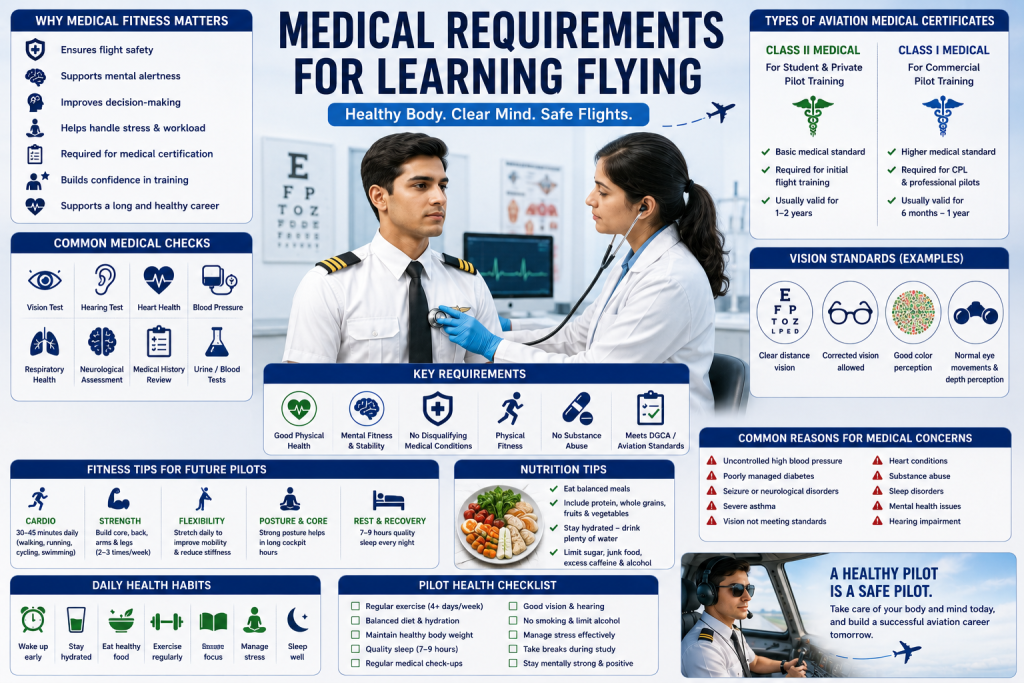
Medical Requirements for Learning Flying are among the first things every aspiring pilot should understand before joining a flight school. Learning to fly is exciting, but aviation is a safety-focused field where physical fitness, mental readiness, clear vision, good hearing, and overall health matter greatly.
A pilot must be able to make quick decisions, communicate clearly, handle pressure, read instruments, manage workload, and respond calmly during emergencies. Medical assessments help confirm that a student pilot is fit enough to begin training safely.
For beginners, the aviation medical process may sound confusing at first. However, it becomes simple when explained step by step. This guide explains why medical fitness matters, what aviation medical certificates are, what tests may be included, and how students can prepare before starting their flying journey.
Why Medical Fitness Matters in Aviation
Medical fitness is important because pilots operate aircraft in a dynamic environment. Even small health issues can affect attention, reaction time, vision, balance, judgment, or communication.
Aviation medical requirements protect:
- The student pilot
- Flight instructors
- Passengers
- Other aircraft
- People on the ground
- The overall safety of flight operations
Medical fitness supports safe flying in several ways.
Flight Safety
A healthy pilot is more capable of controlling the aircraft, following procedures, and responding to changing flight conditions.
Passenger Safety
When pilots carry passengers later in their training or career, their medical fitness becomes even more important.
Pilot Performance
Flying requires concentration, coordination, memory, and situational awareness. Good health supports better performance.
Decision Making
Pilots must make correct decisions quickly. Fatigue, illness, stress, or untreated medical conditions can affect judgment.
Emergency Readiness
During emergencies, pilots need physical strength, mental clarity, and emotional control.
Long-Term Flying Career
Students who maintain good health from the beginning are better prepared for a long aviation career.
Understanding Aviation Medical Certificates
An aviation medical certificate is an official medical approval that confirms a pilot or student pilot meets required health standards for flying. It is issued after a medical examination by an authorized aviation medical examiner or approved medical authority.
The certificate shows that the candidate is medically fit for the level of flying they want to pursue.
Aviation medical certificates are required because flying involves responsibility and safety. Different types of flying may require different medical standards.
Why It Is Required
A medical certificate helps ensure that the pilot does not have a health condition that may create risk during flight. It is not meant to discourage students. Instead, it helps identify and manage health concerns before they become safety problems.
Who Issues It
Aviation medical certificates are issued through approved aviation medical examiners or recognized medical authorities depending on the country and aviation regulator.
Validity
Medical certificate validity depends on the type of certificate, age of the candidate, licence category, and applicable aviation regulations. Students should always confirm validity rules with their flight school or aviation authority.
Renewal Process
Medical certificates must be renewed periodically. Renewal usually includes updated medical checks to ensure continued fitness.
Common Medical Requirements for Student Pilots
Medical requirements may vary depending on country, licence type, and regulator. However, most aviation medical examinations focus on similar health areas.
General Physical Health
Student pilots should have overall good health. The medical examiner may check general fitness, medical history, past surgeries, chronic conditions, medication use, and lifestyle habits.
Vision Requirements
Vision is one of the most important areas in aviation. Pilots must read instruments, identify runway markings, scan the sky, recognize lights, and interpret charts.
Vision checks may include:
- Distance vision
- Near vision
- Corrected vision
- Color vision
- Eye movement
- Depth perception
Wearing glasses or contact lenses does not automatically stop someone from becoming a pilot. Many pilots fly with approved corrective lenses if their vision meets required standards.
Hearing Requirements
Good hearing helps pilots communicate with instructors, air traffic control, and other aircraft. Hearing checks may include normal conversation ability or specific hearing tests.
Clear listening is important during:
- Radio communication
- Instructor commands
- Warning sounds
- Cockpit alerts
- Emergency instructions
Cardiovascular Health
Heart health is important because flying can involve stress, workload, and changing physical conditions. Medical checks may include blood pressure measurement and heart-related evaluation.
Some candidates may require additional testing if they have a history of heart disease, chest pain, abnormal blood pressure, or other cardiovascular concerns.
Respiratory Health
Good breathing health is important for safe flying. Conditions such as asthma or other respiratory issues may need evaluation depending on severity and control.
The goal is to ensure the student can breathe comfortably and safely during flight training.
Neurological Health
Neurological health includes the brain, nerves, balance, coordination, and consciousness. Medical examiners may review any history of seizures, fainting, serious head injury, dizziness, or neurological illness.
This is important because pilots must remain alert and in control during flight.
Mental Health
Mental health is an important part of aviation safety. Pilots need emotional stability, stress control, decision-making ability, and clear thinking.
Having experienced stress or anxiety does not always mean disqualification. What matters is proper assessment, treatment if required, and safe fitness for flying.
Musculoskeletal Fitness
Pilots need enough physical movement to operate controls, sit comfortably, use rudder pedals, turn the head, and manage cockpit tasks.
Medical checks may consider:
- Mobility
- Strength
- Posture
- Joint function
- Limb movement
- Back or neck issues
Overall Physical Fitness
Overall fitness helps students manage long training days, simulator sessions, heat, workload, and fatigue. Fitness also supports faster recovery and better focus.
Class II Medical Examination
A Class II Medical Examination is commonly required for student pilots and private pilot training in many aviation systems. It is often the first medical step for beginners who want to learn flying.
Purpose
The purpose of Class II medical certification is to confirm that the candidate is healthy enough to begin or continue basic flight training.
Who Requires It
Student pilots, private pilot candidates, and beginner flight training applicants may need Class II medical certification depending on the licensing route and aviation authority.
Typical Tests Included
A Class II medical may include:
- Medical history review
- General physical examination
- Vision test
- Hearing assessment
- Blood pressure check
- Height and weight record
- Urine test
- Basic heart health review
- Review of current medication
- Mental health screening
The exact tests may vary depending on regulatory requirements.
Importance Before Flight Training
Completing the medical examination early helps students avoid training delays. If any health issue requires further evaluation, it can be handled before investing heavily in flight training.
Class I Medical Examination
A Class I Medical Examination is usually required for students planning a professional pilot career, especially those aiming for commercial pilot training.
Purpose
Class I medical certification applies stricter standards because commercial pilots carry greater responsibility. They may fly passengers, cargo, charter aircraft, or airline operations.
Who Requires It
Candidates aiming for Commercial Pilot Licence or professional flying careers usually need Class I medical certification.
Additional Evaluations
Class I medical examinations may include more detailed checks than Class II. These can involve advanced eye tests, ECG, blood tests, hearing tests, and other specialist evaluations if required.
Commercial Pilot Pathway
Students planning to become commercial pilots should understand Class I medical expectations early. Passing an initial basic medical may not be enough for a long-term professional aviation career.
Medical Tests You May Undergo
Aviation medical exams are designed to assess important areas of health and fitness. Students should not panic about the process. Most tests are routine and straightforward.
| Medical Test | Purpose |
|---|---|
| Eye Examination | Checks vision clarity, color vision, and eye health |
| Hearing Test | Confirms ability to hear communication and alerts |
| Blood Pressure | Reviews cardiovascular health |
| ECG | Checks heart rhythm where applicable |
| Blood Tests | Assesses general health markers where required |
| Urine Tests | Screens for basic health indicators |
| Height and Weight | Helps evaluate general physical profile |
| Medical History Review | Identifies past or current health concerns |
| General Physical Exam | Reviews overall fitness and body systems |
Common Medical Conditions That May Need Further Evaluation
Some medical conditions do not always mean a student cannot fly. Many conditions simply require proper evaluation, medical reports, treatment history, or specialist opinion.
Diabetes
Diabetes may require careful review depending on control, medication, and risk of low blood sugar. Students should follow medical advice and maintain clear health records.
Hypertension
High blood pressure may need monitoring and treatment. Controlled blood pressure may be acceptable depending on medical assessment.
Vision Disorders
Some vision problems can be corrected with glasses, contact lenses, or treatment. The key point is whether the candidate meets required visual standards.
Hearing Impairment
Mild hearing concerns may need additional testing. Clear communication ability remains important for safe flying.
Asthma
Asthma may require evaluation based on severity, triggers, control, and medication. Well-managed conditions may be assessed differently from uncontrolled conditions.
Heart Conditions
Heart-related issues usually need detailed medical review. Safety depends on stability, treatment, and risk assessment.
Neurological Disorders
A history of seizures, fainting, or serious neurological problems may need specialist evaluation.
Sleep Disorders
Sleep problems can affect alertness and reaction time. Conditions such as sleep apnea may require treatment and monitoring.
Eligibility depends on professional medical assessment, not assumptions.
How to Prepare for Your Aviation Medical Examination
Good preparation can make the medical examination smoother and less stressful.
Helpful tips include:
- Sleep well before the exam.
- Stay hydrated.
- Eat normally unless instructed otherwise.
- Carry identity documents.
- Bring previous medical reports if any.
- Carry glasses or contact lenses if used.
- List current medicines honestly.
- Share accurate medical history.
- Avoid unnecessary stress.
- Follow examiner instructions carefully.
Do not hide past medical conditions. Honesty is important in aviation medicine.
Lifestyle Habits That Support Pilot Medical Fitness
Pilot fitness is not only about passing one exam. It is about maintaining health throughout training and career.
Regular Exercise
Exercise improves stamina, heart health, posture, and stress control. A mix of cardio, strength training, and flexibility work is useful.
Healthy Nutrition
A balanced diet supports energy, concentration, immunity, and weight management.
Weight Management
Healthy weight reduces stress on the body and supports long-term medical fitness.
Stress Management
Meditation, breathing exercises, sports, hobbies, and proper rest can help manage stress.
Good Sleep
Sleep is critical for learning, memory, decision-making, and reaction time.
Avoiding Smoking
Smoking can affect breathing, stamina, heart health, and long-term fitness.
Responsible Alcohol Consumption
Alcohol can affect judgment, health, sleep, and training discipline. Student pilots should follow aviation safety rules strictly.
Routine Health Checkups
Regular checkups help detect issues early and support long-term flying fitness.
Common Myths About Pilot Medical Exams
Many students worry about aviation medical exams because of myths. Let us clear some common misunderstandings.
Myth 1: Wearing Glasses Means You Cannot Become a Pilot
This is not true in many cases. Corrective lenses are commonly allowed if the candidate meets required vision standards.
Myth 2: Minor Medical Conditions Always Disqualify Candidates
Not every medical condition results in rejection. Many cases are evaluated individually.
Myth 3: Medical Exams Are Required Only Once
Medical certificates usually need periodic renewal. Pilots must maintain fitness throughout training and career.
Myth 4: Perfect Health Is Required
Aviation medical standards require safe fitness, not unrealistic perfection. The key is whether the candidate can fly safely.
Myth 5: You Should Hide Medical Problems
This is dangerous and unprofessional. Full honesty helps doctors assess and guide candidates correctly.
Medical Fitness Throughout a Pilot Career
Medical fitness does not end after the first certificate. Pilots must maintain health throughout their flying journey.
This includes:
- Periodic medical renewals
- Reporting major health changes
- Following treatment plans
- Managing stress and fatigue
- Avoiding unsafe medication use
- Staying physically active
- Maintaining good sleep habits
- Monitoring vision and hearing
- Keeping medical records updated
Professional pilots especially need long-term health discipline because their career depends on continued medical fitness.
Frequently Asked Questions
1. Do I need a medical certificate before learning flying?
Yes, most student pilots need an aviation medical certificate before beginning practical flying training. The type of certificate depends on the licence goal and aviation authority rules. Completing the medical early helps avoid training delays. It also confirms whether you are fit to begin flight training safely.
2. Can I learn flying if I wear glasses?
Yes, wearing glasses does not automatically stop you from learning flying. Many pilots use glasses or contact lenses if their corrected vision meets required standards. You may need to carry spare glasses depending on rules. The final decision depends on the aviation medical examiner.
3. What is a Class II medical?
A Class II medical is commonly used for student pilots and private pilot candidates in many aviation systems. It checks general health, vision, hearing, blood pressure, and medical history. It helps confirm that a beginner is fit for basic flight training. Requirements may vary based on the aviation regulator.
4. What is a Class I medical?
A Class I medical is usually required for commercial pilot training and professional flying careers. It is generally more detailed than Class II and may include additional tests. Students aiming to become airline or commercial pilots should understand Class I medical requirements early. This helps plan their career better.
5. Can medical problems stop me from becoming a pilot?
Some medical conditions may need further evaluation, treatment, or specialist reports. Not every condition leads to disqualification. The decision depends on safety, stability, severity, and regulatory standards. Always consult an approved aviation medical examiner instead of assuming the result.
6. Is mental health checked in pilot medical exams?
Yes, mental health is an important part of aviation safety. Pilots need clear thinking, emotional stability, stress control, and good decision-making. A history of stress or anxiety does not always mean rejection. What matters is proper assessment and safe fitness for flying.
7. How should I prepare for my aviation medical exam?
Sleep well, stay hydrated, carry required documents, bring medical records, and be honest about your health history. If you use glasses or medication, take them with you. Avoid unnecessary stress before the exam. Follow the examiner’s instructions carefully.
8. Are medical exams required again after starting training?
Yes, aviation medical certificates usually need renewal. The renewal period depends on certificate type, age, licence category, and aviation rules. Pilots must maintain fitness throughout training and career. Any significant health change should be reported as required.
9. Can asthma affect pilot medical fitness?
Asthma may require medical evaluation depending on severity and control. Well-managed asthma may be assessed differently from severe or uncontrolled asthma. The examiner may request reports or additional tests. Do not assume disqualification without professional assessment.
10. Why is medical fitness so important for pilots?
Medical fitness is important because pilots must operate aircraft safely, make quick decisions, communicate clearly, and respond to emergencies. Health issues can affect vision, hearing, judgment, reaction time, and concentration. Medical certification protects the pilot, instructor, passengers, and others in the airspace.
Conclusion
Medical Requirements for Learning Flying are a vital foundation for safe and responsible aviation training. Before starting flight lessons, every aspiring pilot should understand the importance of medical fitness, aviation medical certificates, vision standards, hearing ability, physical health, and mental readiness.
The medical process is not meant to stop students from following their dreams. It is designed to protect safety and help candidates understand their health before entering the cockpit. Many common concerns, such as glasses, controlled medical conditions, or minor health issues, may still be acceptable after proper evaluation.
Aspiring pilots should prepare early, complete the required medical examination, maintain healthy habits, and stay honest about their medical history. Strong medical fitness supports better learning, safer flying, and a more confident journey toward becoming a skilled aviator.

