
Introduction
Becoming a pilot requires more than technical knowledge, flying skills, and flight training hours. A pilot must also meet specific health and medical standards to ensure safe aircraft operation. One of the most important steps for aspiring commercial pilots is completing the Class One Medical Test for Pilots.
A Class One Medical Certificate confirms that a pilot meets the required physical and psychological health standards established by aviation authorities. It is generally required for individuals planning a professional aviation career, especially those who want to become airline pilots or commercial pilots.
For future pilots, completing this medical examination early can help them understand their eligibility, identify potential health concerns, and plan their aviation journey with confidence. Medical certification is not only a regulatory requirement but also an important part of maintaining aviation safety.
Real-World Examples of Why Class One Medical Testing Matters
The Class One Medical Test becomes important in several practical situations during a pilot’s career journey:
- Before starting professional flight training: Many aviation training programs require students to complete medical certification before investing significant time and resources into pilot training.
- During commercial pilot license preparation: Students working toward commercial pilot qualifications need medical approval to continue their professional aviation pathway.
- Before airline employment: Airlines usually require pilots to maintain valid medical certification before operating commercial flights.
- Throughout a pilot career: Regular medical assessments help ensure pilots continue meeting health standards required for safe flight operations.
Understanding medical requirements early allows future pilots to make informed decisions about their aviation goals.
Evaluation Criteria for Future Pilots Before Taking a Class One Medical Test
Before scheduling a medical examination, aspiring pilots should consider several important factors:
Choose an Approved Aviation Medical Examiner
Candidates should select a qualified aviation medical examiner authorized by the relevant aviation authority. Aviation medical examinations require specialized knowledge of pilot health standards.
Understand Required Documentation
Pilots should prepare necessary documents, including identification details, previous medical records, vision reports, and information about existing health conditions.
Review Personal Medical History
Candidates should understand their own medical background, including previous surgeries, medications, allergies, or long-term health conditions.
Maintain Healthy Lifestyle Habits
Good sleep, regular exercise, balanced nutrition, and stress management can support better overall health before the examination.
Understand Aviation Medical Requirements
Medical standards can vary depending on the aviation authority and country. Future pilots should understand the specific requirements applicable to their training and licensing goals.
What Is a Class One Medical Certificate?
A Class One Medical Certificate is an aviation medical approval that confirms a pilot meets specific health standards required for professional flying activities.
It is designed for pilots who plan to operate aircraft commercially, including airline operations and other professional aviation roles.
The purpose of this certification is to evaluate whether a pilot’s physical and mental health condition supports safe decision-making, aircraft operation, and emergency response abilities.
Unlike general health checkups, aviation medical examinations focus on conditions that may affect flight safety, such as vision ability, hearing capability, cardiovascular health, and overall physical fitness.
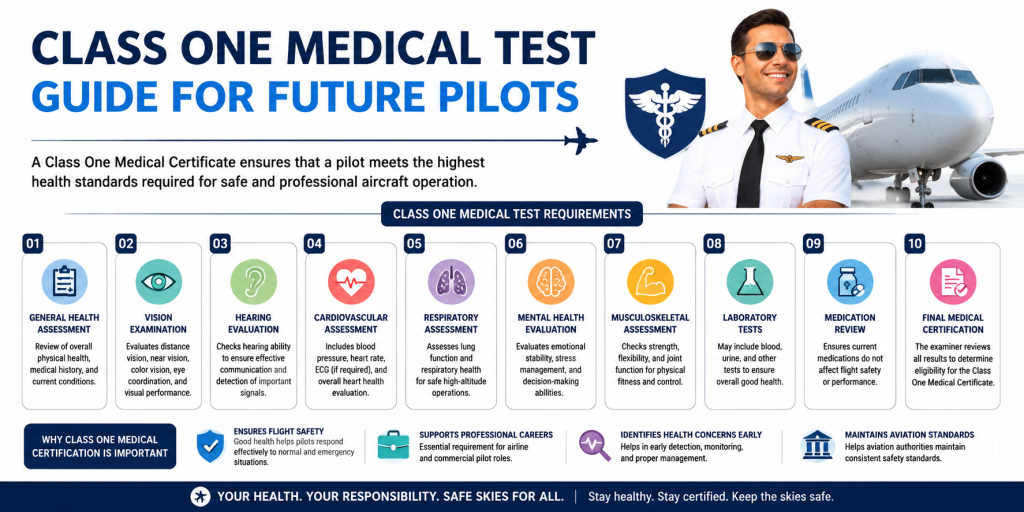
Why Class One Medical Certification Is Important for Pilots
Ensures Flight Safety
Pilots are responsible for aircraft operation and passenger safety. Good physical and mental health helps pilots respond effectively to normal and emergency situations.
Supports Professional Aviation Careers
A valid Class One Medical Certificate is an essential requirement for many professional pilot roles. Without medical approval, aspiring pilots may not be able to continue certain career pathways.
Helps Identify Health Concerns Early
The examination can identify medical conditions that may require monitoring, treatment, or additional evaluation.
Maintains Aviation Standards
Medical certification helps aviation authorities maintain consistent safety standards across the aviation industry.
Class One Medical Test Requirements
The Class One Medical Examination usually includes multiple health evaluations designed specifically for aviation professionals.
General Health Assessment
The examiner reviews overall physical health, medical history, and current health conditions.
This assessment may include:
- Height and weight evaluation
- General physical examination
- Review of previous medical conditions
- Assessment of overall fitness
Vision Examination
Clear vision is essential for pilots because they must read instruments, identify aircraft surroundings, and maintain situational awareness.
Vision testing may evaluate:
- Distance vision
- Near vision
- Color vision
- Eye coordination
- Visual performance
Candidates who use corrective lenses may still qualify depending on applicable aviation standards.
Hearing Evaluation
Pilots must have sufficient hearing ability to communicate effectively with air traffic control, crew members, and aviation systems.
The hearing assessment checks whether candidates can detect required sound levels and communication signals.
Cardiovascular Assessment
Heart health is an important part of aviation medical evaluation.
The assessment may include:
- Blood pressure measurement
- Heart examination
- Additional cardiovascular tests when required
Neurological Evaluation
The examiner may review neurological health to identify conditions that could affect coordination, awareness, or decision-making.
Mental Health Considerations
Mental wellness is also an important aspect of pilot fitness. Aviation authorities consider factors related to stress management, emotional stability, and overall psychological readiness.
Step-by-Step Class One Medical Examination Process
Step 1: Find an Approved Aviation Medical Examiner
The first step is selecting an authorized medical examiner who can conduct aviation-specific health evaluations.
Step 2: Schedule the Medical Appointment
Candidates should book the examination in advance and understand what documents or preparation requirements are needed.
Step 3: Prepare Medical Information
Before attending the appointment, candidates should organize:
- Previous medical records
- Details of current medications
- Information about past treatments
- Identification documents
Step 4: Complete Required Medical Tests
The examiner conducts different assessments based on aviation medical requirements.
These may include:
- Vision testing
- Hearing evaluation
- Physical examination
- Cardiovascular checks
- Additional assessments if needed
Step 5: Receive Medical Evaluation Results
After completing the examination, the medical examiner reviews the results and determines whether the candidate meets the required medical standards.
Common Tests Conducted During a Class One Medical Examination
Eye Examination
The eye examination evaluates whether the candidate has sufficient vision for aviation responsibilities.
It may include:
- Reading visual charts
- Testing eye coordination
- Checking color recognition
Color Vision Testing
Pilots need accurate color recognition because aviation instruments, signals, and airport lighting systems use color-based information.
Blood Pressure Check
Blood pressure evaluation helps identify cardiovascular concerns that may require monitoring.
ECG Evaluation
An electrocardiogram may be required in certain situations to assess heart activity.
Hearing Test
Hearing assessments verify communication ability in aviation environments.
Physical Examination
The medical examiner reviews general health factors that may influence pilot performance.
How to Prepare for a Class One Medical Test
Proper preparation can help candidates complete the medical examination smoothly.
Maintain Healthy Sleep Patterns
Good sleep supports concentration, energy levels, and overall health.
Follow a Balanced Diet
Healthy nutrition can contribute to better physical condition and general wellness.
Manage Stress Before the Examination
Candidates should avoid unnecessary stress and prepare calmly before attending their appointment.
Carry Previous Medical Records
Having accurate medical information helps the examiner understand the candidate’s health background.
Complete Forms Carefully
Incorrect or incomplete information may delay the medical evaluation process.
Schedule Early
Future pilots should complete medical certification early in their training journey to avoid unexpected challenges later.
Common Reasons Candidates May Face Medical Concerns
Some candidates may require additional evaluation due to certain health conditions or medical history.
Common areas that may require attention include:
Vision Problems
Certain vision conditions may require further assessment to determine whether aviation standards are met.
Hearing Difficulties
Hearing limitations may require additional evaluation depending on severity and aviation requirements.
Cardiovascular Concerns
Heart-related conditions may require additional medical review.
Incomplete Medical Information
Missing or inaccurate health information can create delays during the certification process.
Temporary Health Conditions
Short-term illnesses or recovery periods may affect the timing of medical approval.
Can You Become a Pilot If You Have a Medical Condition?
Having a medical condition does not automatically mean someone cannot become a pilot.
Aviation authorities evaluate medical conditions based on factors such as:
- Severity of the condition
- Effect on flight safety
- Treatment status
- Medical stability
Some candidates may require additional assessments or medical documentation before receiving approval.
Future pilots should consult qualified aviation medical professionals for guidance related to their individual circumstances.
Class One Medical Certificate Renewal and Validity
Maintaining a valid medical certificate is an ongoing responsibility for pilots.
Renewal requirements may depend on factors such as:
- Pilot age
- Aviation authority regulations
- Type of flying activity
- Medical history
Regular medical monitoring helps pilots maintain fitness throughout their aviation careers.
Tips for Maintaining Long-Term Pilot Medical Fitness
Successful pilots focus on maintaining healthy habits throughout their careers.
Important practices include:
Regular Health Monitoring
Routine health checkups help identify potential issues early.
Physical Fitness
Regular exercise supports stamina, flexibility, and overall health.
Stress Management
Aviation can involve demanding schedules. Managing stress effectively supports better performance.
Healthy Lifestyle Choices
Balanced nutrition, adequate rest, and avoiding unhealthy habits contribute to long-term pilot fitness.
Professional Medical Guidance
Pilots should follow advice from qualified healthcare and aviation medical professionals.
Mistakes Future Pilots Should Avoid Before Medical Examination
Ignoring Health Concerns
Candidates should not ignore existing medical issues. Early evaluation can prevent complications.
Providing Incomplete Information
Honest and accurate medical information helps ensure proper evaluation.
Waiting Too Long
Completing medical certification early allows students to plan their aviation training effectively.
Poor Preparation
Failing to prepare documents or understand requirements can create unnecessary delays.
Frequently Asked Questions
1. What is a Class One Medical Test for pilots?
A Class One Medical Test evaluates whether an aspiring professional pilot meets aviation health standards required for safe flying operations.
2. Who needs a Class One Medical Certificate?
It is generally required for pilots planning professional aviation careers, including commercial and airline operations.
3. How difficult is the Class One Medical Examination?
The examination is designed to evaluate aviation-related health standards. Preparation and understanding the requirements can help candidates complete it smoothly.
4. What eyesight requirements are needed for pilots?
Pilots must meet specific vision standards related to clarity, distance vision, near vision, and color recognition.
5. Can glasses or contact lenses affect pilot medical approval?
Many pilots use corrective lenses. Eligibility depends on whether vision standards are satisfied according to applicable aviation rules.
6. What documents are required for the medical test?
Requirements vary, but candidates generally need identification documents, medical history details, and previous health records if applicable.
7. How long does the Class One Medical process take?
The duration depends on the examination requirements and whether additional evaluations are needed.
8. Can a medical condition prevent someone from becoming a pilot?
Some medical conditions may affect eligibility, but decisions depend on individual assessment and aviation authority standards.
9. How often must pilots renew their medical certificate?
Renewal frequency depends on aviation regulations, pilot age, and operational requirements.
10. When should student pilots complete their first medical examination?
Many future pilots complete their medical assessment before investing heavily in professional flight training.
Conclusion
The Class One Medical Test is one of the most important steps for anyone planning a professional aviation career. It ensures that pilots meet essential health standards needed for safe aircraft operation and responsible decision-making.
Future pilots should approach the medical examination with proper preparation, accurate information, and a commitment to maintaining long-term health. Completing medical certification early helps aspiring aviators build a strong foundation for their flight training journey.
Aviation requires dedication, discipline, and responsibility. Maintaining medical fitness is an ongoing part of becoming and remaining a successful pilot.

