
Introduction
Learning to fly is one of the most exciting journeys a student can begin. Unlike normal classroom learning, flight training happens in a real aircraft, in real weather, with real responsibilities. Every lesson requires focus, communication, discipline, and confidence.
One of the most important relationships in this journey is the relationship between a student pilot and a flight instructor. Your instructor teaches you how to control the aircraft, understand safety procedures, make decisions, correct mistakes, and slowly become a confident pilot.
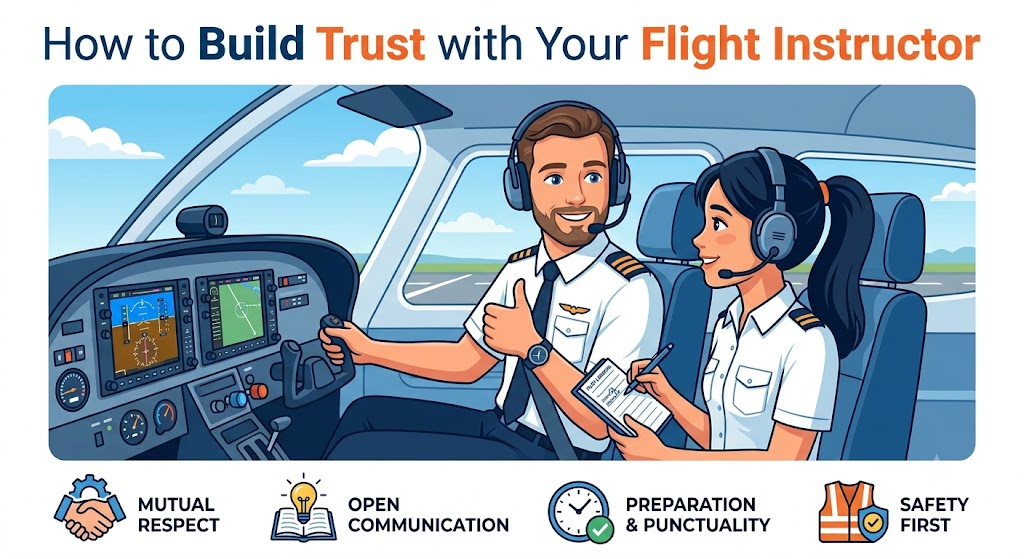
But successful flight training is not only about flying skills. It is also about trust.
When you trust your flight instructor, you feel more comfortable asking questions, admitting mistakes, accepting feedback, and learning from every lesson. When your instructor trusts you, they can guide you more effectively and help you grow as a responsible pilot.
This guide explains how to build trust with your flight instructor, why it matters, and what student pilots can do to create a strong learning relationship.
What Does Trust Mean in Flight Training?
Trust in flight training means confidence, respect, honesty, and teamwork between the student and instructor. It does not mean blindly agreeing with everything. It means both people are working toward the same goal: safe and effective learning.
A trusted flight instructor creates a safe space where students can learn without fear. A trustworthy student pilot listens carefully, prepares properly, communicates honestly, and follows safety instructions.
In aviation, trust is built through actions. It grows lesson by lesson through preparation, communication, discipline, and professional behavior.
Why Trust Matters During Flight Lessons
Flight training can be challenging. Students may feel nervous during takeoff, landing, radio communication, stalls, steep turns, or emergency practice. A good instructor helps reduce fear by explaining things clearly and guiding the student step by step.
Trust helps in many ways:
- It improves communication in the cockpit.
- It helps students accept corrections calmly.
- It reduces stress during difficult lessons.
- It builds confidence over time.
- It improves decision-making skills.
- It supports safer flying habits.
- It helps instructors understand the student’s strengths and weaknesses.
When trust is strong, students learn faster because they are not afraid to ask questions or admit confusion.
Understand Your Flight Instructor’s Role
A flight instructor is more than a person sitting next to you in the aircraft. They are your teacher, safety guide, evaluator, mentor, and coach.
Your instructor’s role includes:
- Teaching aircraft control
- Explaining aviation concepts
- Monitoring safety
- Correcting mistakes
- Building confidence
- Preparing you for exams and check rides
- Helping you develop pilot judgment
- Teaching good cockpit discipline
Sometimes your instructor may sound strict. This usually happens because aviation safety requires seriousness. Corrections are not personal criticism. They are part of becoming a safer pilot.
15 Practical Ways to Build Trust with Your Flight Instructor
1. Be Honest About Your Skill Level
Never pretend to understand something if you do not. If you are confused about radio calls, landing technique, aircraft checks, or navigation, say so clearly.
A good instructor will appreciate honesty because it helps them teach you better.
2. Arrive Prepared for Every Lesson
Preparation shows respect for your instructor’s time and your own training. Before each lesson, review the topic, check assigned reading, and understand the basic objective.
Prepared students make better progress and build instructor confidence.
3. Communicate Clearly
Good communication is essential in aviation. Tell your instructor if you feel nervous, tired, confused, or unsure.
Clear communication helps avoid mistakes and creates a better learning environment.
4. Ask Questions Without Fear
Many beginner pilots hesitate to ask questions because they think the question is too simple. In flight training, no genuine question is silly.
Asking questions shows that you care about learning properly.
5. Accept Feedback Positively
Your instructor will correct your mistakes. This is normal. Do not take feedback personally.
Instead of becoming defensive, listen carefully and ask how you can improve. This attitude builds trust quickly.
6. Practice Regularly
Skills improve with repetition. If you take long gaps between lessons, progress may slow down.
Regular practice shows commitment and helps your instructor plan your training more effectively.
7. Respect Safety Procedures
Safety is the foundation of aviation. Always follow checklists, briefings, weather decisions, and cockpit procedures.
A student who respects safety earns trust naturally.
8. Be Punctual
Arriving late again and again can affect training quality. Being on time shows discipline and professionalism.
Pilots are expected to respect schedules, and this habit starts during training.
9. Maintain Professional Behavior
Flight training is exciting, but it is also serious. Treat your instructor, aircraft, school staff, and fellow students with respect.
Professional behavior helps create a positive reputation.
10. Admit Mistakes Quickly
Mistakes happen in training. What matters is how you respond.
If you miss a checklist item, misunderstand an instruction, or make a control error, admit it. Honest students are easier to teach and safer to train.
11. Stay Calm During Corrections
Sometimes instructors must correct students quickly during flight. This may happen during landing, approach, traffic pattern work, or emergency practice.
Stay calm and understand that quick correction is about safety, not criticism.
12. Keep a Positive Learning Attitude
Some lessons will feel difficult. You may struggle with landings, navigation, radio communication, or confidence.
A positive attitude helps you keep improving even when progress feels slow.
13. Set Realistic Goals Together
Discuss your goals with your instructor. Ask what you should focus on before the next lesson.
Clear goals help both student and instructor track progress better.
14. Track Your Progress
Keep notes after each lesson. Write down what went well, what needs improvement, and what your instructor advised.
This shows seriousness and helps you learn faster.
15. Build Mutual Respect
Trust grows when both student and instructor respect each other. Listen carefully, value your instructor’s experience, and communicate openly.
Respect makes training smoother and more enjoyable.
Common Mistakes That Damage Trust
Some habits can weaken the student-instructor relationship.
Common mistakes include:
- Hiding mistakes
- Ignoring instructions
- Coming unprepared
- Being overconfident
- Canceling lessons frequently
- Arguing during feedback
- Not asking questions
- Taking safety lightly
Avoiding these mistakes helps create a better training experience.
What Good Instructor-Student Communication Looks Like
Good communication happens before, during, and after each lesson.
Before the lesson, the instructor should explain the goal. The student should ask questions and share concerns.
During flight, communication should be clear, short, and focused. The student should listen carefully and respond properly.
After the flight, the debrief is very important. This is where the instructor explains what went well and what needs work.
A good debrief builds confidence and gives the student a clear path for improvement.
How Flight Instructors Build Trust with Students
Trust is not only the student’s responsibility. Good instructors also build trust by being patient, professional, clear, and fair.
A strong flight instructor:
- Explains concepts in simple language
- Gives clear instructions
- Encourages questions
- Corrects mistakes respectfully
- Maintains safety at all times
- Understands student nervousness
- Tracks progress honestly
- Builds confidence gradually
A professional instructor helps students feel supported, not judged.
How Trust Improves Aviation Safety
Trust directly supports aviation safety. When students trust their instructor, they are more likely to speak up, ask for help, and admit uncertainty.
This improves:
- Cockpit communication
- Situational awareness
- Emergency response
- Decision making
- Checklist discipline
- Risk management
In aviation, silence can be dangerous. Trust allows open communication, which helps prevent mistakes.
Signs You Have a Healthy Instructor Relationship
You likely have a good relationship with your flight instructor if:
- You feel comfortable asking questions.
- You understand your training progress.
- Feedback feels useful, not insulting.
- You feel safer and more confident over time.
- Your instructor listens to your concerns.
- Lessons are structured and professional.
- You are improving gradually.
A healthy instructor relationship helps you become a better pilot.
When Should You Consider Changing Your Flight Instructor?
Sometimes, a student and instructor may not be the right match. Changing instructors should not be the first step, but it may be necessary in some cases.
You may consider a change if:
- Communication is consistently poor.
- You feel unsafe.
- The instructor is unprofessional.
- You are not making progress despite effort.
- The teaching style does not match your learning needs.
- Your concerns are ignored.
Before changing, try to have an honest conversation. If the issue continues, speak with the flight school management.
Tips for First-Time Student Pilots
If you are just starting flight training, remember these simple tips:
- Be patient with yourself.
- Do not compare your progress with others.
- Study before each lesson.
- Ask questions early.
- Accept mistakes as part of learning.
- Respect aviation safety rules.
- Build confidence step by step.
- Trust the training process.
Every skilled pilot was once a beginner.
Frequently Asked Questions
1. How important is trust in flight training?
Trust is very important because flight training depends on communication, safety, and feedback. A student must feel comfortable asking questions and accepting corrections. A flight instructor must also trust that the student is honest, prepared, and serious about learning.
2. Can I ask basic questions during training?
Yes. Student pilots should always ask questions, even if they seem basic. Aviation learning is detailed, and small doubts can become bigger problems if ignored. A good instructor will respect your willingness to learn.
3. What if I make mistakes while flying?
Mistakes are normal during flight training. Your instructor expects them and is trained to handle them safely. What matters most is that you stay calm, listen carefully, and learn from each mistake.
4. How can I improve communication with my instructor?
Be honest, clear, and respectful. Tell your instructor when you are confused, nervous, or unsure. Ask for feedback after each lesson and discuss what you should improve before the next flight.
5. Should I change instructors if I feel uncomfortable?
If you feel uncomfortable, first try to understand the reason. Sometimes it may be normal training pressure. But if the instructor is unsafe, disrespectful, or unclear, you can speak with the flight school and consider changing instructors.
6. How long does it take to build trust?
Trust develops gradually. Some students feel comfortable after a few lessons, while others take more time. Consistent preparation, honest communication, and respectful behavior help build trust faster.
7. What qualities make a good flight instructor?
A good flight instructor is patient, clear, professional, safety-focused, and supportive. They should explain concepts well, correct mistakes respectfully, and help students build confidence.
8. How do instructors evaluate student pilots?
Instructors evaluate students based on safety awareness, aircraft handling, decision making, communication, preparation, checklist use, and overall progress. They look for improvement, not perfection.
9. Can nervous students become good pilots?
Yes. Many students feel nervous at the beginning. With good instruction, practice, and confidence-building, nervous students can become skilled and safe pilots.
10. How do I become a better student pilot?
Prepare before each lesson, listen carefully, ask questions, accept feedback, review your mistakes, and stay consistent. A serious learning attitude is one of the best qualities of a successful student pilot.
Conclusion
Building trust with your flight instructor is one of the most important parts of successful flight training. Trust is created through honesty, communication, preparation, discipline, and mutual respect.
Your instructor is there to guide you, correct you, protect you, and help you grow into a confident pilot. As a student pilot, your role is to stay open, prepared, respectful, and committed to learning.
The stronger your relationship with your instructor, the better your training experience will be. Approach every lesson with curiosity, professionalism, and a safety-first mindset.

