
Introduction
Choosing the right flight instructor is one of the most important decisions in your aviation journey. A good instructor doesn’t just teach you how to fly an aircraft—they shape your discipline, decision-making, safety mindset, and overall confidence as a pilot.
Your flight instructor becomes your first real mentor in aviation. The quality of guidance you receive during training can significantly influence your skills, licensing success, and even your long-term airline career.
Why the Right Flight Instructor Matters
Flight training is not just about completing hours in the cockpit. It is about developing safe, confident, and skilled decision-making under pressure.
A strong instructor helps you:
Build correct flying habits from day one
Understand aviation safety deeply
Prepare effectively for DGCA/FAA exams
Gain confidence during solo flights
Develop real-world cockpit discipline
On the other hand, a poor instructor can lead to confusion, unsafe habits, and delayed progress in your pilot training.
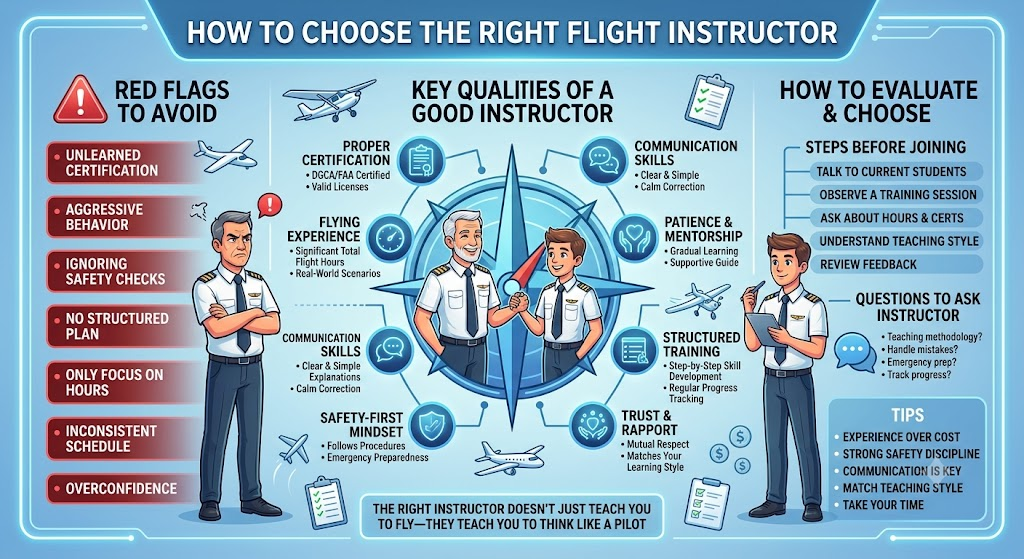
Key Qualities of a Good Flight Instructor
A professional and effective flight instructor should have the following qualities:
- Proper Certification and Licensing
A qualified instructor must hold valid aviation certifications such as:
DGCA-approved instructor rating (India)
FAA Certified Flight Instructor (USA)
Valid and updated licenses
Without proper certification, training quality and safety may be compromised.
- Strong Real-World Flying Experience
Experience matters in aviation.
A good instructor should have:
Significant total flight hours
Experience in different flying conditions
Exposure to real operational scenarios
Experienced instructors provide practical insights beyond textbooks.
- Excellent Communication Skills
Clear communication is essential in flight training.
A good instructor:
Explains concepts simply
Gives clear in-flight instructions
Listens and corrects mistakes calmly
Avoids confusion during critical situations
Poor communication can lead to serious training errors.
- Safety-First Mindset
Safety is the foundation of aviation training.
A good instructor always:
Follows standard operating procedures
Prioritizes safe decision-making
Emphasizes emergency preparedness
Avoids risky shortcuts
- Patience and Mentorship Ability
Learning to fly takes time and repetition.
A good instructor should:
Be patient with beginners
Support gradual learning
Encourage improvement instead of criticism
Act as a mentor, not just a trainer
- Structured Training Approach
A professional instructor follows a clear plan:
Step-by-step skill development
Regular progress tracking
Balanced ground and flight training
Clear learning objectives
Red Flags to Avoid in Flight Instructors
Be cautious if you notice the following warning signs:
Lack of proper certification or unclear credentials
Aggressive or rude behavior in training
Ignoring safety procedures or checklist discipline
No structured teaching plan
Focus only on completing flight hours
Inconsistent availability or training schedule
Overconfidence without explaining concepts properly
Such instructors can negatively impact both safety and learning quality.
How to Evaluate a Flight Instructor Before Joining
Before finalizing your instructor, take these practical steps:
Talk to current students about their experience
Observe a training session if possible
Ask about total flying hours and certifications
Understand their teaching style
Check instructor-to-student ratio
Review feedback from other trainees
Direct interaction gives you the clearest picture of their teaching quality.
Important Questions to Ask a Flight Instructor
Asking the right questions helps you make a better decision:
How many total flight hours do you have?
What is your teaching methodology?
How do you handle student mistakes during flight?
How do you prepare students for emergencies?
How do you track student progress?
A good instructor will answer these confidently and clearly.
Tips for Choosing the Best Flight Instructor
Keep these simple tips in mind:
Choose experience over low cost
Ensure strong safety discipline
Match teaching style with your learning comfort
Prefer instructors with real operational experience
Focus on communication and trust building
Avoid rushed decision-making
A good instructor-student relationship improves learning quality significantly.
Common Mistakes Students Make
Many aviation students make avoidable mistakes such as:
Choosing instructors only based on fees
Not checking certification or experience
Ignoring student reviews and feedback
Not interacting with instructors before enrollment
Overlooking safety mindset and discipline
Avoiding these mistakes can greatly improve your training experience.
Conclusion
Selecting the right flight instructor is not just a training decision—it is a career-defining step in aviation. A good instructor helps you build strong fundamentals, safe flying habits, and the confidence needed to succeed as a professional pilot.
Always focus on certification, experience, communication, and safety mindset when evaluating instructors. Take your time, ask questions, and observe carefully before making a choice.
In aviation, the right instructor does not just teach you to fly—they teach you to think like a pilot.
FAQs
- Why is choosing the right flight instructor important?
A good instructor builds your core flying skills, safety habits, and confidence, which directly impacts your aviation career success.
- What qualifications should a flight instructor have?
They should have valid DGCA or FAA certifications along with an instructor rating and proper aviation licensing.
- How does experience affect a flight instructor’s quality?
Experienced instructors handle real-world scenarios better and provide practical knowledge beyond basic training.
- What is the biggest red flag in a flight instructor?
Lack of certification or ignoring safety procedures is the most serious warning sign.
- How can I evaluate a flight instructor before joining?
You can talk to students, observe training sessions, and ask about experience and teaching methods.
- Should communication skills matter in flight instructors?
Yes, clear communication is essential for safe and effective flight training.
- Can a bad instructor affect my pilot career?
Yes, poor instruction can lead to weak fundamentals, unsafe habits, and delays in licensing.
- What questions should I ask an instructor?
Ask about flight hours, teaching methods, safety handling, and student progress tracking.
- Is expensive training always better?
Not necessarily. Focus on instructor quality, not just cost.
- What makes a great flight instructor?
A great instructor combines experience, patience, safety awareness, and strong communication skills.

