
Introduction
Takeoff is one of the most exciting parts of flight training. For many student pilots, it is the moment when the aircraft changes from a ground machine into a flying machine. But takeoff is not only about adding power and lifting off. It is a complete skill that includes preparation, runway awareness, aircraft control, communication, and good decision-making.
This blog on How to Practice Takeoffs During Flight Training is written for student pilots who want to understand what happens during takeoff training and how to build safe habits from the beginning.
Takeoff practice should always be done under the guidance of a certified flight instructor. Every aircraft, airport, runway, and weather condition is different. Your instructor and aircraft manual are your main sources for real procedures.
Why Takeoff Practice Matters for Student Pilots
Takeoff practice is important because it teaches a student pilot how to control the aircraft during one of the busiest phases of flight.
During takeoff training, students learn how to:
- Prepare the aircraft before entering the runway
- Use the checklist correctly
- Maintain runway centerline
- Apply power smoothly
- Control direction with proper rudder use
- Monitor airspeed and engine indications
- Transition safely from ground roll to climb
- Make safe decisions if something does not look right
The FAA Airplane Flying Handbook explains normal, crosswind, short-field, and soft-field takeoffs as core airplane flying skills, which shows why takeoff training is a major part of basic pilot development.
What Student Pilots Should Know Before Takeoff Practice
Before practicing takeoffs, a student pilot should understand the basic aircraft controls and cockpit layout. You do not need to be perfect on day one, but you should know what your instructor is asking you to observe.
Important areas include:
- Throttle or power control
- Rudder pedals
- Elevator control
- Aileron control
- Airspeed indicator
- Engine instruments
- Flap position
- Trim setting
- Runway direction
- Wind direction
- Radio communication
A student should also understand that takeoff begins before the aircraft reaches the runway. Good takeoffs start with good preparation.
Understanding the Takeoff Checklist
A checklist is not just a memory aid. It is a safety tool.
Before takeoff, pilots use checklists to confirm that the aircraft is ready for departure. This may include items related to fuel, flight controls, instruments, engine checks, trim, flaps, doors, windows, and other aircraft-specific systems.
Student pilots should learn checklist discipline early. Skipping checklist items can create unnecessary risk. Even experienced pilots use checklists because aviation safety depends on consistency.
The FAA Pilot’s Handbook of Aeronautical Knowledge includes airport operations and runway safety guidance, which supports the importance of careful preparation before operating near runways.
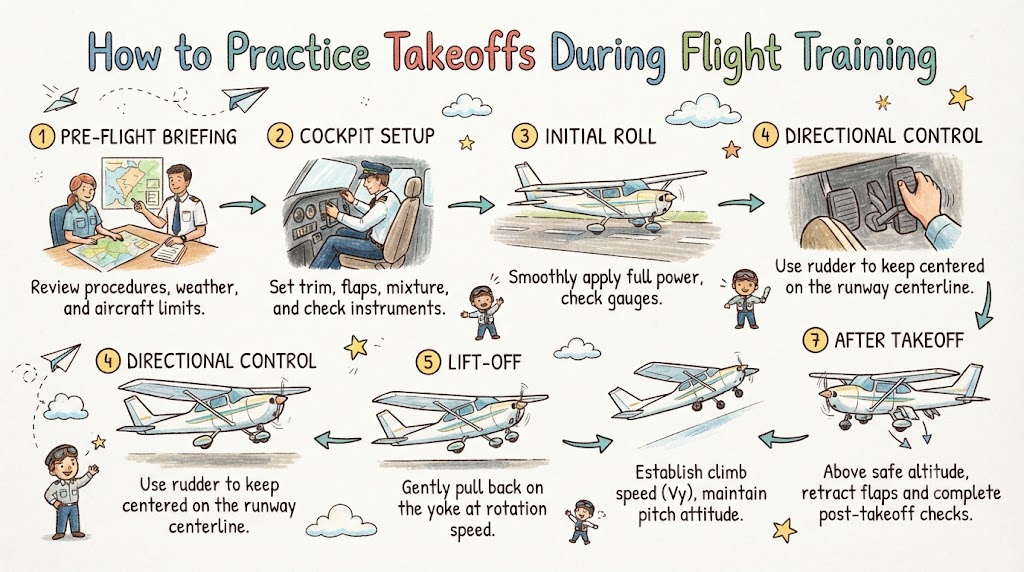
Basic Flow of Takeoff Practice
Takeoff practice usually follows a learning flow. The exact steps depend on the aircraft, airport, weather, and instructor guidance. The goal here is not to replace training, but to help students understand what skills are being developed.
Pre-Takeoff Preparation
Before takeoff, the student learns to review the checklist, listen to instructions, check runway conditions, and confirm the plan with the instructor.
This is also the time to understand wind direction, runway in use, traffic, and emergency planning.
Lining Up With the Runway
Runway alignment is one of the first visible skills in takeoff practice. A student must learn to keep the aircraft aligned with the runway centerline.
At first, this may feel challenging because the aircraft reacts to wind, power, and control inputs. With practice, students learn to make small corrections instead of large, sudden movements.
Applying Power Smoothly
Power should be applied according to the aircraft procedure taught by the instructor. The student learns to avoid rushing and to observe how the aircraft responds.
This stage teaches coordination, engine awareness, and calm control.
Maintaining Directional Control
During the takeoff roll, the aircraft must stay aligned with the runway. Student pilots often learn that rudder control is very important during this phase.
Many beginners focus too much on the control yoke or stick and forget that the rudder pedals are needed for directional control on the runway.
Monitoring Airspeed and Aircraft Response
As the aircraft accelerates, the student learns to observe airspeed and aircraft feel. The instructor teaches when the aircraft is ready to transition from ground roll to flight.
This is where timing and aircraft awareness begin to develop.
Initial Climb
After lift-off, the student learns to maintain proper climb attitude, direction, and awareness. The aircraft is now flying, but the takeoff is not complete until the aircraft is safely climbing and the pilot is following the correct departure procedure.
Common Takeoff Types Student Pilots May Learn
Student pilots may be introduced to different takeoff types during training. These should always be practiced with instructor supervision.
Normal Takeoff
A normal takeoff is used under standard runway and weather conditions. It teaches the basic takeoff flow and helps students build confidence.
Crosswind Takeoff
A crosswind takeoff is practiced when wind is blowing across the runway. The student learns how wind affects the aircraft and why proper control input matters.
Short-Field Takeoff
A short-field takeoff is used when runway length or obstacle clearance is a concern. This is a more performance-focused skill and must be practiced carefully with an instructor.
Soft-Field Takeoff
A soft-field takeoff is used for grass, dirt, or soft surfaces where the aircraft may not roll as easily as it does on a paved runway.
The FAA Airplane Flying Handbook covers these takeoff types in its takeoff and departure climb training material, including normal, crosswind, short-field, and soft-field techniques.
Common Mistakes During Takeoff Practice
Mistakes are part of learning, but student pilots should understand the most common takeoff errors early.
Common mistakes include:
- Not completing checklist items carefully
- Poor runway centerline control
- Over-controlling the aircraft
- Weak rudder use
- Looking inside the cockpit too much
- Not checking engine instruments
- Rushing the takeoff
- Poor wind awareness
- Not listening clearly to instructor guidance
- Delayed decision-making when something feels wrong
The goal of training is not to avoid every mistake immediately. The goal is to recognize mistakes, correct them safely, and build better habits.
How Flight Instructors Help During Takeoff Training
A flight instructor is not only there to explain the takeoff. The instructor is there to protect safety, manage risk, and teach good judgment.
During takeoff practice, instructors help students understand:
- How to prepare before takeoff
- What to check before entering the runway
- How to control direction
- How to manage power smoothly
- How to recognize aircraft response
- How to handle wind correction
- When to continue
- When to reject or discontinue a takeoff
- How to stay calm under pressure
At first, your instructor may handle more of the work. Over time, you will slowly take more responsibility as your skill improves.
Takeoff Safety Tips for Student Pilots
Safety should always come before confidence. A student pilot should never rush takeoff practice.
Use the Checklist Every Time
Do not treat checklists as optional. Checklists create consistency and reduce avoidable mistakes.
Understand the Wind
Wind affects takeoff distance, aircraft control, and runway alignment. Always discuss wind conditions with your instructor before takeoff.
Keep Eyes Outside
During takeoff, students should avoid staring at instruments for too long. Outside reference helps with runway alignment and directional control.
Listen Carefully
At controlled airports, air traffic control instructions must be followed. At nontowered airports, pilots must listen carefully and communicate clearly.
Know When Not to Continue
If something does not feel right, the safest decision may be to reject the takeoff before becoming airborne. This decision must be learned with instructor guidance.
Respect Runway Safety
Runway awareness is a major part of safe flying. The FAA highlights runway safety and runway incursion prevention as important parts of airport operations.
How Students Can Prepare Before Each Lesson
Good takeoff practice does not start in the aircraft. It starts before the lesson.
Student pilots can prepare by:
- Reviewing the aircraft checklist
- Reading the lesson notes
- Studying runway signs and markings
- Reviewing traffic pattern procedures
- Asking the instructor about the lesson goal
- Practicing radio calls on the ground
- Mentally rehearsing the takeoff flow
- Reviewing mistakes from the previous lesson
This type of preparation helps students feel less rushed during the real flight.
Building Confidence Through Repeated Practice
Takeoffs can feel stressful in the beginning because many things happen quickly. But with repeated practice, students begin to recognize patterns.
They learn how the aircraft sounds, how it accelerates, how it responds to control inputs, and how it feels during the first few seconds of flight.
Confidence comes from repetition, but safe confidence comes from guided repetition. That means practicing with an instructor, following procedures, and learning from every takeoff.
Why Takeoff Practice Builds Better Pilots
Takeoff practice teaches more than one skill. It connects many parts of flying into one short but important phase.
A good takeoff requires:
- Planning
- Checklist discipline
- Aircraft control
- Wind awareness
- Runway awareness
- Communication
- Judgment
- Calm thinking
These are the same skills student pilots need throughout their aviation journey.
FAQs About Practicing Takeoffs During Flight Training
What is the first thing student pilots learn about takeoffs?
Student pilots usually begin by learning preparation, checklist use, runway awareness, and basic aircraft control before taking more responsibility during takeoff.
Can a student pilot practice takeoffs alone?
A student pilot can only practice solo takeoffs after proper training, instructor approval, and meeting aviation authority requirements. Early practice must be done with an instructor.
Why is rudder control important during takeoff?
Rudder control helps keep the aircraft aligned with the runway during the takeoff roll. Many beginners need practice to use rudder smoothly and correctly.
What is a normal takeoff?
A normal takeoff is a standard takeoff used under regular runway and weather conditions. It is one of the first takeoff types student pilots learn.
What is the biggest mistake during takeoff training?
One common mistake is rushing. Students may rush checklists, power application, or control inputs. Calm and consistent practice is important.
Why do instructors teach different types of takeoffs?
Different takeoff types prepare students for different runway surfaces, wind conditions, runway lengths, and performance situations.
How can I improve my takeoff practice?
Review your checklist, listen to your instructor, understand wind conditions, practice mental rehearsal, and focus on smooth control inputs.
Final Thoughts
Learning How to Practice Takeoffs During Flight Training is an important step for every student pilot. Takeoff practice builds confidence, control, awareness, and decision-making.
For beginners, the takeoff may feel fast and busy. That is normal. With proper instructor guidance, repeated practice, and strong checklist habits, students slowly become more comfortable and more prepared.
Always remember that real takeoff procedures must come from your certified flight instructor, aircraft manual, local airport procedures, and aviation authority guidance. Safe takeoff practice is not about rushing into the air. It is about preparing correctly, controlling the aircraft smoothly, and making smart decisions from the very beginning.

