
Introduction
A flying instructor plays a crucial role in shaping a pilot’s entire aviation career. From the very first lesson in the cockpit to preparing for solo flights and licensing exams, the instructor influences how confidently, safely, and professionally a student learns to fly. In aviation, good instruction is not just about teaching procedures—it is about building discipline, judgment, and a strong safety mindset.
Choosing the right flying instructor is one of the most important decisions for any aspiring pilot.
Why a Good Flying Instructor Matters
Flight training is a highly structured and safety-sensitive process. A skilled instructor ensures that every stage of learning is clear, safe, and effective.
A good flying instructor helps students:
- Build correct flying habits from the beginning
- Understand aviation safety principles deeply
- Develop strong cockpit discipline
- Prepare effectively for DGCA or FAA licensing exams
- Gain confidence for solo and cross-country flights
A weak instructor can lead to confusion, unsafe habits, and delayed progress in training.
Key Qualities of a Good Flying Instructor
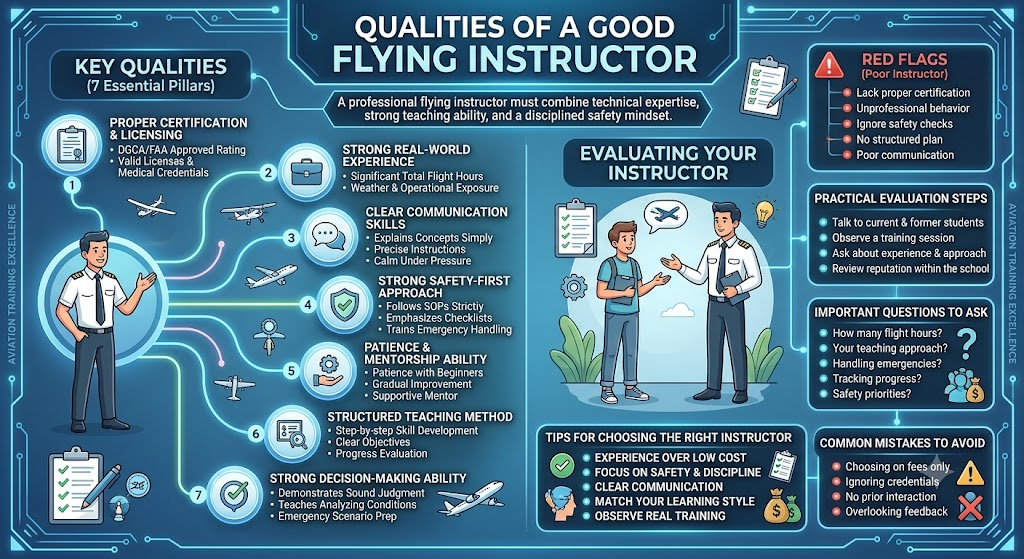
A professional flying instructor must combine technical expertise with strong teaching ability and a disciplined safety mindset.
1. Proper Certification and Licensing
A qualified instructor must hold valid aviation certifications such as:
- DGCA-approved flight instructor rating (India)
- FAA Certified Flight Instructor license (USA)
- Valid and updated medical and flying credentials
Proper certification ensures that the instructor meets required aviation training and safety standards.
2. Strong Real-World Flying Experience
Experience is one of the most important qualities in aviation training.
A good instructor should have:
- Significant total flight hours
- Experience in different weather and operational conditions
- Exposure to real-world aviation scenarios
Experienced instructors can provide practical insights beyond textbook knowledge.
3. Clear Communication Skills
Effective communication is essential in flight training.
A good instructor:
- Explains concepts in simple and structured language
- Gives precise instructions during flights
- Remains calm and clear under pressure
- Encourages questions and understanding
Poor communication can lead to misunderstandings and unsafe flying practices.
4. Strong Safety-First Approach
Safety is the foundation of aviation.
A good flying instructor always:
- Follows standard operating procedures strictly
- Prioritizes safety over speed or convenience
- Emphasizes checklist discipline
- Trains students in emergency handling
Any compromise on safety standards is a serious concern.
5. Patience and Mentorship Ability
Flight training takes time and continuous practice.
A good instructor:
- Remains patient with beginners
- Encourages gradual improvement
- Supports students through mistakes
- Acts as a mentor, not just a trainer
A supportive learning environment builds confidence and skill.
6. Structured Teaching Method
A professional instructor follows a systematic approach to training.
This includes:
- Step-by-step skill development
- Clear learning objectives
- Balanced ground and flight training
- Regular progress evaluation
Structured training ensures steady and measurable improvement.
7. Strong Decision-Making Ability
Aviation requires quick and correct decisions.
A good instructor:
- Demonstrates sound judgment in flight situations
- Teaches students how to analyze conditions
- Prepares students for emergency scenarios
- Builds confidence in decision-making
Red Flags in a Poor Flying Instructor
It is equally important to recognize warning signs early.
Avoid instructors who:
- Lack proper certification or have unclear credentials
- Show rude or unprofessional behavior
- Ignore safety procedures or checklists
- Do not follow a structured training plan
- Focus only on completing flight hours
- Communicate poorly during training
Such instructors can negatively impact both safety and learning quality.
How to Evaluate a Flying Instructor Before Joining
Before choosing an instructor, take these practical steps:
- Talk to current and former students
- Observe a training session if possible
- Ask about total flight experience and background
- Understand their teaching style
- Check safety discipline during operations
- Review instructor reputation within the school
Direct observation is one of the best ways to evaluate quality.
Important Questions to Ask a Flying Instructor
Asking the right questions helps you make an informed decision:
- How many total flight hours do you have?
- What is your teaching approach for beginners?
- How do you handle in-flight emergencies?
- How do you track student progress?
- What safety procedures do you prioritize?
A good instructor will answer these questions confidently and clearly.
Tips for Choosing the Right Flying Instructor
Keep these practical tips in mind:
- Prioritize experience over low cost
- Focus on safety mindset and discipline
- Choose someone with clear communication skills
- Match instructor style with your learning preference
- Observe real training behavior before deciding
A strong instructor-student relationship leads to better learning outcomes.
Common Mistakes Students Make
Many aspiring pilots make avoidable mistakes such as:
- Choosing instructors based only on low fees
- Ignoring certification and experience
- Not interacting with instructors before enrollment
- Overlooking student feedback and reviews
- Failing to observe safety practices
Avoiding these mistakes can significantly improve your training experience.
FAQs
1. Why are the qualities of a flying instructor important?
They directly affect your learning quality, safety awareness, and overall success in pilot training.
2. What certification should a flying instructor have?
They should have valid DGCA or FAA instructor ratings along with updated aviation licenses and approvals.
3. How does experience help a flying instructor?
Experienced instructors provide real-world aviation knowledge and better handling of practical flying situations.
4. What is the most important quality in a flying instructor?
A strong safety-first mindset is the most important quality in aviation training.
5. Why is communication important in flight instruction?
Clear communication ensures safe operations, proper understanding, and fewer training errors.
6. Can a bad instructor affect my pilot career?
Yes, poor instruction can lead to weak fundamentals, unsafe habits, and delays in licensing.
7. How can I evaluate a flying instructor?
By checking certification, speaking with students, observing training sessions, and reviewing experience.
8. Should cost be the main factor in choosing an instructor?
No, experience, safety discipline, and teaching quality are more important than cost.
9. What makes a flying instructor a good mentor?
Patience, structured teaching, guidance, and supportive behavior make a strong mentor.
10. What is the role of a flying instructor?
They train students in flying skills, safety procedures, decision-making, and aviation discipline.
Conclusion
The quality of your flying instructor plays a major role in shaping your future as a pilot. A good instructor builds strong aviation fundamentals, ensures safety discipline, and prepares you for real-world flying challenges.
Always focus on certification, experience, communication skills, and safety mindset when selecting an instructor. Take time to evaluate carefully before making a decision, because in aviation, the right instructor does not just teach flying—they build responsible and confident pilots.

