
Introduction
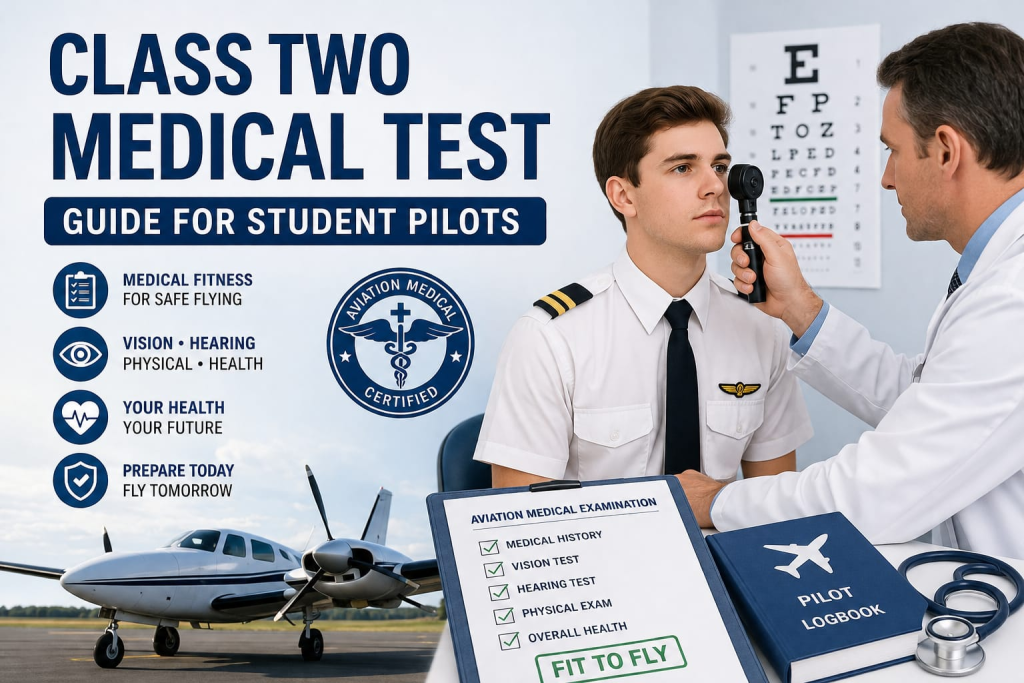
Becoming a pilot requires more than completing flight lessons and learning aircraft operations. Before a student can begin their aviation training journey, they must meet specific health and fitness requirements designed to ensure safe flying practices. One of the important steps for many aspiring pilots is completing a Class Two Medical Test.
A Class Two Medical Certificate confirms that a student pilot meets the required medical standards to safely perform flight duties during training and certain aviation activities. The examination helps identify any health conditions that may affect a pilot’s ability to operate an aircraft safely.
Many beginners focus on selecting a flight school, understanding training costs, and preparing for flying lessons, but medical certification should be one of the earliest steps in their aviation journey. Completing the medical assessment before starting training helps students understand their eligibility and avoid unexpected delays.
Real-world examples:
- A beginner pilot completes a Class Two Medical Test before joining a flight academy to confirm medical eligibility.
- A student discovers a vision-related concern during the examination and gets professional guidance before beginning flight lessons.
- An aspiring pilot prepares required medical documents early to make the flight training admission process smoother.
Evaluation Criteria for Choosing the Right Medical Preparation Approach
Before appearing for a Class Two Medical Test, student pilots should consider several important factors:
Approved Aviation Medical Examiner
Students should choose an authorized aviation medical examiner who understands pilot medical requirements and follows aviation health standards.
Required Documentation
Preparing medical records, identification documents, previous health reports, and other required paperwork can make the examination process easier.
Understanding Medical Requirements
Students should understand the general health areas evaluated during aviation medical examinations, including vision, hearing, physical fitness, and overall health conditions.
Location and Accessibility
Choosing a medical examination facility that is convenient to access can help students manage appointments, follow-ups, and additional assessments if required.
Preparation Before Examination
Maintaining healthy habits and being aware of medical expectations can help students approach the examination confidently.
Follow-up Support
Some medical evaluations may require additional reports or specialist opinions. Students should consider whether proper follow-up guidance is available.
What Is a Class Two Medical Certificate?
A Class Two Medical Certificate is an aviation medical approval that confirms a pilot meets specific health standards required for certain flying activities. It is designed to evaluate whether an individual has the physical and mental fitness needed to safely participate in aviation operations.
For student pilots, this certification is an important milestone because it helps confirm that they are medically prepared before investing significant time and resources into flight training.
Unlike a regular health checkup, an aviation medical examination focuses on health factors that may directly influence flight safety. These assessments are designed around the unique demands of aviation environments.
A Class Two Medical Certificate generally evaluates areas such as:
- Vision capability
- Hearing ability
- General physical health
- Medical history
- Conditions that may affect flight performance
The exact requirements and procedures can vary depending on the aviation authority and country regulations.
Why Student Pilots Need a Class Two Medical Test
Medical fitness is a critical part of aviation safety. A pilot’s physical condition can influence decision-making, concentration, reaction time, and overall performance during flight operations.
For student pilots, completing a medical examination early provides several advantages:
Confirms Training Eligibility
A medical certificate helps students understand whether they meet the required health standards before beginning professional training.
Supports Flight Safety
Healthy pilots are better prepared to manage the physical and mental demands associated with flying.
Helps Avoid Training Delays
Completing medical certification early reduces the risk of discovering medical requirements after starting flight lessons.
Builds Confidence
Knowing that they meet aviation health requirements allows students to focus more effectively on learning flying skills.
Class Two Medical Test Requirements
The exact requirements for a Class Two Medical Test depend on aviation regulations, but common evaluation areas may include:
Medical History Review
The examiner reviews previous medical information, existing conditions, medications, and relevant health background.
Students should provide accurate information because complete medical history helps examiners make proper assessments.
Vision Examination
Good vision is important for pilots because they need to read instruments, identify visual references, and maintain situational awareness.
Vision assessments may include:
- Distance vision
- Near vision
- Color recognition
- Eye health evaluation
Hearing Assessment
Pilots need effective communication abilities, especially when interacting with air traffic control and other aviation personnel.
The examination may evaluate hearing capability and communication-related requirements.
Physical Examination
A general physical assessment may be performed to review overall fitness and identify conditions that could affect flying activities.
Additional Medical Evaluations
Depending on individual circumstances, additional tests or specialist evaluations may be requested.
Step-by-Step Class Two Medical Test Process
Step 1: Find an Approved Aviation Medical Examiner
The first step is selecting an authorized medical examiner who can conduct aviation-related health assessments.
Students should verify that the examiner is recognized by the appropriate aviation authority.
Step 2: Prepare Required Documents
Before the appointment, students should organize necessary documents, which may include:
- Identification documents
- Medical history details
- Previous medical reports
- Prescription information if applicable
Step 3: Complete Medical Forms
Students usually need to provide information about their health background. Accuracy and honesty are important during this process.
Step 4: Complete Medical Examinations
The examiner performs required assessments based on aviation medical standards.
These may include:
- Vision testing
- Hearing evaluation
- Physical examination
- Health assessment
Step 5: Medical Review and Assessment
The examiner reviews the results and determines whether the student meets the required medical criteria.
Step 6: Receive Medical Certification
If approved, the student receives their medical certificate and can continue planning their aviation training journey.
How Student Pilots Can Prepare for the Medical Test
Proper preparation can make the medical examination process smoother and less stressful.
Maintain Healthy Lifestyle Habits
Regular exercise, balanced nutrition, adequate sleep, and healthy routines support overall fitness.
Review Personal Medical History
Students should understand their previous medical conditions, treatments, and medications before attending the examination.
Take Care of Vision Health
Since eyesight is an important aviation requirement, students should maintain regular eye care and understand their vision status.
Carry Relevant Medical Information
Bringing previous reports or documentation can help the examiner understand the student’s health background.
Stay Relaxed Before the Examination
Stress and anxiety can affect certain health measurements. Students should approach the appointment calmly.
Follow Examiner Instructions
Students should carefully follow all guidance provided during the assessment process.
Common Reasons Students May Face Medical Delays
Some students experience delays during the certification process due to incomplete preparation or additional evaluation requirements.
Missing Documentation
Incomplete medical records or missing information can slow down the review process.
Undisclosed Medical History
Providing incomplete health information may create complications during assessment.
Vision-Related Concerns
Some students may require additional vision evaluations before approval.
Additional Medical Reviews
Certain health conditions may require further assessment from specialists.
Lack of Preparation
Not understanding the process beforehand can create unnecessary confusion and delays.
Class Two Medical Test vs Other Aviation Medical Certifications
| Category | Class Two Medical | Other Aviation Medical Certifications |
|---|---|---|
| Purpose | Confirms medical fitness for specific aviation activities | Designed for different levels of aviation responsibilities |
| Suitable For | Student pilots and certain aviation roles | Professional pilots or specialized aviation activities |
| Evaluation Level | Focuses on required aviation health standards | May involve additional requirements |
| Medical Scope | General aviation fitness assessment | Depends on operational requirements |
Common Mistakes Student Pilots Should Avoid
Delaying the Medical Examination
Many students wait until after choosing a flight school. Completing medical certification earlier can help with better planning.
Ignoring Aviation Medical Requirements
General health does not always equal aviation medical fitness. Students should understand aviation-specific expectations.
Providing Incorrect Information
Honest medical information helps examiners make accurate decisions.
Choosing an Unapproved Examiner
Students should ensure the medical examiner is authorized to conduct aviation medical assessments.
Not Planning for Follow-up Evaluations
Some situations may require additional assessments, so students should keep enough time available.
Benefits of Completing Medical Certification Early
Completing a Class Two Medical Test before beginning flight training provides several benefits:
Better Training Planning
Students can confidently plan their aviation education after understanding their medical eligibility.
Reduced Uncertainty
Early certification helps avoid unexpected challenges during flight school admission.
Improved Career Preparation
Medical readiness allows students to focus on developing flying skills and aviation knowledge.
Efficient Training Journey
Students can progress through flight training with fewer interruptions related to medical requirements.
Frequently Asked Questions
1. What is a Class Two Medical Test for student pilots?
A Class Two Medical Test is an aviation health examination that evaluates whether a student pilot meets required medical standards. It helps ensure that the pilot can safely participate in flight training activities.
2. Why is medical certification required before flight training?
Medical certification helps confirm that students are physically and mentally prepared for the responsibilities associated with flying. It supports aviation safety and training planning.
3. Who performs a Class Two aviation medical examination?
The examination is conducted by an approved aviation medical examiner who follows the medical standards established by the relevant aviation authority.
4. What health checks are included in the test?
The examination commonly includes medical history review, vision assessment, hearing evaluation, physical examination, and other checks depending on requirements.
5. Can vision problems affect pilot medical approval?
Vision requirements are an important part of aviation medical assessments. Some vision conditions may require additional evaluation before approval.
6. How should students prepare before the examination?
Students should organize medical documents, review their health history, maintain healthy habits, and follow instructions provided by the examiner.
7. What happens if additional tests are required?
If additional evaluation is needed, students may be asked to complete further assessments or provide specialist reports before a final decision is made.
8. Is a Class Two Medical Certificate required for all student pilots?
Medical requirements depend on the aviation authority and type of flight training. Students should check the requirements applicable to their training pathway.
9. When should a beginner complete the medical test?
Students should complete the medical examination early in their aviation planning process to confirm eligibility before making major training commitments.
10. Can medical requirements vary between countries?
Yes, aviation medical standards and procedures may differ depending on the country and aviation authority regulating pilot certification.
Conclusion
A Class Two Medical Test is an important starting point for students who want to build a career in aviation. It confirms whether aspiring pilots meet the required health standards and helps them begin flight training with greater confidence.
Completing medical certification early allows students to plan their aviation journey more effectively, avoid unnecessary delays, and focus on developing the knowledge and skills needed to become successful pilots.
For aspiring aviators, medical preparation is not just a requirement; it is a foundation for a safe and responsible flying career.

