
Introduction
Choosing a flying school is one of the most important decisions in a pilot’s journey. It is not just about learning to fly aircraft—it is about learning in a safe, structured, and professionally managed environment. A strong safety culture builds confidence, discipline, and real-world aviation readiness.
If safety standards are weak, even the best training program can become risky and ineffective. That is why every aspiring pilot must know how to properly evaluate a flying school before enrolling.
Why Safety Standards Matter in Aviation Training
Safety is the backbone of aviation. Every procedure, checklist, and training flight is built around minimizing risk and ensuring controlled operations.
Poor safety standards can lead to:
- Unsafe flying habits during early training
- Lack of confidence in emergency situations
- Increased chances of training incidents
- Weak understanding of aviation discipline
- Difficulty meeting airline-level expectations
A good flying school creates pilots who are not only skilled but also safety-conscious and responsible.
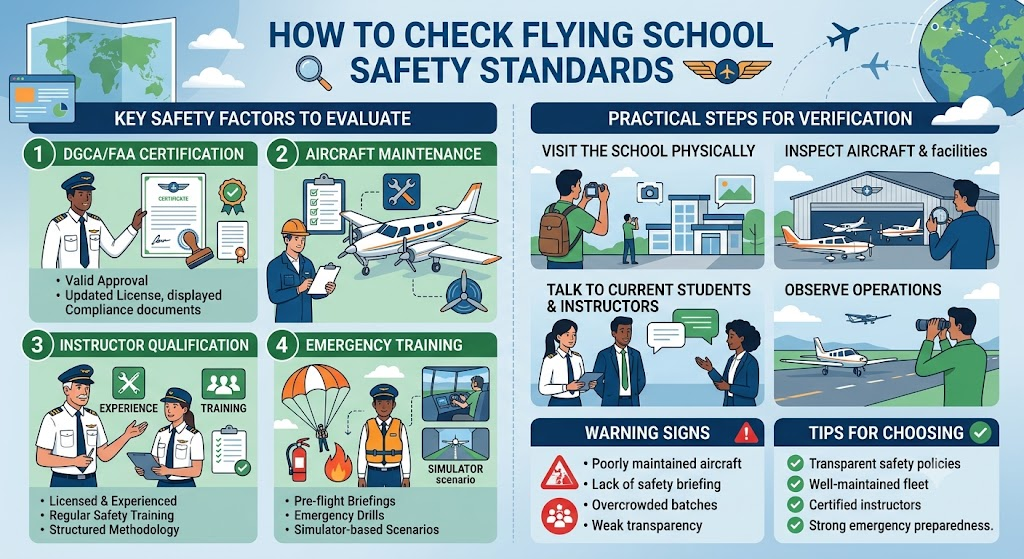
Key Safety Standards to Check in Flying Schools
Before joining any flight training institute, carefully evaluate the following safety factors.
1. DGCA or FAA Certification and Compliance
The first and most critical safety check is regulatory approval.
A legitimate flying school should have:
- Valid DGCA approval (India) or FAA certification (USA)
- Updated operating license
- Clearly displayed compliance documents
If certification details are unclear or hidden, it is a major warning sign.
2. Aircraft Maintenance and Airworthiness
Aircraft condition is a direct reflection of safety standards.
Check for:
- Regular maintenance schedules
- Certified maintenance engineers
- Valid airworthiness certificates
- Clean and properly maintained aircraft fleet
Poor maintenance increases risk and reduces training quality significantly.
3. Instructor Qualification and Safety Awareness
Instructors play a vital role in shaping your flying discipline.
A safe school ensures:
- Licensed and experienced flight instructors
- Strong aviation background
- Regular safety training for staff
- Structured teaching methodology
Inexperienced instructors can lead to unsafe flying habits.
4. Emergency Training and Safety Drills
Every pilot must be prepared for unexpected situations.
Look for:
- Emergency landing practice
- Fire and evacuation training
- Simulator-based emergency scenarios
- Pre-flight safety briefings
If emergency training is missing, the safety system is weak.
5. Airport and Operational Safety Conditions
The training environment must be professionally managed.
Evaluate:
- Runway condition and maintenance
- Air traffic control coordination
- Ground handling procedures
- Emergency response readiness
Poor airport operations can increase training risks.
6. Simulator Standards and Usage
Simulators are essential for safe and controlled learning.
A good school provides:
- Modern, certified flight simulators
- Realistic emergency training scenarios
- Regular simulator sessions in curriculum
- Integration with actual flight training
Outdated simulators reduce learning effectiveness.
7. Student-to-Aircraft Ratio
This factor directly impacts safety and flying experience.
Warning signs:
- Too many students per aircraft
- Limited flying time per student
- Long delays in scheduling flights
Balanced ratios ensure better supervision and safer training.
8. Flight Monitoring and Safety Systems
Professional flying schools use structured monitoring systems.
Look for:
- Flight data tracking systems
- Instructor feedback logs
- Safety reporting procedures
- Regular operational audits
Lack of monitoring systems is a serious concern.
How to Verify Flying School Safety Standards
Before making a decision, take these practical steps:
- Visit the school physically
- Inspect aircraft and maintenance facilities
- Ask to see official certification documents
- Talk to current students and instructors
- Observe flight operations and training behavior
- Review safety briefing procedures
Direct observation is the most reliable way to judge safety standards.
Warning Signs of Poor Safety Standards
Be cautious if you notice:
- Poorly maintained or aging aircraft
- No structured safety briefing before flights
- Lack of emergency preparedness training
- Overcrowded batches
- Weak regulatory transparency
- Informal or unorganized training environment
These are strong indicators of unsafe operations.
Tips to Choose a Safe Flying School
A good flying school will always demonstrate strong safety culture.
Look for:
- Transparent safety policies
- Well-maintained aircraft fleet
- Experienced and certified instructors
- Structured training and evaluation system
- Strong emergency preparedness training
- Professional and disciplined environment
Always ask:
- How often are aircraft inspected?
- What safety drills are included?
- How is flight safety monitored?
Common Mistakes Students Make
Many aspiring pilots ignore critical safety checks such as:
- Choosing schools only based on low fees
- Not verifying certification status
- Trusting marketing claims blindly
- Skipping physical visits
- Ignoring student feedback
- Overlooking aircraft condition
Avoiding these mistakes can significantly improve your safety and training quality.
Frequently Asked Questions (FAQs)
1. What is the most important safety factor in a flying school?
The most important factor is official certification like DGCA or FAA approval, which ensures regulatory compliance and safety standards.
2. Why is aircraft maintenance important in pilot training?
Well-maintained aircraft reduce risk during flights and ensure safe, reliable training conditions for students.
3. How do I verify if a flying school is safe?
You can check certification documents, visit the campus, inspect aircraft, and talk to current students and instructors.
4. Are simulators important for flight safety training?
Yes, simulators allow students to practice emergency situations safely without real-world risk.
5. What role do instructors play in flight safety?
Instructors guide students in safe flying practices, emergency handling, and proper aviation discipline.
6. What is a safe student-to-aircraft ratio?
A lower ratio is better because it ensures more flying time and better supervision per student.
7. What are signs of an unsafe flying school?
Poor aircraft condition, lack of safety drills, overcrowding, and missing certifications are major warning signs.
8. Why should I visit a flying school before joining?
A visit helps you evaluate real aircraft condition, training environment, and safety practices firsthand.
9. Can low fees indicate poor safety standards?
Sometimes yes, extremely low fees may indicate compromises in maintenance or training quality.
10. Is safety training mandatory in flight schools?
Yes, safety training is a core part of pilot education and must be included in every legitimate program.
Conclusion
Evaluating flying school safety standards is one of the most important steps in building a successful aviation career. A safe training environment ensures better learning, stronger discipline, and reduced risk during flight training.
Always verify certification, inspect aircraft conditions, understand instructor qualifications, and observe real operational practices before enrolling. A good flying school does not just teach you how to fly—it teaches you how to fly safely and responsibly.
Choosing the right institute today will directly shape your confidence, skills, and career success as a pilot in the future.

