
Introduction
Choosing among the best heart hospitals in the world is a major decision, especially when a patient requires complex surgery, advanced cardiology treatment, or long-term heart care. Global rankings can provide a useful starting point, but the highest-ranked hospital is not automatically the best choice for every patient. The right hospital should have relevant experience with the patient’s condition, qualified specialists, reliable clinical outcomes, suitable technology, transparent costs, and a clear recovery plan.
What Defines a Leading Heart Hospital?
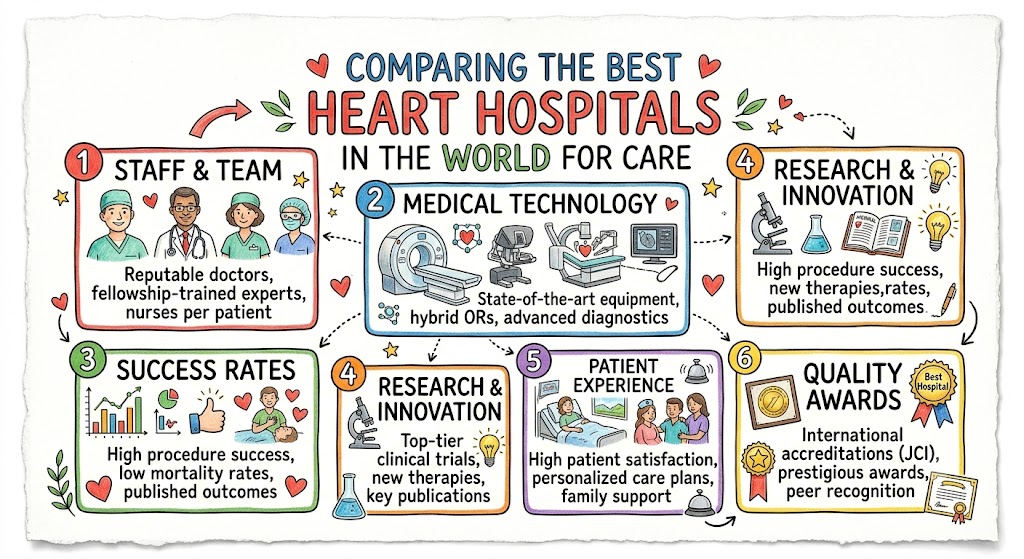
The best cardiac hospitals are not identified by reputation alone. Patients should examine several practical and clinical factors before choosing a treatment centre.
Specialized cardiac departments
A comprehensive heart hospital should provide access to cardiologists, interventional cardiologists, cardiac surgeons, electrophysiologists, imaging specialists, cardiac anaesthetists, intensive-care physicians, rehabilitation professionals, and trained cardiac nurses.
This multidisciplinary approach becomes particularly important for patients with complex valve disease, coronary artery disease, congenital heart defects, heart failure, aortic disease, or multiple medical conditions.
Experience with the required procedure
A hospital may be internationally recognised for cardiology but may not be equally experienced in every type of heart surgery. Patients should therefore ask how frequently the hospital and proposed surgeon perform the exact treatment being recommended.
Important procedures may include:
- Coronary artery bypass grafting
- Angioplasty and stent placement
- Heart valve repair or replacement
- Transcatheter aortic valve replacement
- Pacemaker or defibrillator implantation
- Arrhythmia ablation
- Congenital heart surgery
- Aortic aneurysm surgery
- Heart transplantation
- Mechanical circulatory support
Published and risk-adjusted outcomes
Patients should request procedure-specific information rather than relying only on a hospital’s overall success rate. Useful measures include mortality, infection, complications, readmission, reoperation, length of stay, and long-term recovery.
Risk-adjusted results are especially valuable because they consider differences in patient age, disease severity, and other medical conditions. In the United States, public quality measures include risk-standardised mortality and readmission information for conditions and procedures such as heart attack, heart failure, and bypass surgery.
Accreditation and safety systems
Accreditation can indicate that a hospital follows defined standards for patient safety, infection prevention, medication management, staff qualifications, and clinical processes. However, accreditation should be evaluated alongside specialist experience and actual outcomes.
Recovery and follow-up services
Successful heart treatment extends beyond the operation or procedure. A strong cardiac programme should provide medication planning, dietary guidance, physiotherapy, wound care, rehabilitation, and communication with the patient’s local cardiologist.
Cardiac rehabilitation is a medically supervised programme that may include exercise, heart-health education, and counselling to support recovery following certain heart conditions or surgeries.
Current Comparison of Leading Heart Hospitals Worldwide
The following hospitals are examples of internationally recognised cardiac centres. The table is not a personalised recommendation or permanent ranking.
| Heart hospital | Location | Areas patients may evaluate |
|---|---|---|
| Cleveland Clinic | Cleveland, United States | Comprehensive cardiology, complex heart disease, minimally invasive treatment, vascular and thoracic care |
| Mayo Clinic | Rochester, United States | Complex cardiovascular surgery, valve disease, multidisciplinary evaluation and rare conditions |
| Deutsches Herzzentrum der Charité | Berlin, Germany | Cardiac surgery, congenital heart disease, paediatric cardiac care and international patient support |
| Mount Sinai Fuster Heart Hospital | New York, United States | Valve repair, bypass surgery, aortic disease, transplantation and minimally invasive procedures |
| Royal Brompton and Harefield Hospitals | London, United Kingdom | Specialist heart and lung treatment, complex surgery, transplantation and mechanical heart support |
| National Heart Centre Singapore | Singapore | Cardiology, coronary intervention, inherited heart conditions and advanced cardiac programmes |
| AIIMS New Delhi | New Delhi, India | Cardiology, cardiovascular surgery, cardiac intensive care and high-volume public-sector treatment |
The 2026 Newsweek and Statista specialised-hospital assessment placed Cleveland Clinic first for cardiology and Mayo Clinic Rochester first for cardiac surgery. Other highly recognised institutions included Massachusetts General Hospital, Johns Hopkins Hospital, Deutsches Herzzentrum der Charité, Mount Sinai Hospital, Royal Brompton Hospital, National Heart Centre Singapore, and several major centres in Europe, Asia, and the Americas.
Understanding Global Heart Hospital Rankings
Rankings can help patients discover respected hospitals, but they should not be treated as a final medical decision.
The 2026 Newsweek and Statista specialised rankings evaluated more than 8,500 hospitals and recognised departments across 12 medical specialties. The methodology considered international professional recommendations, accreditation information, certifications, and the use of patient-reported outcome measures.
For the cardiac surgery category, peer recommendations accounted for most of the scoring, while accreditation and patient-reported outcome implementation had smaller weightings. The ranking publisher also states that its results should not be used as the only source for choosing a hospital.
A ranking may not fully reflect:
- The experience of an individual surgeon
- Outcomes for a specific procedure
- Recent staffing or programme changes
- Waiting periods
- Insurance acceptance
- Total treatment expenses
- Language assistance
- Post-discharge support
- Suitability for a particular patient
Patients should use rankings to prepare a shortlist and then conduct a condition-specific comparison.
Overview of Selected Global Cardiac Centres
Cleveland Clinic
Cleveland Clinic’s Heart, Vascular and Thoracic Institute combines specialists from multiple cardiovascular disciplines. Its international patient service assists patients with appointments, medical-record coordination, financial arrangements, and care planning before and after travel.
Patients may consider evaluating this hospital for complex cardiovascular disease, advanced surgical opinions, valve conditions, vascular disease, and multidisciplinary care.
Mayo Clinic Rochester
Mayo Clinic Rochester is internationally recognised for cardiology and cardiovascular surgery. Its cardiovascular surgery programme treats complex and serious heart conditions across different age groups and works with specialists from related medical departments.
Patients with complicated diagnoses, previous cardiac operations, valve problems, or multiple health conditions may find its coordinated evaluation model relevant.
Deutsches Herzzentrum der Charité
The German Heart Center at Charité in Berlin provides specialised cardiovascular care, including services for congenital heart disease and paediatric cardiac surgery. Its international patient team can assist self-paying patients with cost information, visa documentation, accommodation, and interpreter arrangements.
It may be considered by families seeking treatment for congenital heart defects, complex surgery, or European cardiac expertise.
Mount Sinai Fuster Heart Hospital
Mount Sinai offers surgical services for coronary artery disease, mitral valve problems, aortic aneurysms, heart transplantation, repeat cardiac surgery, and selected minimally invasive procedures. Its clinicians assess whether open surgery or a less invasive approach is appropriate for each patient.
This centre may be relevant for patients comparing advanced valve repair, bypass surgery, aortic treatment, and complex surgical options.
Royal Brompton and Harefield Hospitals
Royal Brompton and Harefield are specialist heart and lung hospitals within Guy’s and St Thomas’ NHS Foundation Trust. Harefield Hospital has extensive experience in heart and lung transplantation and mechanical circulatory support, including left ventricular assist devices.
Patients may evaluate these hospitals for advanced heart failure, transplantation, complex cardiothoracic surgery, and specialist heart-lung care.
National Heart Centre Singapore
National Heart Centre Singapore provides specialised cardiovascular services, including care for inherited cardiac conditions, coronary intervention, cardiothoracic surgery, heart transplantation, and mechanical assist-device programmes.
Its location may make it a practical option for patients from the Asia-Pacific region seeking advanced heart care closer to home.
AIIMS New Delhi
The Cardio-Thoracic Sciences Centre at AIIMS New Delhi has dedicated beds and departments for cardiology, cardiovascular surgery, cardiac anaesthesia, cardiac pathology, intensive care, and associated services. AIIMS also appeared among leading Asia-Pacific institutions for cardiology and cardiac surgery in 2026 specialty rankings.
As a major public institution, it may offer highly specialised expertise, although patients should verify referral requirements, eligibility, and expected waiting periods before planning treatment.
Cardiology Hospitals Versus Heart Surgery Hospitals
The terms best cardiology hospitals and best heart surgery hospitals are sometimes used interchangeably, but they do not mean exactly the same thing.
Cardiology generally focuses on diagnosis and non-surgical treatment. Services may include:
- Electrocardiograms
- Echocardiography
- Cardiac CT and MRI
- Stress testing
- Angiography
- Angioplasty
- Stent placement
- Arrhythmia treatment
- Heart-failure management
Cardiac surgery involves operations performed on the heart or major blood vessels. These may include:
- Bypass surgery
- Valve repair
- Valve replacement
- Aortic surgery
- Congenital heart surgery
- Heart transplantation
A patient needing angioplasty may benefit most from an experienced interventional cardiology programme. Someone requiring bypass or complex valve surgery should examine the cardiac surgery department and the proposed surgeon’s relevant experience.
Comparing Hospitals for Bypass Surgery
Patients looking for the best hospitals for bypass surgery should ask for information specific to coronary artery bypass grafting.
Important questions include:
- How many bypass operations does the team perform annually?
- Does the surgeon regularly treat patients with similar risk factors?
- Are arterial grafts considered when appropriate?
- What are the risk-adjusted mortality and complication rates?
- How often do patients require another operation?
- Is an experienced cardiac intensive-care team available?
- What infection-prevention measures are followed?
- Is cardiac rehabilitation included in the recovery plan?
Patients should also ask why bypass surgery has been recommended instead of medication, angioplasty, or another treatment.
Comparing Hospitals for Angioplasty
When researching the best hospitals for angioplasty, patients should examine the interventional cardiology department rather than the hospital’s general reputation.
Key considerations include:
- Availability of a catheterisation laboratory
- Emergency angioplasty capability
- Experience with complex coronary blockages
- Types of stents used
- Intravascular imaging availability
- Blood-thinning medication planning
- Intensive-care and surgical backup
- Treatment of complications
- Follow-up after discharge
Angioplasty is not automatically better or less risky than bypass surgery. The appropriate treatment depends on the location and number of blockages, heart function, symptoms, diabetes, age, previous treatment, and overall medical condition.
How India Fits into a Global Heart-Care Comparison
The best cardiac hospitals in India may be considered by domestic and international patients seeking specialist care, geographical convenience, shorter travel from nearby countries, or potentially lower treatment expenses.
India has government teaching institutions, private multispecialty hospitals, and dedicated cardiac centres. However, quality, waiting time, cost, international support, and clinical experience can vary considerably between hospitals.
Patients considering medical tourism for heart surgery in India should verify:
- Hospital accreditation
- Surgeon qualifications
- Procedure-specific experience
- Written treatment plan
- Itemised cost estimate
- Implant or stent charges
- Blood and medication expenses
- Intensive-care charges
- Expected hospital stay
- Complication-related costs
- Accommodation and travel support
- Follow-up after returning home
The heart surgery cost in India can differ according to the procedure, hospital category, city, room type, implant selection, length of intensive care, patient complexity, and complications. A low initial package should not be accepted without understanding what is excluded.
Practical Hospital Comparison Checklist
Before selecting a heart hospital, patients and caregivers should compare the following information:
| Comparison area | Information to request |
|---|---|
| Diagnosis | Written diagnosis, test results and severity of disease |
| Treatment | Recommended procedure and possible alternatives |
| Specialist | Qualifications and experience with similar cases |
| Outcomes | Risk-adjusted mortality, complications and readmissions |
| Hospital resources | Cardiac ICU, imaging, catheterisation lab and emergency backup |
| Cost | Itemised estimate and possible additional expenses |
| Recovery | Expected stay, activity restrictions and rehabilitation |
| International support | Visa, interpreter, accommodation and record coordination |
| Follow-up | Remote consultation and communication with the local doctor |
| Emergency plan | Instructions for complications after discharge or travel |
Questions to Ask Before Making a Decision
A patient should request clear answers to these questions:
- Why is this treatment necessary?
- Are there non-surgical alternatives?
- How urgently must treatment be performed?
- How many similar patients has the team treated?
- What are the likely benefits and risks?
- What complications are most common?
- What happens when a complication occurs?
- Who will perform the main parts of the procedure?
- How long will recovery take?
- Is rehabilitation available near the patient’s home?
- What is included in the cost estimate?
- Can the hospital provide a remote second opinion first?
The American Heart Association advises patients to consider another medical opinion when they have concerns or unanswered questions about a recommended treatment.
Common Mistakes Patients Should Avoid
Choosing only by ranking
Rankings provide general information but cannot determine whether a hospital is suitable for an individual patient.
Selecting only by the lowest cost
An inexpensive package may exclude implants, medicines, intensive care, additional tests, blood products, rehabilitation, or management of complications.
Ignoring the individual surgeon
The hospital’s reputation matters, but the proposed surgeon’s experience with the exact procedure is equally important.
Travelling without a recovery plan
Patients should arrange local follow-up, medication access, wound checks, rehabilitation, and emergency support before leaving the treating city or country.
Delaying emergency care to reach a famous hospital
Global hospital comparisons are appropriate for planned treatment, not medical emergencies. Chest pressure, breathing difficulty, pain spreading to the arm, back, neck or jaw, sweating, nausea, or sudden weakness may require immediate emergency assistance. Fast action is important when a heart attack is suspected.
Frequently Asked Questions
1. Which is the best heart hospital in the world?
There is no single hospital that is best for every patient. The right choice depends on the heart condition, required procedure, specialist experience, outcomes, urgency, budget, and location.
2. Are international rankings reliable?
They can help identify recognised institutions, but their methods and limitations should be reviewed. Rankings should be combined with clinical outcomes, specialist experience, and personalised medical advice.
3. How should I compare cardiac surgeons?
Compare their qualifications, years of experience, annual procedure volume, experience with similar cases, complication rates, communication, and role during the operation.
4. Is a high-volume cardiac centre always better?
Higher volume can indicate greater experience, particularly with complex procedures, but volume alone does not guarantee better care. Outcomes, safety systems, staffing, and patient selection also matter.
5. Should I get a second opinion before heart surgery?
A second opinion can be valuable for planned complex surgery, uncertain diagnoses, or cases with several possible treatments. Emergency treatment should not be delayed unnecessarily.
6. What records are needed for an international consultation?
Hospitals commonly request medical history, current medicines, blood reports, ECGs, echocardiograms, angiography images, CT or MRI scans, discharge summaries, and the referring doctor’s notes.
7. How do I compare the best hospitals for bypass surgery?
Examine bypass-specific surgical volume, risk-adjusted outcomes, intensive-care resources, grafting approach, infection rates, rehabilitation, and surgeon experience.
8. How do I compare the best hospitals for angioplasty?
Review the interventional cardiology team, catheterisation facilities, complex angioplasty experience, emergency support, stent options, imaging technology, and follow-up planning.
9. Is travelling abroad for heart surgery safe?
It may be appropriate for selected stable patients, but travel should be approved by the treating cardiologist. Patients must consider urgency, fitness to fly, blood-clot risk, infection, follow-up, and access to emergency care.
10. What should be included in a cardiac treatment estimate?
The estimate should clarify consultation, investigations, surgeon and anaesthesia fees, operating room, implants, stents, intensive care, room charges, medicines, blood products, rehabilitation, and possible complication-related expenses.
Conclusion
Comparing the best heart hospitals in the world requires more than reviewing a list of famous institutions. Patients should focus on the hospital’s experience with their exact condition, the proposed specialist, risk-adjusted outcomes, safety standards, treatment options, costs, recovery services, and long-term follow-up. Global rankings can support the research process, but they should never replace an individual medical assessment. A carefully selected hospital is one that combines suitable clinical expertise with transparent communication, realistic treatment planning, and dependable support throughout recovery.

