
Introduction
Learning to fly is one of the most exciting goals for anyone who dreams of becoming a pilot. It is a journey that combines discipline, technical knowledge, confidence, fitness, and a strong passion for aviation. But before joining a flight school or starting pilot training, every aspiring pilot should understand the basic eligibility requirements.
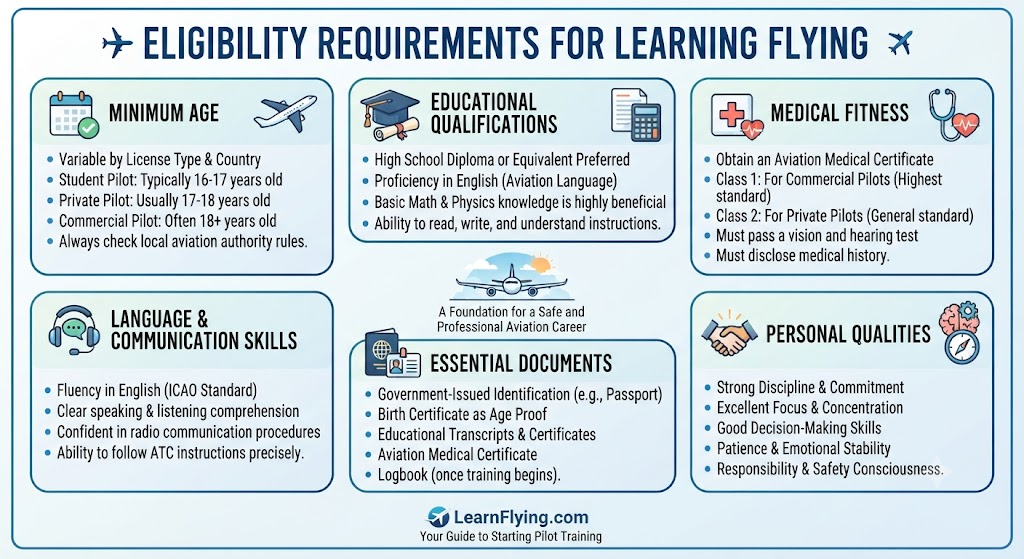
Eligibility requirements help students know whether they are ready to begin flight training. These requirements may include age, education, medical fitness, communication skills, documents, and personal qualities. While exact rules can vary by country, aviation authority, and license type, the foundation remains the same: a pilot must be physically fit, mentally alert, well-prepared, and responsible enough to fly safely.
This guide explains the eligibility requirements for learning flying in simple language so beginners can plan their aviation journey with confidence.
Why Eligibility Requirements Matter
Flying an aircraft is a serious responsibility. A pilot must protect the safety of passengers, crew, aircraft, and people on the ground. Eligibility requirements ensure that students entering aviation training have the right foundation to learn safely and professionally.
These requirements matter because they support:
- Aviation safety
- Proper training standards
- Student readiness
- Regulatory compliance
- Career planning
- Long-term pilot development
Understanding eligibility early also helps students avoid delays during admission, medical checks, and license processing.
Minimum Age Requirements
Age requirements depend on the type of pilot license and the aviation authority of the country where training is done. In general, students can begin aviation learning at a young age, but official pilot licensing usually requires a minimum age.
Common age-related points include:
- Student pilots may begin basic training earlier, depending on local rules.
- Private pilot applicants usually need to meet a minimum age set by the authority.
- Commercial pilot aspirants generally need to be older because professional flying requires higher responsibility.
- Some flight schools may have their own admission age guidelines.
Students should always confirm the exact age requirement from the flight school and official aviation authority before applying.
Educational Qualifications
Education is an important part of pilot training. A pilot must understand navigation, weather, aircraft systems, regulations, maps, calculations, and communication procedures.
Most aspiring pilots should focus on:
- High school education
- Mathematics
- Physics
- English language
- Basic computer skills
- Logical thinking
- Continuous learning
A strong background in science and mathematics is helpful, especially for students planning to become commercial pilots. However, requirements may vary depending on the country and license type.
Medical Fitness Requirements
Medical fitness is one of the most important eligibility requirements for learning flying. Pilots must be healthy enough to handle flight training and cockpit responsibilities.
Aviation medical checks may include:
- Vision test
- Hearing test
- Blood pressure check
- General physical examination
- Medical history review
- Mental health assessment
- Additional tests if required
Students may need a medical certificate before starting or continuing flight training. The type of medical certificate depends on the license category.
Common Medical Certificate Types
| Medical Certificate | Usually Required For | Purpose |
|---|---|---|
| Class 1 Medical | Commercial pilot aspirants | Professional flying fitness |
| Class 2 Medical | Private pilot training | General flying fitness |
| Class 3 Medical | Specific aviation roles where applicable | Depends on authority rules |
Exact medical rules vary, so students should check with the official aviation authority or approved aviation medical examiner.
Vision and Hearing Requirements
Good vision and hearing are essential for pilots. A pilot must read instruments, identify runway markings, watch traffic, understand radio calls, and respond to cockpit alerts.
Many students worry that wearing glasses will stop them from becoming pilots. In many cases, wearing glasses or contact lenses is allowed if corrected vision meets the required standard.
Hearing is also important because pilots must clearly understand instructions from air traffic control, instructors, and cockpit communication systems.
Language and Communication Skills
English is widely used in aviation communication, especially for radio calls, manuals, instructions, and international flight operations. Even for local training, strong communication skills are very useful.
Aspiring pilots should develop:
- Clear speaking ability
- Good listening skills
- Reading comprehension
- Aviation vocabulary
- Confidence in radio communication
- Ability to follow instructions accurately
Communication is not only about speaking English. It is about being clear, calm, and precise during flight operations.
Essential Documents Required
Flight schools and aviation authorities usually require students to submit documents before admission or license processing.
Common documents may include:
- Government-issued identification
- Educational certificates
- Birth certificate or age proof
- Medical certificate
- Passport-size photographs
- Passport if required
- Address proof
- Application forms
- Previous training records if applicable
Students should keep original documents and copies organized before applying to a flight school.
Personal Qualities Every Aspiring Pilot Should Develop
Eligibility is not only about documents and certificates. A good pilot also needs strong personal qualities.
Important qualities include:
- Discipline
- Responsibility
- Patience
- Confidence
- Focus
- Situational awareness
- Decision-making ability
- Problem-solving skills
- Teamwork
- Leadership
- Time management
- Adaptability
Flight training can be challenging. Students who are disciplined and consistent usually handle training more effectively.
Financial Planning Before Flight Training
Flight training can be a major investment. Before joining a school, students should understand the complete cost structure.
Important expenses may include:
- Admission fees
- Ground school fees
- Flying hour charges
- Simulator training
- Study materials
- Medical examination fees
- Examination fees
- Accommodation and travel
- License processing fees
- Additional training if needed
Good financial planning helps students avoid interruptions during training. Students may also explore scholarships, education loans, installment plans, or financial support options where available.
Common Mistakes Students Should Avoid
Many aspiring pilots face delays because they do not prepare properly before joining training.
Common mistakes include:
- Ignoring medical requirements
- Choosing a flight school without research
- Not checking license eligibility
- Delaying document collection
- Underestimating ground school studies
- Poor English communication
- Weak financial planning
- Not asking questions before admission
- Expecting flying to be easy without effort
Avoiding these mistakes can make the aviation journey smoother.
Step-by-Step Roadmap to Start Learning Flying
Here is a simple roadmap for beginners:
- Research different aviation careers.
- Understand pilot license types.
- Check minimum eligibility requirements.
- Confirm age and education criteria.
- Complete the required medical examination.
- Prepare all documents.
- Compare flight schools carefully.
- Understand training costs.
- Join ground school.
- Begin flight training with discipline.
- Build flying hours.
- Clear required exams and skill tests.
- Apply for the relevant pilot license.
- Continue learning and improving.
This roadmap helps students move step by step instead of feeling confused at the beginning.
How LearnFlying.com Can Help You Start Your Aviation Journey
LearnFlying.com can support aspiring pilots with simple, useful, and beginner-friendly aviation guidance. Students can use the platform to learn about pilot training, eligibility requirements, flight school preparation, aviation career planning, and important skills for future pilots.
The goal is to help students make informed decisions before investing time and money in flight training.
Frequently Asked Questions
1. What is the minimum age to learn flying?
The minimum age depends on the country, aviation authority, and license type. Some students may begin basic aviation learning earlier, but official pilot licensing usually has a minimum age requirement. Always confirm the latest rules from the flight school or aviation authority.
2. Do I need a science background to become a pilot?
A science background, especially physics and mathematics, is helpful for pilot training. Some commercial pilot pathways may require specific academic subjects. However, requirements can vary, so students should check the rules for their preferred license and country.
3. Is English mandatory for pilot training?
English is very important in aviation because it is widely used for communication, manuals, exams, and radio calls. Strong English skills can help students learn faster and communicate more safely during training.
4. Can I wear glasses and become a pilot?
Yes, in many cases, students who wear glasses or contact lenses can become pilots if their corrected vision meets the required aviation medical standard. The final decision depends on the medical examination and authority rules.
5. Is a medical examination compulsory?
Yes, a medical examination is usually required before or during flight training. It confirms whether the candidate is physically and mentally fit for flying duties.
6. What documents are required for flight school admission?
Common documents include ID proof, educational certificates, age proof, medical certificate, photographs, application forms, and passport if required. The exact list may vary by flight school and country.
7. How long does pilot training take?
The duration depends on the license type, training schedule, weather, aircraft availability, student performance, and regulatory requirements. Private pilot training may take less time than commercial pilot training.
8. Can I become a pilot after graduation?
Yes, many students begin pilot training after graduation. A college degree may also be helpful for certain aviation careers, although exact requirements depend on the country, airline, and license type.
9. Is flying difficult to learn?
Flying requires focus, discipline, practice, and patience. It may feel challenging at first, but with good instructors, consistent study, and regular practice, students can build confidence step by step.
10. What should I do before joining a flight school?
Before joining, check eligibility requirements, complete the medical examination, compare flight schools, understand total costs, prepare documents, and speak with instructors or aviation counselors if possible.
Conclusion
Understanding the eligibility requirements for learning flying is the first step toward a successful aviation journey. Age, education, medical fitness, communication skills, documents, and personal qualities all play an important role in preparing a student for flight training.
Aviation rewards students who are disciplined, responsible, curious, and committed to continuous improvement. If you dream of becoming a pilot, start by preparing early, staying healthy, improving your communication skills, and learning as much as possible about the training process. LearnFlying.com can help you explore aviation guidance, pilot training resources, and career-focused information to begin your journey with confidence.

