
INTRODUCTION
The moment you decide to build a new life across international borders, a single number suddenly dictates your entire future. That number emerges from a PR points calculator, and for countless aspiring permanent residents, it becomes either the key that unlocks opportunity or the barrier that demands renewed strategy. You have likely spent hours searching for clarity, only to encounter fragmented information that leaves you more confused than confident.
This guide exists to dismantle that confusion permanently. We will explore every component of the PR points system, from age and education to language proficiency and work experience. You will learn precisely how each factor contributes to your total score, where hidden opportunities for improvement reside, and which mistakes routinely derail otherwise strong applications. Consider this your comprehensive roadmap to mastering the PR Points Calculator with surgical precision. Let us transform uncertainty into actionable strategy.
What Is a PR Points System?
A PR points system represents a standardized, objective framework that immigration authorities employ to rank prospective permanent residents based on their likelihood of successful economic and social integration. Rather than relying on subjective judgments, this mathematical model assigns numerical values to specific human capital attributes, then aggregates those values into a single competitive score. The fundamental premise remains simple: candidates with higher scores possess characteristics that correlate strongly with positive labor market outcomes, faster language acquisition, and smoother cultural adaptation.
Consequently, immigration programs worldwide have adopted variations of this methodology to manage application volumes efficiently while selecting candidates who promise the greatest long-term contribution to their new home. Understanding this system transforms you from a passive applicant into an active strategist who knows exactly which levers to pull for maximum impact.
The Core Purpose of PR Points System
- Objective Ranking Mechanism: The system eliminates subjective bias by converting personal attributes into quantifiable metrics. Every candidate receives evaluation against identical criteria, ensuring fair comparison across diverse backgrounds. This transparency allows you to predict your standing before formally applying.
- Economic Alignment Tool: Immigration authorities design points systems to attract candidates whose skills match current labor market shortages. Consequently, high-demand occupations receive additional points, directly connecting immigration outcomes with national economic priorities.
How the PR Points System Works
- Cumulative Score Calculation: Each eligibility category contributes a specific maximum point value. Your age, education, work experience, and language abilities each generate individual scores that sum to your total. Crossing the published threshold does not guarantee selection but makes you competitive.
- Competitive Ranking Ladder: Authorities sort all candidates by their total points, then invite the highest-scoring individuals during each selection round. This creates a dynamic cutoff score that fluctuates based on the applicant pool’s overall strength and available invitation targets.
Eligibility Standards vs. Selection Criteria
- Eligibility Standards: These represent minimum requirements that every candidate must satisfy to enter the points system at all. Failing any eligibility standard disqualifies you immediately, regardless of your potential point total. Examples include minimum language scores and adequate settlement funds.
- Selection Criteria: These determine your competitive ranking among eligible candidates. Meeting eligibility standards alone rarely secures an invitation. Instead, you must accumulate sufficient selection points to outrank other qualified applicants vying for the same limited invitations.
PR Points System Components: The Building Blocks
The architecture of any robust PR points system rests upon several foundational components that collectively paint a complete picture of your candidacy. Immigration economists have spent decades refining these variables to maximize predictive accuracy regarding long-term economic success. Age dominates this calculation because research consistently demonstrates that younger immigrants enjoy longer working careers, higher lifetime earnings, and faster wage growth trajectories. Education follows closely, serving as a proxy for cognitive ability, specialized knowledge, and future adaptability in changing labor markets.
Language proficiency carries tremendous weight because communication competence directly influences workplace integration, social network formation, and access to community resources. Professional experience verifies that your education translates into productive capability. Each component interacts with the others, meaning strengths in one area can partially compensate for weaknesses elsewhere, though certain factors carry non-negotiable minimum thresholds.
Age Factors in PR Points System
- Peak Scoring Window: Candidates between approximately twenty-five and thirty-five years of age receive the maximum age-related points. This window captures individuals who have completed their education, acquired initial work experience, and still possess decades of remaining career activity.
- Declining Points Curve: Once you exceed the peak age threshold, points begin decreasing incrementally with each passing year. The reduction accelerates after age forty, reflecting shorter remaining work horizons and higher projected healthcare utilization rates.
Educational Evaluation for PR Points System
- Credential Recognition Pathways: Foreign degrees require verification through designated assessment bodies that confirm their equivalence to local educational standards. A bachelor’s degree from one country may translate differently than the same credential from another jurisdiction.
- Advanced Degree Advantages: Master’s degrees and doctorates generate substantially higher points than undergraduate qualifications alone. Furthermore, completing multiple degrees within the same field or across complementary disciplines can produce additional bonus points.
Language Proficiency Standards
- Official Language Testing: Designated examination providers evaluate reading, writing, speaking, and listening skills separately. Each skill domain contributes independently to your total language score, meaning weakness in one area reduces points even if other areas excel.
- Benchmark Level Implications: Language test results align with standardized proficiency benchmarks. Achieving the highest benchmark unlocks maximum language points, while intermediate levels yield partial credit. Second official language ability provides supplementary points, though significantly fewer than primary language mastery.
Professional Experience Verification
- Skill Level Classification: Not all work experience carries equal value. Occupations classified at higher skill levels generate more points per year of experience. Supervisory, managerial, and specialized technical roles typically receive premium weighting compared to routine or semi-skilled positions.
- Experience Duration Tiers: Points accumulate progressively across experience brackets. One year of qualifying experience yields baseline points, three years produces significantly more, and six or more years unlocks the maximum allocation. However, experience beyond ten years rarely generates additional credit.
International Pathways for PR Points System
Different countries have designed their permanent residence pathways around unique immigration philosophies, yet points-based systems have emerged as the dominant global standard for economic immigration. Canada pioneered this approach with its Express Entry system, which has since inspired adaptations in Australia, New Zealand, Singapore, and several European nations. Each jurisdiction customizes its point allocations to reflect local labor market needs, demographic priorities, and cultural integration expectations.
Consequently, a profile that generates a highly competitive score in one country might rank only moderately in another. Understanding these international variations becomes essential if you maintain flexibility regarding your ultimate destination. Some systems favor younger candidates with less experience, while others reward seasoned professionals willing to settle in regional areas. Additionally, certain pathways exist specifically for individuals whose scores fall below general selection thresholds but who possess qualifying job offers or provincial nominations.
Key Categories and Classes
- Federal Skilled Worker Program: This category targets professionals with substantial work experience in skilled occupations. Candidates must demonstrate transferable skills that function across multiple industries rather than hyper-specialized knowledge limited to a single employer.
- Canadian Experience Class: Designed for temporary residents who have already worked inside the country, this pathway recognizes that local work experience strongly predicts successful permanent settlement. Consequently, applicants receive reduced education requirements and expedited processing timelines.
Comparative Results Summary
- Express Entry System Ranking: Candidates receive Comprehensive Ranking System scores up to approximately 1,200 points, combining core human capital factors with additional bonuses for provincial nominations, qualifying job offers, and Canadian study experience.
- Australian SkillSelect System: Australia employs a threshold-based model where candidates must achieve a minimum points score before submitting an Expression of Interest. State nominations and regional sponsorship provide additional points that frequently determine selection success.
Advanced Regional Requirements for PR Points System
Regional immigration initiatives represent one of the most powerful yet underutilized strategies for improving your PR points calculation. National governments have recognized that economic opportunities and population needs vary dramatically across different geographic areas. Major metropolitan centers often attract far more immigrants than smaller communities can accommodate, creating labor shortages in regional areas despite strong national employment figures.
Consequently, provinces and territories have developed customized immigration streams that nominate candidates willing to settle outside major cities. Receiving a regional nomination typically adds hundreds of points to your base score, effectively guaranteeing selection in the next invitation round. These nominations carry conditions requiring you to live and work in the nominating region for a specified period. Furthermore, certain educational institutions located in regional areas offer graduates additional points simply for completing their studies outside major population centers.
Regional Study Bonuses
- Duration Requirements: Completing a program of two academic years or longer in a designated regional institution unlocks significant bonus points. Shorter programs receive reduced credit, while programs under one year generate no regional study benefit whatsoever.
- Living Obligations: Simply enrolling in a regional institution does not automatically qualify you. You must physically reside in the region throughout your studies, maintain local housing, and demonstrate genuine integration into the regional community.
Sponsorship Weights
- Employer-Driven Nominations: Qualifying job offers from employers located in regional areas carry greater point value than identical offers in major cities. This differential encourages skilled workers to accept positions outside traditional immigration hotspots.
- Community Sponsorships: Certain economic development organizations and regional chambers of commerce can directly nominate candidates whose skills align with local strategic priorities. These sponsorships bypass standard points thresholds entirely in some programs.
The Global Landscape of PR Points System
Comparing international points-based immigration systems reveals fascinating differences in national priorities and economic strategies. Canada’s Express Entry system emphasizes adaptability factors like Canadian work experience and family connections more heavily than purely human capital variables. Australia’s SkillSelect program places extraordinary weight on age, awarding maximum points to candidates under thirty-five while sharply reducing allocations for older professionals. New Zealand’s system integrates employment duration directly into the points calculation, rewarding long-term residency with progressively higher scores.
The United Kingdom’s points-based system focuses almost exclusively on job offers and salary levels, reflecting its post-Brexit shift toward selective high-value immigration. Singapore’s approach remains intentionally opaque, publishing general criteria but refusing to disclose exact point allocations to prevent gaming. Understanding these global variations matters because your optimal immigration strategy depends heavily on which destination aligns most favorably with your personal profile.
Major Global Frameworks
- Express Entry (Canada): The most transparent and predictable major system, publishing detailed point breakdowns and regular invitation round results. Candidates can accurately calculate their scores and monitor historical cutoff trends to predict their selection probability.
- SkillSelect (Australia): Employs a hybrid model combining points testing with occupation ceilings. Even high-scoring candidates cannot receive invitations if their occupation has already reached its annual quota earlier in the selection cycle.
Key International Differences
- Language Weighting Variations: Canadian systems assign approximately thirty percent of total points to language ability, while Australian systems allocate roughly fifteen percent. Consequently, multilingual candidates enjoy stronger advantages in Canadian pathways.
- Work Experience Requirements: New Zealand mandates twelve months of skilled employment before points become claimable, whereas Canadian and Australian systems accept overseas experience without requiring local job offers. This fundamental difference dramatically alters suitability for different candidate profiles.
Benefits of Utilizing a PR Points Calculator
Engaging with a PR points calculator before submitting any formal immigration application delivers strategic advantages that extend far beyond simple score awareness. Most candidates drastically overestimate their eligibility based on casual reading of program requirements, only to discover painful gaps during formal assessment. A calculator forces brutal honesty by requiring you to document exact dates, precise test scores, and verifiable credentials. This process often reveals that your current points total sits substantially lower than you assumed.
More importantly, the calculator identifies exactly where you fall short. Perhaps your language scores need improvement, or maybe your education requires an updated assessment. Without this clarity, you might waste months preparing an application destined for rejection. Conversely, discovering that you already exceed selection thresholds provides immediate confidence to proceed. Furthermore, calculators help you compare multiple immigration streams simultaneously, identifying which pathway maximizes your specific attributes.
Planning Accuracy
- Realistic Timeline Development: Knowing your precise points total allows you to forecast when you might receive an invitation based on historical cutoff trends. This eliminates guesswork from critical life decisions like job resignations and housing arrangements.
- Gap Identification: The calculator highlights specific deficiencies preventing you from reaching competitive score ranges. Rather than vaguely knowing you need improvement, you understand exactly which factor requires attention first.
Strategic Resource Allocation
- Cost-Efficient Targeting: Instead of pursuing expensive education upgrades you might not need, calculator results show whether language training or additional work experience would generate higher point gains per dollar spent.
- Alternative Pathway Discovery: When your core human capital points fall permanently below competitive thresholds, calculators reveal whether regional nominations or job sponsorships could bridge the gap more effectively than attempting unrealistic profile changes.
Educational Credential Assessment (ECA) Standards
An educational credential assessment represents the formal process through which immigration authorities verify that your foreign degrees, diplomas, or certificates meet local educational standards. Without this verification, your international education effectively counts for zero points, regardless of its prestige in your home country. Designated assessment organizations compare your credentials against the local qualification framework, producing official reports that translate your academic achievements into equivalent local terms.
For example, a three-year bachelor’s degree from one country might equal a local bachelor’s degree, while a four-year professional degree elsewhere could generate recognition as a master’s level qualification. These equivalencies directly determine your education points. Furthermore, certain assessments verify that your program duration meets minimum physical presence requirements, disqualifying accelerated online degrees or extensive credit transfer arrangements. Processing times vary substantially between assessment bodies, often spanning several months, making early initiation essential for efficient application timelines.
| Education Level Achieved | Typical ECA Equivalency | Estimated Points Value |
|---|---|---|
| Secondary school diploma | Local high school completion | 20-30 points |
| One-year post-secondary certificate | Certificate or diploma (short duration) | 30-40 points |
| Two-year undergraduate diploma | Associate degree or advanced diploma | 40-55 points |
| Three-year bachelor’s degree | Bachelor’s degree (standard) | 70-85 points |
| Four-year honors bachelor’s degree | Bachelor’s degree with specialization | 85-100 points |
| One-year postgraduate certificate | Graduate certificate above bachelor’s | 90-105 points |
| Master’s degree (thesis or coursework) | Master’s degree equivalent | 110-125 points |
| Professional doctoral degree (MD, JD, DDS) | Entry-to-practice professional degree | 120-135 points |
| Doctor of Philosophy (PhD) | Doctoral degree equivalent | 135-150 points |
| Multiple degrees (bachelor’s + master’s) | Two or more credentials (one advanced) | 115-135 points |
Verification Protocols
- Designated Body Selection: Immigration authorities recognize specific organizations for educational assessments. Choosing a non-designated provider renders your assessment invalid regardless of its accuracy, wasting both time and money.
- Credential Authentication: Assessment bodies directly contact your issuing institutions to confirm attendance, graduation dates, and degree classifications. Fabricated credentials inevitably trigger discovery during this verification process.
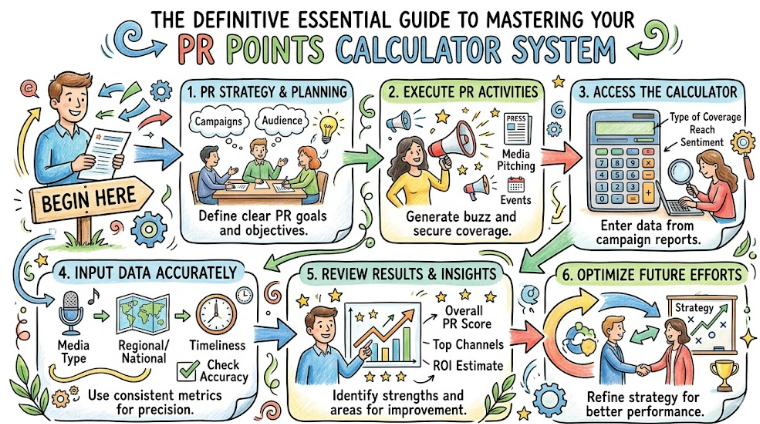
Step-by-Step Guide to Mastering PR Points Calculation
Systematic calculation of your PR points eliminates the anxiety and confusion that plague most candidates during the immigration planning phase. Rather than guessing your competitiveness or relying on anecdotal reports from successful applicants, a structured approach produces reliable, actionable data. Begin by gathering every document that supports your claims, because partial information leads to partial scores. Then work through each category methodically, claiming only what you can prove through official documentation.
Many candidates sabotage themselves by claiming points for attributes they cannot verify, then facing rejection during formal review. Conversely, overly conservative candidates frequently undervalue legitimate achievements, submitting applications below their true potential. The correct path lies somewhere between these extremes: claim everything you can document honestly, but never claim anything you cannot prove. This principle protects you from both rejection and unnecessary disadvantage.
Gathering Necessary Documents
- Comprehensive Inventory Creation: List every educational certificate, employment letter, language test result, and identity document before starting your calculation. Missing documents inevitably lead to forgotten claimable points that could have elevated your score.
- Expiration Date Tracking: Language test results and educational assessments carry validity periods ranging from two to five years. Using expired documents in your calculation produces inaccurate scores that collapse when you submit current evidence.
Practicing Core Assessments
- Language Test Familiarization: Official examination formats differ substantially from casual language ability. Practice tests reveal specific weaknesses in particular skill domains, allowing targeted improvement rather than general studying.
- Employment Letter Templates: Reviewing accepted employment letter formats prevents rejection of valid experience claims. Proper letters specify exact start and end dates, weekly hours, job duties matching occupation codes, and official company letterhead.
Checking Market Demand Lists
- Occupation Code Verification: Every skilled occupation corresponds to a standardized classification code. Claiming points for experience under an incorrect code invalidates your entire work history, regardless of its relevance or duration.
- Quota Monitoring Strategies: High-demand occupations frequently reach annual limits months before selection cycles end. Checking current availability before calculating prevents wasted effort on pathways already closed for the season.
Calculating the Final Result
- Online Calculator Validation: Complete at least three different calculator tools using identical inputs. Significant score variations between calculators indicate ambiguous program rules that require professional clarification before proceeding.
- Historical Cutoff Analysis: Review invitation round data from the previous twelve months to identify trends in minimum competitive scores. Your current points total must exceed the average cutoff, not merely meet the lowest recorded value.
Strategies to Optimize Your PR Points Score
Optimizing your PR points score requires moving beyond passive acceptance of your current profile into active strategic improvement. Many candidates assume their age, education, and experience are fixed variables they cannot change. While age does progress inevitably, education remains open to additional credentials, experience accumulates naturally over time, and language ability responds dramatically to focused study. The most successful applicants treat their points calculation as a dynamic target they can influence through deliberate action.
Perhaps retaking a language examination after three months of intensive tutoring could raise your score by fifty points. Alternatively, completing a one-year postgraduate certificate might transform a mediocre bachelor’s degree into a superior two-credential profile. Regional nomination strategies frequently add hundreds of points with minimal personal investment beyond relocation willingness. The key lies in identifying which improvement strategies generate the largest point gains per unit of time, money, and effort invested.
The Performance Enhancement Strategy
- Language Retake Optimization: Language test results remain valid for two years, allowing multiple attempts. Many candidates improve by one full proficiency band simply through focused test preparation, generating substantial point gains without further education.
- Spouse Inclusion Decisions: Including a spouse with strong language skills and education adds significant points, but including a spouse with weak attributes reduces your score compared to applying as a single candidate. Calculate both scenarios before deciding.
Bonus Qualification Advantages
- Sibling Sponsorship Benefits: Having a parent, sibling, or child already established as a permanent resident or citizen in your destination country typically adds bonus points. This recognition encourages family reunification alongside economic immigration objectives.
- Previous Study Credit: Completing any program of at least two academic years inside your destination country unlocks substantial adaptability points. Even incomplete programs or certificate courses generate partial credit toward this bonus category.
Regional Nomination Opportunities
- Strategic Relocation Planning: Research which regions actively recruit candidates with your specific occupation before moving. Different regions maintain distinct priority occupation lists, and targeting the right region doubles your nomination probability.
- Employment Commitment Documentation: Regional nominations require genuine employment connections beyond casual job searching. Securing a written job offer from a regional employer before applying for nomination dramatically strengthens your case compared to speculative relocation promises.
Common Mistakes in the PR Points Process
The gap between theoretical eligibility and actual selection claims countless applications each year through preventable errors rather than fundamental disqualification. Understanding these common mistakes protects you from joining their ranks. Overestimation stands as the most frequent offender, with candidates claiming points for work experience that falls below required skill levels or education that lacks proper verification. Immigration officers have reviewed thousands of applications and immediately recognize inflated claims.
Documentation expiration follows closely behind, as candidates complete language tests or educational assessments early in their planning, then submit applications months later using credentials that expired during processing. Format violations also generate surprising rejection volumes, with employment letters missing required elements or translation certifications failing to meet official standards. Even minor errors like inconsistent name spelling between documents can trigger extended verification delays or outright rejections. Each of these mistakes carries the same consequence: your application fails, and your waiting time resets to zero.
Overestimating Attributes
- Skill Level Confusion: Candidates routinely assume any paid employment qualifies for experience points. In reality, only positions matching specific occupation classifications count. Administrative assistants claiming managerial experience or general laborers claiming skilled trade status inevitably face rejection.
- Part-Time Calculation Errors: Multiple part-time roles do not combine to produce equivalent full-time experience credit. Each position counts only its actual duration, and overlapping employment periods cannot be stacked to accelerate experience accumulation.
Expired Documentation Risks
- Language Test Expiration Window: Language results expire precisely two years from the test date, not from the results release date. Submitting an application one day after expiration invalidates your entire language score, collapsing your points total below competitive thresholds.
- Assessment Validity Periods: Educational credential assessments typically expire after five years, reflecting that curriculum standards evolve. Completing your assessment years before application submission risks discovering expired credentials when you finally apply.
Real-Life Case Scenarios Using PR Points Calculator
Examining real candidate profiles demonstrates how theoretical points calculations translate into actual immigration outcomes. These scenarios reveal that identical points totals can arise from completely different attribute combinations, and that strategic profile adjustments frequently produce better results than passive waiting. The early career scenario represents candidates with strong language skills and advanced education but limited work experience. Their youth generates maximum age points, partially compensating for shorter professional histories.
The experienced professional scenario features candidates with substantial work experience and moderate language scores but higher ages. Their maturity reduces age points but increases experience allocations. The specialized hero scenario includes candidates with unusual combinations, such as bilingual proficiency or multiple advanced degrees, that unlock bonus categories unavailable to standard applicants. Comparing these scenarios against your own profile reveals which optimization strategies would generate the greatest impact for your specific situation.
The Early Career Scenario
- Profile Snapshot: Twenty-nine years old, master’s degree, three years of skilled work experience, perfect first language test scores, and no second language ability. Total points land approximately twenty points below competitive thresholds.
- Optimization Path: Adding second official language study for six months generates sufficient bonus points to exceed selection cutoffs. Alternatively, securing a regional job offer provides even larger point gains with less time investment.
The Experienced Professional Scenario
- Profile Snapshot: Forty-two years old, bachelor’s degree, fifteen years of specialized work experience, moderate first language scores, and basic second language competence. Age penalties significantly reduce the total points score.
- Optimization Path: Retaking the primary language test after intensive preparation raises scores by one full band, adding enough points to overcome age penalties. Regional nomination provides a secondary pathway if language improvement proves impossible.
The Specialized Hero Scenario
- Profile Snapshot: Thirty-four years old, two bachelor’s degrees, eight years of experience including two years of local work experience through a temporary work permit, and perfect bilingual test scores.
- Optimization Path: This profile already exceeds competitive thresholds substantially. The candidate should apply immediately without waiting for additional experience or education. Each month of delay risks age point reductions or policy changes.
Frequently Asked Questions (FAQs)
- Do I need a job offer before I can claim any work experience points?
No. Most points systems award full credit for qualifying work experience gained anywhere in the world, regardless of whether you hold a local job offer. However, certain occupation-specific pathways do require employer sponsorship. - What happens if my points calculator result shows I qualify but the official system rejects me?
Official systems may apply additional selection factors beyond simple points totals, including occupation-specific caps, document authenticity verification, and admissibility assessments for health or criminal history. - Can I include my common-law partner’s education and language scores in my calculation?
Yes, provided you can document the relationship with at least twelve continuous months of cohabitation. Including a highly qualified partner adds significant points, while a less qualified partner may reduce your total. - How long do my language test results remain valid for my application?
Language test results expire exactly two years from the test administration date. You must submit your complete application before this expiration date for the results to remain valid.
How long do my language test results remain valid for my application?
Language test results expire exactly two years from the test administration date. You must submit your complete application before this expiration date for the results to remain valid. - Will completing additional education after submitting my application increase my points retroactively?
No. Your points calculate based on the credentials you possessed at your application submission date. New education completed during processing does not affect your ranking unless you withdraw and resubmit. - What distinguishes a designated educational assessment organization from any other credential evaluation service?
Immigration authorities publish official lists of designated organizations. Only evaluations from these specific bodies receive recognition. Non-designated evaluations hold no value regardless of their professional reputation. - Can I claim points for work experience that overlaps with my full-time education?
Generally no. Work experience claimed for points must occur after completing your qualifying education unless you can demonstrate that the work was co-op, internship, or apprenticeship integrated into your academic program. - Do I lose points if my spouse does not take a language test at all?
Yes. Failing to submit any language test results for your spouse yields zero points for spousal language ability. Even minimal test results generate some points, making testing worthwhile regardless of expected performance. - How frequently do invitation cutoff scores change?
Cutoff scores fluctuate with every selection round based on the number of available invitations and the quality of the applicant pool. Significant changes typically occur quarterly as new candidates enter the system. - Can I apply through multiple immigration streams simultaneously to improve my selection chances?
Yes, most systems allow concurrent applications under different streams, provided you pay separate processing fees for each. However, receiving selection under one stream terminates your other pending applications. - What proof do I need for self-employed work experience in my points calculation?
Self-employment requires tax returns, client contracts, business licenses, and third-party verification of services provided. Personal statements alone never satisfy self-employment documentation requirements. - Does military service count toward professional experience points in any category?
Military service qualifies only when the role involved skilled technical, medical, engineering, or administrative duties equivalent to civilian occupations. Combat roles without specialized skill development typically receive no credit.
FINAL THOUGHT
Mastering your PR points calculation does not guarantee immigration success, but failing to understand it virtually ensures frustration and wasted effort. The candidates who ultimately receive invitations rarely stumble into selection by accident. Instead, they invest time in understanding exactly how the system evaluates their profile, identify specific gaps between their current score and competitive thresholds, then execute targeted improvement strategies. Perhaps you need three months of language preparation rather than two years of additional education.
Maybe relocating to a regional community offers faster results than pursuing a second master’s degree. The calculator reveals these answers, but only if you engage with it honestly and systematically. Your journey toward permanent residence begins with a single accurate calculation, not with vague hopes or anecdotal success stories. Take your documents, complete the assessment, and confront your true score today. Then build a strategy from that foundation of truth rather than wishful thinking. The pathway forward exists, but only you can walk it. Begin now.

