
Introduction
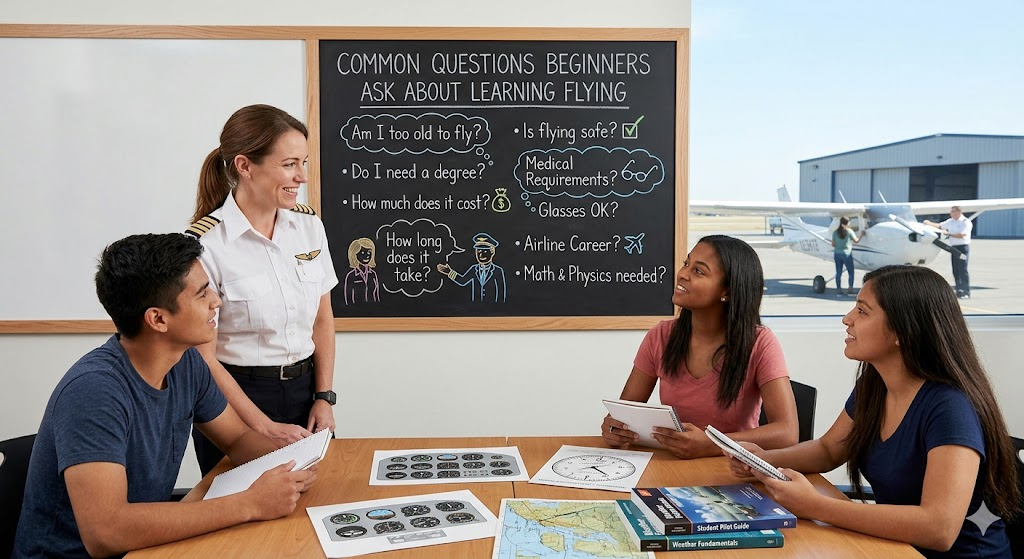
Learning to fly is one of the most exciting goals a person can have, but beginners often feel confused before they even step into a cockpit. Questions about cost, age, medical fitness, safety, training duration, and career options are completely normal. Flying may look complex from the outside, but with the right instructor, structured training, and consistent practice, it becomes a step-by-step learning journey. Whether you want to fly as a hobby, become a private pilot, or build a professional aviation career, understanding the basics early helps you make better decisions. This guide answers the most common questions beginners ask about learning flying and helps you prepare with confidence.
Why Beginners Have So Many Questions About Learning Flying
Flying is different from most skills because it combines classroom knowledge, practical aircraft handling, safety procedures, weather awareness, communication, navigation, and decision-making. Beginners are often unsure whether they are eligible, how much training will cost, how long it will take, or whether they are physically fit to become a pilot.
Many people also believe flying is only for highly technical or wealthy individuals, but that is not always true. Flight training is structured so beginners can learn gradually. The first lessons focus on basic aircraft controls, safety checks, instructor guidance, and building confidence in the air.
1- Am I Too Old to Learn Flying?
No, most people are not too old to learn flying. Many students begin as teenagers, while others start in their 30s, 40s, 50s, or later. Age matters less than health, commitment, consistency, and learning attitude.
For hobby flying, many older learners successfully complete training and enjoy flying privately. For airline careers, age can affect career planning because commercial aviation has medical and retirement-related considerations, but starting later does not automatically close the door.
2- Do I Need a College Degree to Learn Flying?
You do not usually need a college degree to start learning flying. Basic education, communication skills, discipline, and the ability to understand aviation subjects are more important at the beginner stage.
For private pilot training, the focus is on flight skills, ground school knowledge, medical eligibility, and passing required tests. For airline careers, requirements may vary depending on country, airline, and training pathway. Some airlines prefer degrees, while others focus more on licenses, flight hours, aptitude, and training performance.
3- Is Learning to Fly Difficult?
Learning to fly is challenging, but it is not impossible. Beginners usually find the first few lessons exciting and slightly overwhelming because they are learning aircraft controls, radio communication, checklists, and situational awareness at the same time.
The good part is that training is progressive. You do not learn everything in one day. Your instructor teaches you basic handling first, then turns, climbs, descents, landings, navigation, emergency procedures, and advanced decision-making. With regular practice, flying becomes more natural.
4- How Long Does It Take to Learn Flying?
The time required depends on your goal, training frequency, weather, aircraft availability, instructor availability, and how quickly you understand concepts.
If you fly often, you may progress faster because your skills remain fresh. If you train only occasionally, it may take longer because you may need extra revision between lessons. A private pilot pathway is usually shorter than a commercial pilot pathway, while airline training requires multiple licenses, ratings, exams, and flight-hour building.
5- How Much Does Flight Training Cost?
Flight training cost varies widely based on country, flight school, aircraft type, fuel prices, instructor fees, ground school, exams, medical checks, and licensing fees.
Common cost components include:
- Aircraft rental
- Flight instructor charges
- Ground school training
- Study materials
- Medical examination
- Written exams
- Practical flight test
- License processing
- Simulator sessions, if required
Beginners should ask flight schools for a complete cost breakdown before enrolling. The cheapest school is not always the best choice; safety record, instructor quality, aircraft maintenance, and training structure matter more.
6- What Medical Requirements Are Needed?
Pilots need medical fitness because flying requires good vision, hearing, coordination, decision-making, and general health. The exact medical class depends on the type of license and aviation authority requirements.
A beginner should complete an aviation medical check early. This helps avoid surprises later. Many people with glasses, minor health conditions, or corrected vision can still qualify, but final approval depends on aviation medical standards.
7- Can I Learn Flying If I Wear Glasses?
Yes, many pilots wear glasses or contact lenses. Wearing glasses does not automatically stop you from learning flying. What matters is whether your vision can be corrected to meet required aviation medical standards.
If you wear glasses, carry your prescription details and discuss them during your aviation medical examination. Many student pilots successfully train and fly with corrected vision.
8- What Subjects Should I Study Before Starting Flight Training?
You do not need to be an expert before starting, but basic preparation helps. Useful subjects include:
- Basic mathematics
- Physics fundamentals
- Weather and climate basics
- Map reading
- English communication
- Navigation concepts
- Aircraft basics
- Rules of the air
- Human performance and safety
Ground school will teach aviation-specific subjects, so beginners should focus on building curiosity, discipline, and study habits.
9- Is Flying Safe for Beginners?
Flying is safe when training is done through a professional flight school with qualified instructors, well-maintained aircraft, proper procedures, and strong safety culture.
Beginner students do not fly alone immediately. Early lessons are conducted with an instructor who handles safety, guidance, corrections, and emergency readiness. Before solo flight, students must demonstrate proper control, judgment, communication, and procedure awareness.
10- What Happens During the First Flying Lesson?
A first flying lesson usually begins with a briefing. The instructor explains the aircraft, safety rules, basic controls, and what the student will experience.
A typical first lesson may include:
- Introduction to the aircraft
- Pre-flight inspection
- Cockpit familiarization
- Safety briefing
- Basic control explanation
- Taxi, takeoff, and climb demonstration
- Simple turns, climbs, and descents
- Return and landing with instructor control
- Post-flight feedback
The goal is not perfection. The first lesson is about exposure, confidence, and understanding what flight training feels like.
11- Can I Become an Airline Pilot After Learning Flying?
Yes, learning flying can be the first step toward becoming an airline pilot. The journey usually starts with basic flight training and gradually moves toward advanced licenses, ratings, flight hours, instrument flying, multi-engine training, and airline selection preparation.
A typical pathway may include:
- Student pilot training
- Private pilot license
- Commercial pilot license
- Instrument rating
- Multi-engine rating
- Flight hour building
- Airline preparation
- Type rating, depending on airline requirements
The exact pathway depends on your country, aviation authority, training school, and career plan.
12- How Do I Choose the Right Flight School?
Choosing the right flight school is one of the most important decisions for beginners. Do not select only based on low cost. Look at training quality and long-term value.
Important factors include:
- Instructor experience
- Aircraft condition
- Safety culture
- Student reviews
- Training syllabus
- Ground school quality
- Maintenance standards
- Exam preparation support
- Transparent pricing
- Career guidance
- Location and weather conditions
A good school should answer your questions clearly and help you understand the complete training journey.
Common Myths About Learning Flying
Myth 1- Flying Is Only for Rich People
Flight training can be expensive, but it is not only for wealthy people. Many students plan training in stages, save money, use education loans, or train part-time.
Myth 2- You Must Be a Genius to Fly
Pilots need discipline, focus, and good decision-making, but they do not need to be geniuses. Flight training is designed to teach beginners step by step.
Myth 3- Flying Is Extremely Dangerous
Professional aviation training follows strict safety procedures. Risk is managed through checklists, maintenance, instructor supervision, regulations, and continuous training.
Myth 4- Only Young People Can Become Pilots
Many people begin flying later in life. Age may affect career planning, but it does not stop most people from learning to fly recreationally or professionally.
Beginner Checklist Before Starting Flight Training
- Research flight schools carefully
- Take a discovery flight
- Complete an aviation medical check
- Understand total training costs
- Learn basic aviation terms
- Prepare a study schedule
- Choose a realistic training frequency
- Speak with instructors and current students
- Compare aircraft availability
- Set a clear goal: hobby, private flying, or career pilot
Career Opportunities After Flight Training
Flight training can lead to several aviation paths depending on your license, experience, and goals.
Common opportunities include:
- Private Pilot
- Commercial Pilot
- Flight Instructor
- Charter Pilot
- Corporate Pilot
- Cargo Pilot
- Airline Pilot
- Aerial Survey Pilot
- Aviation Trainer
- Aviation Business Owner
Not every student wants an airline career. Some learn flying for personal freedom, travel, adventure, or confidence.
Expert Tips for New Student Pilots
- Fly regularly to maintain progress.
- Review each lesson before the next flight.
- Do not rush your training.
- Ask questions freely.
- Learn checklists properly.
- Build strong radio communication habits.
- Respect weather and safety rules.
- Choose quality training over cheap shortcuts.
- Stay calm during mistakes; they are part of learning.
- Keep your long-term goal clear.
Frequently Asked Questions
1- How old do I need to be to start flying lessons?
Many people can start flight training as teenagers, depending on local aviation rules. However, minimum age requirements for solo flying and licensing vary by country. It is best to check with a certified flight school or aviation authority.
2- Can I learn flying as a hobby?
Yes, many people learn flying purely as a hobby. A private pilot license is often suitable for those who want to fly for personal enjoyment rather than commercial work.
3- Is flying harder than driving?
Flying requires more planning, rules, weather awareness, and technical knowledge than driving. However, training is structured, and instructors guide beginners through each stage.
4- How many flight hours are required?
Required flight hours depend on the license type and aviation authority. Some students complete training near the minimum requirement, while others need additional hours for confidence and skill development.
5- Can women become pilots?
Yes, women can absolutely become pilots. Aviation is open to all qualified learners who meet training, medical, and licensing requirements.
6- Can I train while working full-time?
Yes, many students train while working full-time. Weekend or part-time flight training is possible, but progress may be slower compared to full-time training.
7- What is a discovery flight?
A discovery flight is an introductory flying experience where a beginner flies with an instructor to understand what flight training feels like. It is a great first step before enrolling.
8- How often should I fly during training?
Flying two or more times per week can help many students progress faster because skills stay fresh. However, the best schedule depends on your budget, availability, and school resources.
9- Do airlines require a degree?
Some airlines may prefer a degree, while others focus on licenses, flight hours, assessments, medical fitness, and training performance. Requirements vary by airline and region.
10- What is the first pilot license?
For many learners, the first major license is a private pilot license. Some countries also have student pilot permits or recreational pilot options before advanced training.
11- Are flight simulators helpful?
Yes, simulators can help students practice procedures, navigation, instrument scanning, and emergency scenarios. However, real aircraft experience remains essential.
12- Can I switch flight schools?
Yes, students can switch flight schools, but records, training progress, and regulatory requirements must be reviewed. Always keep proper documentation of completed training.
13- What happens if I fail an exam?
Failing an exam does not mean your aviation journey is over. You can usually study again, correct weak areas, and retake the exam based on local rules.
14- Is aviation a good career choice?
Aviation can be a rewarding career for people who enjoy responsibility, travel, discipline, technology, and continuous learning. It requires commitment, investment, and patience.
15- What is the best first step to learn flying?
The best first step is to take a discovery flight and speak with a qualified flight instructor. This gives you real exposure before making a bigger training commitment.
Conclusion
Learning to fly may feel overwhelming at first, but most beginner questions have clear and practical answers. Age, background, and lack of experience are rarely major barriers if you are medically fit, motivated, and ready to learn. The most important step is choosing a reliable flight school, understanding the training process, and staying consistent with practice and study. Whether your goal is personal flying or a professional pilot career, flight training can open the door to confidence, freedom, and exciting aviation opportunities. Start with research, take a discovery flight, complete your medical check, and move forward one lesson at a time.

