
Introduction
Choosing a flying school is one of the most important decisions in an aspiring pilot’s journey. It is not just about learning how to fly an aircraft, but about building a strong foundation for a long-term aviation career. The quality of your training directly impacts your flying skills, safety awareness, confidence, and future job opportunities.
Many students make rushed decisions based on advertisements, low fees, or peer influence, only to realize later that the school does not meet industry standards. This leads to financial stress, training delays, and sometimes even starting over from scratch.
This guide explains the most common mistakes students make when choosing a flying school and how to avoid them so you can make a smart, informed, and career-safe decision.
Why Choosing the Right Flying School Matters
Selecting the right flying school is not just an educational decision—it is a career-defining step.
1. Safety Standards
A good flying school ensures well-maintained aircraft, trained instructors, and strict safety protocols. Poor-quality schools may compromise safety.
2. Career Growth
Reputed schools often provide better exposure, structured training, and sometimes airline guidance.
3. Financial Investment
Flight training is expensive. A wrong choice can lead to wasted money, extra hours, and repeat training.
Choosing wisely ensures your investment leads to a successful aviation career.
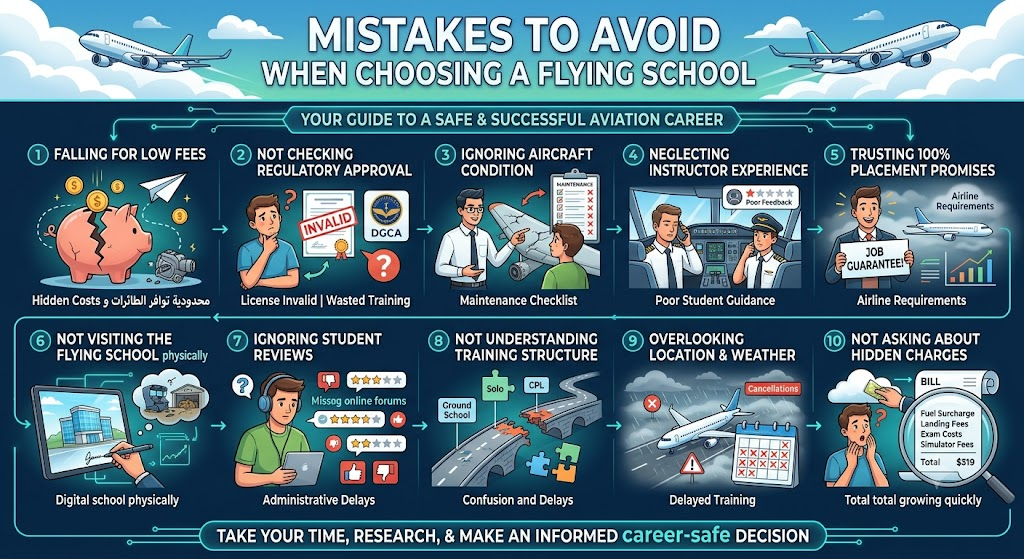
Common Mistakes to Avoid When Choosing a Flying School
1. Choosing Based Only on Low Fees
One of the biggest mistakes students make is selecting a flying school because it is cheaper.
Low fees may indicate:
- Limited aircraft availability
- Poor maintenance standards
- Less experienced instructors
- Hidden additional charges later
Flight training is a quality-driven investment, not a cost-cutting exercise.
2. Not Checking Regulatory Approval
Every legitimate flying school must be approved by the aviation authority (such as DGCA or equivalent in your country).
Failing to verify this can lead to:
- Invalid pilot license
- Wasted training hours
- Legal and certification issues
Always confirm official accreditation before enrolling.
3. Ignoring Aircraft Condition and Maintenance
Aircraft quality plays a critical role in training safety and experience.
Mistakes include:
- Not inspecting aircraft condition
- Not asking about maintenance schedules
- Training on outdated aircraft systems
Poor maintenance can affect both learning quality and safety.
4. Not Researching Instructor Experience
Instructors are the backbone of flight training.
Many students fail to check:
- Instructor qualifications
- Flying experience
- Teaching style
- Student feedback on instructors
An experienced instructor improves your learning speed and confidence significantly.
5. Falling for 100% Job Placement Promises
No flying school can guarantee a job after training.
Be cautious of:
- Unrealistic placement claims
- Guaranteed airline recruitment promises
- Overhyped marketing statements
A good school may support you, but employment depends on performance and airline requirements.
6. Not Visiting the Flying School Physically
Many students make decisions without visiting the campus.
This leads to missing important details like:
- Actual aircraft availability
- Classroom infrastructure
- Simulator quality
- Student environment
A physical visit gives you the real picture beyond marketing claims.
7. Ignoring Student Reviews and Alumni Feedback
Current and former students provide honest insights.
Ignoring feedback may cause you to miss:
- Hidden problems in training quality
- Instructor behavior issues
- Administrative delays
- Real completion timelines
Always talk to multiple students before deciding.
8. Not Understanding Total Training Structure
Some students do not fully understand the training roadmap.
Important aspects include:
- Required flying hours
- Ground training subjects
- Exam structure
- License progression (PPL → CPL → IR)
Lack of clarity can cause confusion and delays later.
9. Overlooking Location and Weather Conditions
Weather plays a major role in flight training schedules.
Poor planning may result in:
- Flight cancellations
- Longer training duration
- Increased costs due to delays
Always consider how frequently flying is possible at that location.
10. Not Asking About Hidden Charges
Many schools advertise base fees but add extra charges later.
Hidden costs may include:
- Landing fees
- Fuel surcharges
- Exam fees
- Simulator costs
- Administrative charges
Always request a complete fee breakdown before enrolling.
How to Evaluate a Good Flying School
Choosing the right school requires structured evaluation.
1. Compare Multiple Schools
Do not settle for the first option. Compare at least 3–5 schools based on cost, infrastructure, and reputation.
2. Visit the Facility
A physical visit helps you verify aircraft condition, classrooms, and overall environment.
3. Check Instructor Quality
Good instructors improve both learning speed and safety awareness.
4. Review Training Structure
A well-organized syllabus ensures smooth progression from beginner to licensed pilot.
5. Talk to Current Students
Their real experience helps you understand day-to-day training challenges.
Tips Before Final Enrollment
Before making your final decision, keep these important tips in mind:
- Always verify certification and approval status
- Ask for a written breakdown of total costs
- Clarify training duration and schedule flexibility
- Understand medical fitness requirements
- Avoid pressure-based enrollment decisions
- Ensure transparency in all policies
A careful approach at this stage can save you from major problems later.
FAQs
1. What is the biggest mistake students make when choosing a flying school?
The biggest mistake is choosing a school based only on low fees without checking safety standards, instructor quality, and certification.
2. Why is regulatory approval important for a flying school?
Regulatory approval ensures that your training is valid and your pilot license will be recognized by aviation authorities.
3. Should I visit a flying school before enrolling?
Yes, visiting the school helps you evaluate aircraft condition, infrastructure, and real training conditions beyond marketing claims.
4. Can I trust job placement guarantees from flying schools?
No, no legitimate school can guarantee a job. They may offer support, but airline hiring depends on performance and requirements.
5. How important are instructors in flight training?
Instructors are extremely important because they directly impact your flying skills, safety awareness, and overall learning experience.
6. What hidden costs should I ask about?
You should ask about fuel charges, landing fees, simulator costs, exam fees, and administrative charges.
7. How do I choose the best flying school?
Compare multiple schools, visit campuses, check reviews, verify certification, and ensure transparency in costs and training structure.
Conclusion
Choosing the right flying school is one of the most critical steps in becoming a pilot. Many students make costly mistakes by focusing only on fees or promises without proper research. However, aviation training requires careful evaluation of safety, instructors, aircraft, certification, and overall transparency.
By avoiding the common mistakes discussed in this guide, you can protect your investment, ensure high-quality training, and build a strong foundation for your aviation career. Take your time, do thorough research, and choose a flying school that truly supports your long-term success.

