
Introduction
Choosing the right flying school is one of the most important decisions in a pilot’s journey. For beginners, it can feel overwhelming because there are many schools, training structures, cost variations, and career pathways to consider. A wrong choice can lead to wasted money, delayed training, or even limited career opportunities.
A good flying school does more than teach you how to fly—it builds your foundation in aviation safety, discipline, decision-making, and real-world flying skills. It also influences how smoothly you progress toward your pilot license and airline career goals. From regulatory approvals and aircraft quality to instructor experience and placement support, every factor matters.
This guide is designed to simplify that decision. It breaks down everything beginners need to evaluate before joining a flying school, including types of schools, cost structures, common mistakes, and a step-by-step selection process. Whether you are just exploring aviation or ready to enroll, this guide will help you make a confident and informed choice.
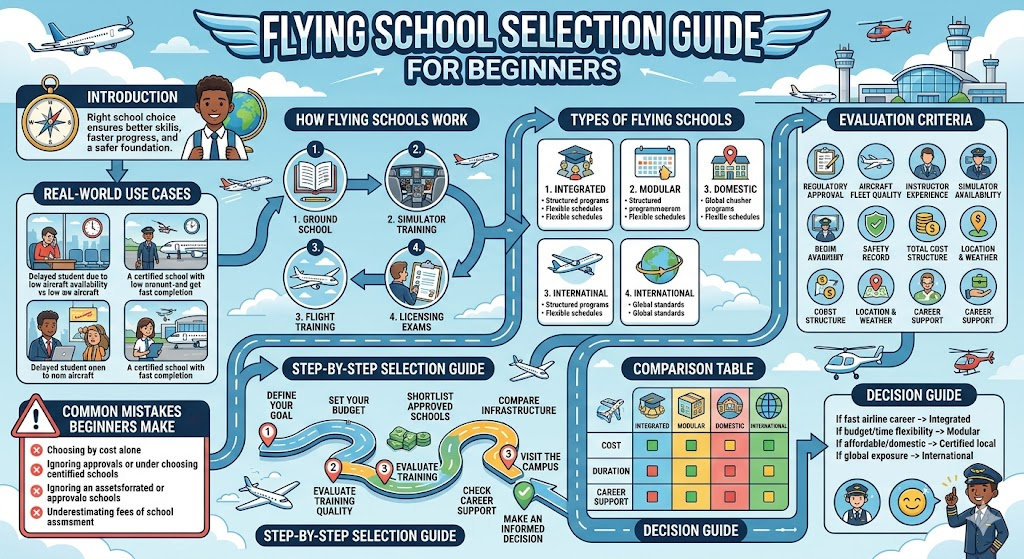
Real-World Use Cases for Choosing the Right Flying School
Understanding how flying school selection impacts real students helps you make better decisions:
- A student chooses a low-cost school but struggles due to limited aircraft availability, delaying flight hours and license completion.
- Another student selects a certified school with structured training and completes licensing faster with better skill confidence.
- A learner compares domestic vs international schools and chooses based on budget, licensing recognition, and career plans.
- A student focused on airline jobs selects a school with strong simulator training and placement support, improving job readiness.
These scenarios show that the right school can significantly impact both training quality and career outcomes.
How Flying Schools Work
Flying schools are structured training institutions that prepare students for pilot licensing. The training process typically includes:
1. Ground School Training
- Aviation theory (navigation, meteorology, regulations)
- Aircraft systems and aerodynamics
- Flight planning and safety procedures
2. Simulator Training
- Controlled environment practice
- Emergency handling scenarios
- Instrument flying practice
3. Flight Training
- Actual flying with instructors
- Takeoff, landing, navigation exercises
- Building required flight hours for licensing
4. Licensing Exams
- Written exams
- Practical flying tests
- Medical certification clearance
The combination of these stages ensures a pilot is fully prepared for real-world aviation conditions.
Types of Flying Schools
1. Integrated Flying Schools
- Structured end-to-end training program
- Faster completion timeline
- Higher cost but streamlined learning path
2. Modular Flying Schools
- Training divided into separate modules
- Flexible scheduling
- Suitable for students managing budget or time constraints
3. Domestic Flying Schools
- Located within your country
- Familiar regulations and licensing system
- Often more cost-effective
4. International Flying Schools
- Exposure to global aviation standards
- Advanced aircraft and infrastructure
- Higher cost and additional licensing considerations
Evaluation Criteria for Beginners
Before selecting a flying school, carefully evaluate the following:
Regulatory Approval
- Ensure the school is approved by aviation authorities (such as DGCA or equivalent)
- Valid certification ensures license recognition
Aircraft Fleet Quality
- Number of aircraft available
- Maintenance standards
- Modern avionics and safety systems
Instructor Experience
- Certified flight instructors (CFIs)
- Real-world aviation experience
- Student-to-instructor ratio
Simulator Availability
- Type and quality of simulators
- Frequency of simulator training sessions
Safety Record
- Accident history
- Maintenance compliance
- Operational standards
Total Cost Structure
- Tuition fees
- Fuel charges
- Exam and licensing fees
- Hidden or additional charges
Location and Weather Conditions
- Favorable flying weather increases training speed
- Airspace congestion affects flight availability
Career Support
- Airline tie-ups
- Placement assistance
- Internship or mentorship programs
Best For / Not Ideal For
Best For:
- Students committed to aviation careers
- Learners ready for structured and intensive training
- Candidates with clear long-term pilot goals
- Individuals who can manage financial investment and discipline
Not Ideal For:
- Casual learners or hobby flyers without career intent
- Students looking for very low-cost shortcuts
- Individuals unable to commit consistent training time
- Those not ready for strict aviation discipline and regulations
Common Mistakes Beginners Make
- Choosing a school only based on lowest cost
- Ignoring regulatory approvals and certifications
- Overlooking aircraft availability and maintenance quality
- Not checking instructor experience and student feedback
- Underestimating total training cost
- Not considering weather conditions and location impact
- Skipping simulator training quality checks
Avoiding these mistakes can significantly improve training outcomes.
Step-by-Step Flying School Selection Guide
Step 1: Define Your Goal
- Airline pilot career or recreational flying
- Domestic or international licensing path
Step 2: Set Your Budget
- Calculate total cost including hidden expenses
- Plan for financial buffer during training delays
Step 3: Shortlist Approved Schools
- Only consider certified and recognized institutions
Step 4: Compare Infrastructure
- Aircraft fleet, simulators, and maintenance systems
Step 5: Evaluate Training Quality
- Instructor experience and student success rate
Step 6: Visit the Campus
- Observe facilities, aircraft condition, and training environment
Step 7: Check Career Support
- Placement programs and airline connections
Step 8: Make an Informed Decision
- Compare all factors before final enrollment
Comparison Table: Flying School Types
| Factor | Integrated Schools | Modular Schools | Domestic Schools | International Schools |
|---|---|---|---|---|
| Cost | High | Flexible | Moderate | Very High |
| Duration | Shorter | Flexible | Moderate | Varies |
| Structure | Fixed | Flexible | Standard | Advanced |
| Aircraft Quality | High | Varies | Moderate | High |
| Career Support | Strong | Limited | Moderate | Strong |
Decision Guide: How to Choose the Right School
- If you want a fast-track airline career → Integrated school is better
- If you need flexibility in time and budget → Modular training works best
- If you prefer affordability and domestic licensing → Choose a certified local school
- If you want global exposure and advanced training → International schools may be suitable
Your decision should balance budget, career goals, and training quality—not just one factor.
FAQs
1. How do I choose the right flying school?
Focus on regulatory approval, aircraft quality, instructor experience, and training structure. Compare multiple schools and avoid decisions based only on cost.
2. What is the cost of pilot training?
Costs vary widely depending on country, school type, and aircraft usage. Always consider total cost including hidden fees like fuel, exams, and licensing.
3. How many flying hours are required to become a pilot?
Most commercial pilot licenses require a minimum number of flight hours, typically ranging from 150 to 250 hours depending on regulations.
4. Is regulatory approval necessary for flying schools?
Yes, approval from aviation authorities ensures your training and license are valid and recognized for career opportunities.
5. Which is better: integrated or modular training?
Integrated training is faster and structured, while modular training offers flexibility and cost control. The best option depends on your goals.
6. Can I switch flying schools during training?
Yes, but it may involve administrative challenges, cost differences, and training adjustments.
7. What is included in flying school fees?
Fees typically include ground school, flight training, simulator sessions, and exam preparation. Some schools charge extra for fuel or landing fees.
8. Do flying schools guarantee job placement?
Most schools do not guarantee jobs, but some offer placement assistance or airline partnerships.
9. Is simulator training important?
Yes, simulators are critical for safety training, emergency practice, and instrument flying skills.
10. How long does pilot training take?
Training duration depends on weather, aircraft availability, and student performance. It can range from 12 months to several years.
Conclusion
Selecting the right flying school is a foundational step in becoming a successful pilot. Beginners should focus on regulatory approval, training quality, instructor expertise, and overall infrastructure rather than just cost. A well-chosen school ensures smoother training progression, better skill development, and stronger career opportunities.
It is important to evaluate multiple schools, visit campuses when possible, and understand the full cost structure before making a decision. Avoid rushing into enrollment without proper research. Aviation training demands discipline, investment, and long-term commitment, so the right foundation makes all the difference.
With careful planning and informed decision-making, your journey toward becoming a pilot can be both successful and rewarding.

