
Introduction
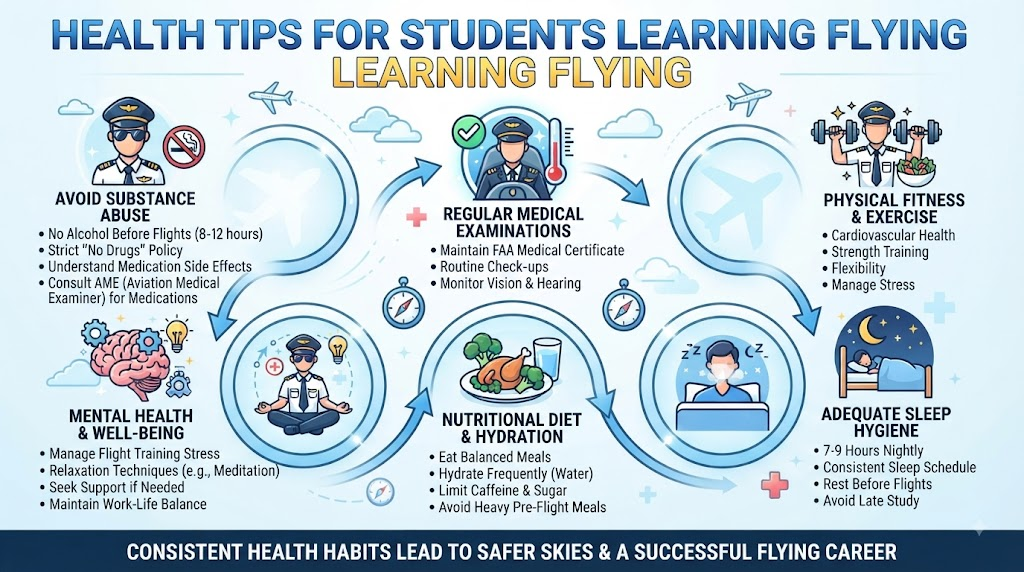
Learning to fly is an exciting experience, but it also requires students to remain physically and mentally prepared for each training session. Flying involves concentration, coordination, communication, decision-making, situational awareness, and the ability to respond appropriately to changing conditions.
A student’s health can influence how effectively they learn and perform these tasks. Common concerns such as lack of sleep, dehydration, stress, motion sickness, illness, or medication side effects can make flight training more difficult and, in some situations, affect fitness to fly.
Maintaining good health does not mean that a student needs to be exceptionally athletic or free from every minor health issue. Instead, it means developing sensible habits, understanding personal limitations, and knowing when professional medical advice may be necessary.
Understanding Health and Fitness in Flight Training
Health and fitness in aviation involve more than physical strength. A student pilot needs to be sufficiently alert and capable of performing the tasks required during a flight.
Important areas include:
- Physical well-being
- Mental alertness
- Concentration
- Adequate sleep
- Hydration
- Vision
- Hearing
- Coordination
- Stress management
- General fitness to fly
The medical requirements for pilots can vary depending on the country, aviation authority, license, and type of operation.
Students should therefore understand the medical requirements applicable to their particular training pathway rather than relying on assumptions about what is required.
Get Adequate Sleep
Sleep is one of the most important health habits for a student pilot.
Flight training requires sustained attention and the ability to process information accurately. Insufficient sleep can affect concentration, memory, alertness, reaction time, and decision-making.
This can become particularly challenging when students have early-morning flights, examinations, ground school, and self-study at the same time.
Students can support their sleep routine by:
- Maintaining reasonably consistent sleeping hours.
- Planning ahead for early flights.
- Avoiding unnecessary late-night study sessions.
- Allowing enough time for proper rest.
- Creating a quiet and comfortable sleeping environment.
- Avoiding excessive screen use immediately before bed.
Trying to compensate for poor sleep by simply consuming more caffeine is not a substitute for adequate rest.
If a student is significantly fatigued before a flight, they should honestly assess whether they are fit to participate and communicate with their instructor when necessary.
Stay Properly Hydrated
Hydration is particularly important during flight training in hot weather or during long training days.
Students may spend considerable time outside the aircraft before and after flights. Heat, physical activity, and long periods without drinking enough fluids can contribute to discomfort and reduced concentration.
Possible signs of inadequate hydration can include:
- Thirst
- Headache
- Tiredness
- Weakness
- Dizziness
- Difficulty concentrating
Students should make reasonable hydration part of their daily routine and pay particular attention to their fluid intake during hot weather.
At the same time, they should avoid excessive drinking immediately before a flight simply to compensate for earlier dehydration.
Maintain a Balanced Diet
A demanding flight-training schedule can make it easy to skip meals or depend heavily on snacks.
Regular, balanced meals can help students maintain their energy throughout the training day.
Students should try to:
- Eat meals at reasonably consistent times.
- Include a variety of nutritious foods.
- Avoid very heavy meals immediately before flying if they cause discomfort.
- Keep suitable snacks available when training schedules are long.
- Avoid relying entirely on highly processed foods.
The goal is not to follow a strict diet. It is to develop eating habits that support general health and allow the student to remain comfortable and focused during training.
Avoid Flying on an Empty Stomach
Long periods without food can make some students feel tired, distracted, or uncomfortable.
This can be particularly relevant when a student has several hours of ground school followed by a flight lesson.
Planning meals and suitable snacks around the training schedule can help prevent unnecessary hunger.
Students should also pay attention to how different foods affect them before flying. A meal that causes discomfort or sluggishness may not be suitable immediately before a flight lesson.
Manage Motion Sickness
Motion sickness is a common concern for some people who are new to flying.
The movement of the aircraft, particularly during turns and other maneuvers, can initially feel unfamiliar.
Possible symptoms include:
- Nausea
- Dizziness
- Sweating
- Headache
- General discomfort
Some students find that motion sickness becomes less troublesome as they gain experience and become more accustomed to aircraft movement.
Students experiencing persistent or severe symptoms should discuss them with an appropriate healthcare professional.
They should also avoid taking medication simply because another pilot or student recommends it. Some medicines can cause drowsiness or affect coordination and alertness, which may be important considerations in aviation.
Protect Your Eyes and Maintain Good Vision
Good vision is an important part of flying.
Student pilots use their vision for many tasks, including:
- Reading aircraft instruments.
- Looking outside the aircraft.
- Identifying runway markings.
- Monitoring taxiways.
- Reading charts and other flight information.
- Maintaining awareness of the surrounding environment.
Students should pay attention to significant changes in their vision and obtain appropriate eye examinations when necessary.
Wearing glasses or contact lenses does not automatically prevent someone from becoming a pilot. Whether a person’s vision meets the applicable standard depends on the relevant aviation medical requirements.
Students who already use corrective lenses should follow the guidance provided by their eye-care professional and aviation medical examiner.
Take Care of Your Hearing
Hearing is also important during flight training.
A student pilot may need to hear:
- Air traffic control transmissions.
- Instructor instructions.
- Other crew communication.
- Warning sounds.
- Relevant cockpit audio.
Aircraft and airport environments can be noisy, so students should follow appropriate hearing-protection practices whenever required or recommended.
Temporary hearing difficulties can sometimes occur with congestion or other illnesses. Persistent or significant hearing changes should be evaluated appropriately.
Manage Stress During Flight Training
Flight training can be challenging, and students may experience stress at different stages of their training.
Common sources of stress include:
- First solo flights.
- Flight tests.
- Academic examinations.
- Instructor feedback.
- Weather-related changes.
- Training progress.
- Fear of making mistakes.
- Career uncertainty.
Some nervousness before an important flight or examination is normal. However, persistent or severe stress that interferes with everyday activities or training should not simply be ignored.
Students can manage ordinary training pressure through:
- Proper preparation.
- Good time management.
- Taking reasonable breaks.
- Maintaining a balanced routine.
- Discussing training concerns with instructors.
- Seeking appropriate professional support when necessary.
Asking for help should not be viewed as a weakness. Responsible pilots need to recognize when they need support.
Maintain General Physical Fitness
Students do not need to become professional athletes to learn how to fly.
However, regular physical activity can support general health and well-being.
Simple activities such as walking, stretching, or moderate exercise appropriate to an individual’s circumstances can help students maintain an active lifestyle.
Students should avoid suddenly beginning an intense exercise program without considering their existing fitness level. Anyone with a medical condition or specific fitness concern should follow appropriate professional advice.
The main objective is to maintain general well-being rather than achieve a particular athletic standard.
Avoid Alcohol and Other Impairing Substances Before Flying
A student pilot should never fly while impaired.
Alcohol, recreational substances, and anything else that affects alertness, judgment, coordination, or reaction time can create serious safety concerns.
Students should also remember that impairment is not limited to alcohol or recreational substances. Some medicines can produce effects that may interfere with safe flight operations.
If there is any uncertainty about fitness to fly, students should obtain appropriate professional guidance rather than making assumptions.
Be Careful With Medication
Students should pay attention to medications they take during flight training.
Prescription and over-the-counter medicines can sometimes cause effects such as:
- Drowsiness
- Dizziness
- Reduced alertness
- Impaired coordination
- Difficulty concentrating
A medicine that is suitable for normal daily activities is not automatically suitable for someone who is about to fly.
Students should not stop prescribed medication on their own or take a new medicine simply because another pilot says it is safe.
When medication may affect fitness to fly, appropriate guidance should be obtained from a qualified healthcare professional or aviation medical examiner.
Maintain Good Personal Hygiene
Good personal hygiene can support general health, particularly when students spend time in shared training environments.
Simple habits include:
- Washing hands regularly.
- Keeping personal items clean.
- Maintaining general cleanliness.
- Avoiding unnecessary close contact with others when seriously ill.
- Following relevant hygiene practices at the flight school.
These habits are particularly useful during periods when common infections are circulating.
Do Not Fly When You Are Unwell
One of the most important health habits a student pilot can develop is learning to recognize when they are not fit to fly.
Students should take particular care when experiencing:
- Significant illness.
- Severe fatigue.
- Significant dizziness.
- Severe or unusual headaches.
- Major congestion.
- Ear or sinus problems.
- Medication side effects.
- Any condition affecting concentration or alertness.
A scheduled flight is not more important than safe participation in the training.
If a student is clearly unwell, communicating the situation with the instructor and postponing the lesson when appropriate is a responsible decision.
Prepare for Hot Weather and Outdoor Training
Flight training can involve considerable time outside the aircraft, especially during aircraft inspections, pre-flight preparation, and post-flight activities.
In hot conditions, students should pay attention to their physical comfort and general well-being.
Useful habits include:
- Maintaining appropriate hydration.
- Wearing suitable clothing.
- Protecting themselves from excessive sun exposure.
- Taking reasonable breaks when appropriate.
- Avoiding unnecessary prolonged exposure to extreme heat.
- Informing the instructor if they begin feeling unwell.
Dizziness, unusual weakness, or significant discomfort should not be ignored.
Take Care of Your Mental Well-Being
Mental well-being is an important part of learning to fly.
Students may experience frustration when progress is slower than expected. They may also feel pressure before examinations, flight tests, or their first solo flight.
It is normal for confidence to change during training.
Students can support their mental well-being by:
- Setting realistic learning goals.
- Preparing properly for lessons.
- Taking reasonable breaks.
- Maintaining activities outside flight training.
- Discussing training difficulties with instructors.
- Talking to trusted people when they need support.
- Seeking professional assistance when difficulties become persistent or overwhelming.
A difficult training period does not necessarily mean that a student is unsuitable for aviation.
Develop a Healthy Pre-Flight Routine
A consistent pre-flight routine can help students assess whether they are ready for training.
Before a flight, students can consider:
- Did I get adequate sleep?
- Have I eaten appropriately?
- Am I adequately hydrated?
- Am I feeling physically well?
- Am I sufficiently alert?
- Could any medication affect my alertness?
- Am I experiencing significant stress or discomfort?
- Is there anything I should tell my instructor?
This type of self-assessment can help students recognize problems before they become distractions during the flight.
Health Habits for Long-Term Flight Training
Flight training can continue for months or longer, so healthy habits should be sustainable.
Students should aim to maintain:
- A consistent sleep routine.
- Regular physical activity.
- Balanced meals.
- Appropriate hydration.
- Good stress-management habits.
- Regular medical attention when needed.
- Appropriate eye and hearing care.
- Responsible medication use.
- Good personal hygiene.
- Honest communication about fitness to fly.
A healthy routine does not need to be complicated. Small habits maintained consistently can be more practical than extreme short-term changes.
Common Health Mistakes Student Pilots Should Avoid
Flying While Severely Fatigued
Students may feel pressure to complete every scheduled lesson, but significant fatigue can affect concentration and decision-making.
Skipping Meals
Going through a long training day without eating can contribute to discomfort and reduced energy.
Ignoring Dehydration
Students may become so focused on training that they forget to drink enough fluids, particularly during hot weather.
Ignoring Recurring Symptoms
Repeated headaches, dizziness, hearing problems, vision changes, or other significant symptoms should not simply be ignored.
Self-Medicating Without Appropriate Guidance
Students should not assume that a medicine is suitable for flying simply because it is commonly used by other people.
Hiding Illness From an Instructor
If a student is unwell, the instructor needs accurate information when determining whether training should continue.
Staying Up Late Before an Early Flight
Last-minute studying may seem productive, but insufficient sleep can affect performance the following morning.
Ignoring Vision or Hearing Changes
Changes in vision or hearing can be important during flight training and should be appropriately evaluated.
Flying While Impaired
Students should never participate in flight training while impaired by alcohol, recreational substances, medication effects, or any other factor that affects safe performance.
Continuing Training Despite Being Clearly Unwell
A postponed lesson can be rescheduled. Flying while unfit can create unnecessary risk.
When Should a Student Seek Medical Advice?
Students should consider seeking appropriate medical advice when symptoms are persistent, severe, unusual, or repeatedly interfere with normal activities or flight training.
Examples include:
- Persistent dizziness.
- Repeated severe headaches.
- Significant changes in vision.
- Persistent hearing difficulties.
- Recurring ear or sinus problems.
- Ongoing sleep difficulties.
- Medication-related concerns.
- Health problems affecting concentration or alertness.
This information is general and does not replace professional medical evaluation.
Students with individual medical concerns should speak with an appropriately qualified healthcare professional or aviation medical examiner.
Health and Aviation Medical Certification
Students pursuing pilot training may need to meet specific aviation medical standards.
These requirements can vary according to:
- Country.
- Aviation authority.
- Pilot license.
- Type of operation.
- Applicable medical category.
Students should understand the medical requirements relevant to their intended training pathway as early as reasonably possible.
If a student has questions about whether a specific medical condition, medication, or previous medical history could affect certification, the appropriate aviation medical examiner is the best source of individualized guidance.
Frequently Asked Questions
1. Why is good health important for student pilots?
Flying requires concentration, alertness, coordination, communication, and decision-making. Good general health can help students remain prepared to perform these tasks effectively.
2. How much sleep should a student pilot get before flying?
Students should get adequate sleep and avoid beginning a flight lesson when they are significantly fatigued. Individual sleep needs vary, but consistently sacrificing sleep for studying or other activities is not a good training habit.
3. Can dehydration affect flight training?
Yes. Inadequate hydration can contribute to symptoms such as headache, tiredness, dizziness, and difficulty concentrating. Students should maintain appropriate hydration, particularly during hot weather and long training days.
4. What should I do if I experience motion sickness while flying?
Inform your instructor and discuss persistent or severe symptoms with an appropriate healthcare professional. Some students become more comfortable with flying as they gain experience. Students should not self-medicate based solely on advice from other pilots.
5. Can wearing glasses affect my ability to become a pilot?
Wearing glasses does not automatically prevent someone from becoming a pilot. The relevant aviation medical standards determine whether a student’s vision meets the applicable requirements.
6. Should I fly if I am feeling sick or extremely tired?
A student should not attempt to fly when they are clearly unfit to perform safely. Significant illness or fatigue should be communicated to the instructor, and appropriate medical advice should be obtained when necessary.
7. Can stress affect flight training?
Yes. Significant stress can affect concentration, sleep, confidence, and decision-making. Normal nervousness can occur during training, but persistent or severe stress should be addressed appropriately.
8. Can students take medication before flying?
Students should not assume that medication is automatically suitable for flying. Some medicines can cause drowsiness, dizziness, or reduced alertness. Appropriate professional guidance should be obtained when medication may affect fitness to fly.
9. Why is hearing important for student pilots?
Hearing is needed for communication with instructors and air traffic control and for awareness of relevant cockpit sounds and alerts. Persistent hearing problems should be appropriately evaluated.
10. What are the most important health habits for someone learning to fly?
Some of the most useful habits include getting adequate sleep, staying appropriately hydrated, eating regular balanced meals, managing stress, maintaining general fitness, protecting vision and hearing, using medication responsibly, and avoiding flight when unwell or significantly fatigued.
Conclusion
Good health is an important part of becoming a safe and capable pilot. Flight training requires students to remain alert, focused, physically comfortable, and mentally prepared for the demands of each lesson.
Simple habits such as getting adequate sleep, staying hydrated, eating appropriately, maintaining general fitness, managing stress, and protecting vision and hearing can support a student’s training routine.
Students should also learn to recognize when they are not fit to fly. Significant fatigue, illness, medication effects, dizziness, or other conditions that affect concentration and alertness should never be ignored simply because a flight has been scheduled.

