
Introduction
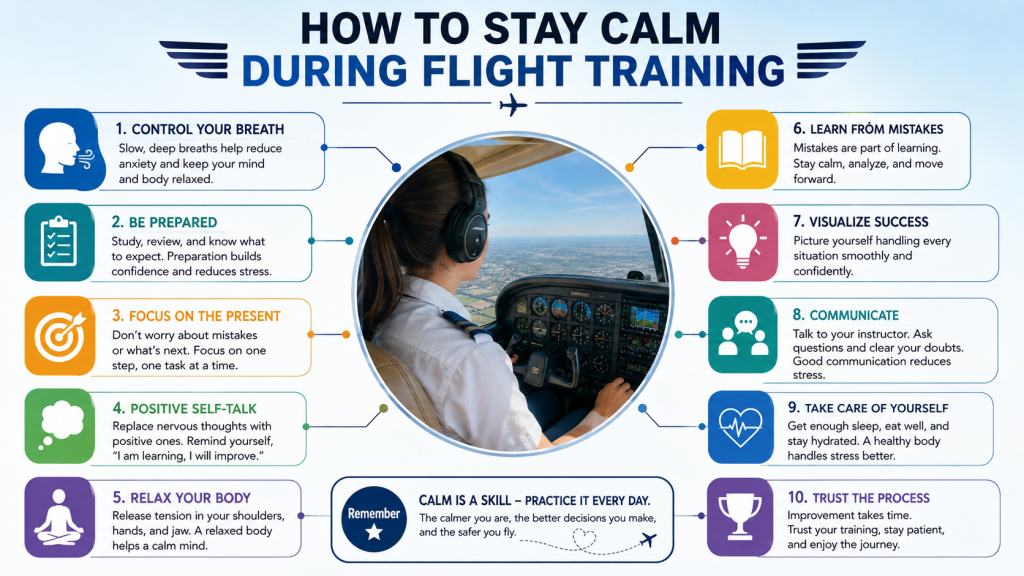
Flight training can be exciting, but it can also feel stressful for student pilots who are learning unfamiliar skills. Nervousness before or during a flight lesson is common, especially when handling new procedures or making decisions in the cockpit. The key is not to eliminate every feeling of anxiety but to learn how to manage it effectively. With preparation, practice, and proper guidance, student pilots can gradually become more comfortable and confident in the air.
Why Student Pilots Feel Nervous During Flight Training
Feeling nervous during flight training does not necessarily mean that someone is unsuitable for becoming a pilot. Learning to control an aircraft involves multiple new responsibilities, and it takes time for these skills to become familiar.
Common reasons for nervousness include:
- Fear of making mistakes
- Operating unfamiliar aircraft
- Managing several tasks at once
- Communicating over the radio
- Flying in unfamiliar conditions
- Concern about instructor feedback
- Preparing for flight tests or check rides
- Experiencing turbulence or unexpected situations
- Feeling pressure to progress quickly
Understanding the source of nervousness can make it easier to manage. Instead of simply thinking, “I am nervous,” a student pilot can identify what is causing the stress and address that specific concern.
How Anxiety Can Affect Flight Performance
Stress can influence concentration, memory, communication, and decision-making. A nervous student may rush through a procedure, overlook information, or become overly focused on a single problem.
For this reason, learning to remain calm is an important part of developing good cockpit habits. Calmness does not mean ignoring problems. It means being able to recognize a situation, prioritize tasks, and respond according to training and established procedures.
If stress becomes overwhelming, students should communicate with their flight instructor rather than attempting to manage serious anxiety alone.
Prepare Before Every Training Flight
Good preparation can significantly reduce uncertainty. Before a training flight, review the material you are expected to know and make sure you understand the objectives of the lesson.
Preparation may include:
- Reviewing relevant procedures
- Studying aircraft systems
- Understanding the lesson objectives
- Checking required materials
- Reviewing previous instructor feedback
- Arriving early enough to avoid unnecessary rushing
- Getting adequate rest before the lesson
Preparation helps turn unfamiliar situations into more predictable ones. The more familiar a student becomes with normal procedures, the less mental energy may be required to recall them during a flight.
Learn the Aircraft and Procedures Thoroughly
Confidence grows when knowledge becomes familiar. Student pilots should spend time understanding the aircraft they are training in, including its normal operating procedures, limitations, instruments, and applicable checklists.
However, students should never rely solely on memory when a checklist or other approved procedure is required. Proper aviation training emphasizes following the aircraft’s approved procedures and the instructor’s guidance.
A useful approach is to study in small sections rather than trying to memorize everything at once. Regular review can make information easier to recall when needed.
Use Breathing and Relaxation Techniques
Simple breathing techniques can help reduce physical signs of nervousness. Before a flight, a student can take a few slow, controlled breaths and consciously relax tense muscles.
During training, the goal is not to become completely relaxed or distracted. Instead, controlled breathing can help a pilot regain focus when feeling overwhelmed.
A simple approach is:
- Pause when the situation allows.
- Take a slow, controlled breath.
- Relax your shoulders and hands.
- Refocus attention on the current task.
- Continue according to training and established procedures.
These techniques should complement, not replace, proper aviation procedures.
Focus on One Task at a Time
One of the most common sources of stress for student pilots is trying to think about everything simultaneously.
Instead, learn to prioritize. If several tasks require attention, follow the priorities taught by your instructor and use the aircraft’s procedures and checklists appropriately.
Rather than thinking:
“What if I make another mistake?”
Try to focus on:
“What is my current task, and what does my training require me to do next?”
This change in mindset can help prevent unnecessary mental overload.
Communicate Clearly With Your Flight Instructor
Flight instructors are an important source of guidance during training. Students should feel comfortable discussing areas where they lack confidence or need additional practice.
Tell your instructor if:
- A particular maneuver makes you uncomfortable.
- You are struggling to understand a procedure.
- You feel overwhelmed during certain exercises.
- You need clarification about an instruction.
- You are concerned about an upcoming flight test.
Asking questions is part of learning. An instructor can often break a difficult task into smaller steps and provide additional practice when appropriate.
Learn From Mistakes Instead of Fearing Them
Mistakes are a normal part of learning new skills. A student pilot should take instructor feedback seriously, but one mistake does not define their ability as a pilot.
After a training flight, consider asking:
- What went well?
- What needs improvement?
- Why did the mistake happen?
- What can I practice before the next lesson?
- What specific feedback did my instructor provide?
This approach turns mistakes into learning opportunities rather than sources of continuing anxiety.
Build Confidence Through Consistent Practice
Confidence generally develops through experience. Repeated exposure to familiar procedures can make tasks feel more natural over time.
Students should avoid comparing their progress with other pilots. Different people learn at different speeds, and training progress can depend on many factors.
Consistency is often more useful than trying to improve everything at once. Focus on the objectives of each lesson and build skills gradually.
How to Stay Calm During Turbulence or Unexpected Situations
Unexpected situations can naturally increase stress, particularly for newer pilots. The most important principle is to rely on training, instructor guidance, aircraft procedures, and established priorities rather than reacting emotionally.
During training, your instructor will teach you how to handle different situations appropriate to your stage of development. If something unexpected happens, avoid making unnecessary decisions simply because you feel pressured.
Listen carefully, communicate when appropriate, and follow the procedures you have been taught.
The purpose of flight training is not to ensure that nothing unexpected ever happens. It is to develop the knowledge and skills needed to respond appropriately.
Managing Stress Before Check Rides and Flight Tests
Check rides and flight tests can create additional pressure because students know their performance is being evaluated.
Instead of focusing entirely on the result, concentrate on demonstrating the knowledge and skills you have developed during training.
Before a test:
- Review areas identified by your instructor.
- Practice procedures that need improvement.
- Get adequate rest.
- Organize your required materials.
- Avoid last-minute cramming.
- Ask your instructor about anything you do not understand.
- Maintain realistic expectations.
Remember that preparation is more productive than repeatedly imagining everything that could go wrong.
Practical Ways to Stay Calm Before and During a Flight
The following approach can help student pilots create a calmer training routine.
| Situation | Practical Approach |
|---|---|
| Nervous before the lesson | Arrive prepared and review the lesson objectives |
| Worried about making mistakes | Focus on learning rather than perfection |
| Feeling mentally overloaded | Prioritize the current task and follow training |
| Uncertain about a procedure | Ask the instructor for clarification |
| Nervous about instructor feedback | Treat feedback as part of the learning process |
| Stress before a check ride | Review weak areas and practice systematically |
| Feeling tense in the cockpit | Use controlled breathing when workload permits |
| Repeatedly struggling with a skill | Discuss additional practice with the instructor |
A Simple Calmness Routine for Student Pilots
Developing a consistent routine can make it easier to manage nervousness.
| Stage | Calmness Routine |
| Before training | Rest properly and prepare required materials |
| Before the lesson | Review objectives and previous feedback |
| Before entering the aircraft | Take a moment to organize your thoughts |
| During normal operations | Follow procedures and focus on the current task |
| When confused | Communicate with the instructor |
| After a mistake | Correct it, learn from the feedback, and continue |
| After the flight | Review strengths and areas for improvement |
| Before the next lesson | Practice the specific areas that need attention |
Common Mistakes Student Pilots Make When Managing Nervousness
Trying to Hide Anxiety
Some students believe that admitting nervousness makes them look inexperienced. In reality, communicating concerns can help instructors provide better guidance.
Overthinking Every Possible Problem
Constantly imagining negative outcomes can increase stress without improving performance. Focus on preparation and the situations you are actually trained to handle.
Rushing Procedures
Nervousness can cause students to rush. Maintaining a disciplined approach and following applicable procedures is more important than trying to appear fast or confident.
Comparing Progress With Other Students
Another student may progress faster in one area while struggling in another. Training should be based on individual learning needs rather than constant comparison.
Ignoring Instructor Feedback
Feedback is an essential part of flight training. Treat constructive criticism as information that can help improve your performance.
Important Considerations for Staying Calm During Flight Training
Prioritize Safety
No amount of confidence should replace safe decision-making. Follow your instructor’s guidance, aircraft procedures, checklists, and applicable regulations.
Get Enough Rest
Fatigue can make concentration and learning more difficult. Arriving rested can help you approach training with a clearer mind.
Know Your Stress Triggers
Identify situations that consistently make you nervous. Discuss them with your instructor so they can be addressed through appropriate training.
Give Yourself Time
Flight training is a learning process. Some skills may become comfortable quickly, while others may require additional practice.
Ask for Help
If nervousness consistently interferes with training, speak openly with your instructor. Getting support early can make the training process more manageable.
Frequently Asked Questions
1. Is it normal to feel nervous during flight training?
Yes. Nervousness is common among student pilots, particularly during the early stages of training or when learning unfamiliar tasks. With preparation and experience, many students become more comfortable.
2. How can I stop being afraid before a training flight?
Preparation is one of the most effective ways to reduce uncertainty. Review the lesson objectives, study relevant procedures, arrive on time, and discuss concerns with your instructor.
3. What should I do if I feel overwhelmed during a flight lesson?
Follow your training and communicate with your instructor. When workload permits, controlled breathing and focusing on the current task can also help you regain concentration.
4. Can breathing exercises help student pilots?
Controlled breathing may help manage physical symptoms of nervousness. It should be used when appropriate and should never distract from required cockpit tasks or procedures.
5. How does preparation improve confidence?
Preparation makes procedures and expectations more familiar. This can reduce uncertainty and allow students to concentrate more effectively during training.
6. Should I tell my flight instructor if I feel anxious?
Yes. Open communication allows your instructor to understand what you are experiencing and provide appropriate guidance or additional practice.
7. How can I stay calm during turbulence?
Follow your instructor’s guidance and the procedures applicable to the aircraft and situation. Avoid reacting emotionally or making unnecessary decisions simply because the aircraft is experiencing turbulence.
8. Does flight training become less stressful with experience?
For many students, familiar procedures and increased experience can make training feel more manageable. However, new challenges may continue to arise as training progresses.
9. How can I prepare mentally for a check ride?
Focus on preparation rather than worrying about the outcome. Review areas that need improvement, practice appropriately, get adequate rest, and discuss concerns with your instructor.
10. What if nervousness continues to affect my training?
Speak with your flight instructor about it. They can help identify specific training challenges and determine whether additional instruction or support may be appropriate.
Conclusion
Staying calm during flight training is a skill that develops over time. Student pilots do not need to be completely free of nervousness to become capable and confident aviators. Preparation, consistent practice, clear communication, proper procedures, and learning from mistakes can gradually make challenging situations easier to manage.
The goal is not to eliminate every feeling of stress but to learn how to respond to it responsibly. By focusing on the current task, trusting their training, and working closely with their flight instructor, student pilots can build both confidence and sound cockpit habits throughout their aviation journey.

