
Introduction
Your first flying lesson is one of the most exciting moments in your aviation journey. It is the day you begin moving from dreaming about flying to actually experiencing the cockpit, aircraft controls, instructor guidance, and real flight training. For many beginners, the first lesson can also feel slightly nervous because everything is new.
The good news is that you do not need to know everything before your first flying lesson. Your instructor will guide you step by step. However, basic preparation can help you feel more confident, relaxed, and ready to learn. This beginner flight training guide explains what to expect, what to carry, what to wear, how to prepare mentally, and how to make the most of your first pilot lesson.
Why Preparation Matters Before Your First Flying Lesson
Preparation helps you start your first flying lesson with confidence. When you know what to expect, you feel less nervous and more focused on learning.
Good preparation helps you:
- Arrive on time and avoid stress
- Carry the right documents
- Understand basic aviation words
- Feel comfortable inside the cockpit
- Ask better questions
- Follow instructor guidance easily
- Stay calm during your first flight
- Learn more from the lesson
Flying is a practical skill, but safety and preparation are important from the beginning. A prepared student usually enjoys the first flight training experience more and remembers the lesson better.
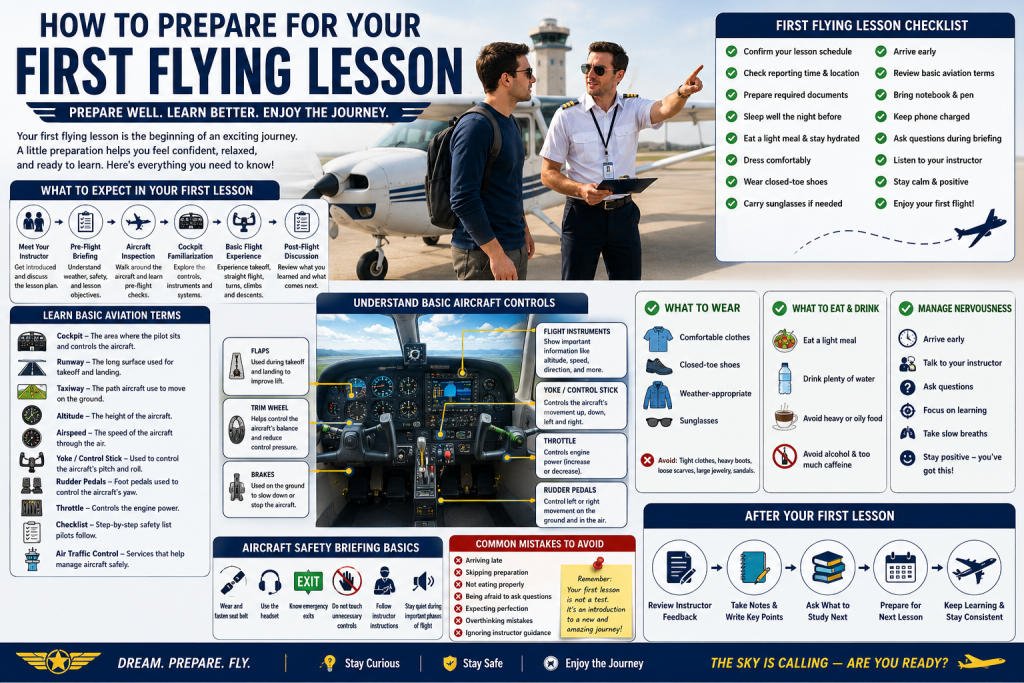
What Happens During a First Flying Lesson?
A first flying lesson is usually designed to introduce you to the aircraft, instructor, safety procedures, and basic flying experience. The exact process may vary by flying school, aircraft type, and country, but most first lessons include similar steps.
Meeting the Instructor
Your flight instructor will welcome you, explain the lesson plan, and answer your basic questions. This is a good time to share if you are nervous or if it is your first time in a small training aircraft.
Pre-Flight Briefing
Before going to the aircraft, your instructor may explain the weather, lesson objective, safety rules, aircraft basics, and what you will do during the flight.
Aircraft Inspection
You may walk around the aircraft with your instructor. This inspection helps students understand how pilots check the aircraft before flight.
Cockpit Familiarization
Inside the cockpit, your instructor may show you the seat, controls, instruments, headset, seat belt, checklist, and communication system.
Basic Controls
Your instructor may explain the yoke or control stick, rudder pedals, throttle, brakes, flaps, and basic instruments.
Taxiing Introduction
In some lessons, students may learn how aircraft move on the ground with instructor support.
Basic Flight Experience
Once airborne, your instructor may demonstrate simple maneuvers such as straight and level flight, gentle turns, climbs, and descents.
Post-Flight Discussion
After landing, your instructor will discuss what happened during the lesson, what you learned, and what may come next.
Learn Basic Aviation Terms Before You Go
You do not need advanced aviation knowledge before your first lesson, but learning a few basic terms can make the experience easier.
- Cockpit: The area where the pilot sits and controls the aircraft.
- Runway: The long surface used for takeoff and landing.
- Taxiway: The path aircraft use to move between runway, hangar, or parking area.
- Altitude: The height of the aircraft above sea level or ground level.
- Airspeed: The speed of the aircraft through the air.
- Yoke or Control Stick: The main control used to move the aircraft in pitch and roll.
- Rudder Pedals: Foot pedals used to control the aircraft’s yaw movement.
- Throttle: The control used to increase or reduce engine power.
- Checklist: A step-by-step safety list pilots use before, during, and after flight.
- Air Traffic Control: The service that helps manage aircraft movement and communication in controlled airspace.
Understanding these words will help you follow your instructor more comfortably.
Understand the Basic Aircraft Controls
Your instructor will explain the controls in detail, but knowing the basics beforehand can reduce confusion.
Yoke or Control Stick
The yoke or control stick helps control the aircraft’s movement. Moving it back usually raises the nose, while moving it forward lowers the nose. Moving it left or right helps the aircraft bank.
Rudder Pedals
Rudder pedals are controlled with your feet. They help control the aircraft’s direction around the vertical axis and are also used during ground movement in many training aircraft.
Throttle
The throttle controls engine power. More power helps the aircraft accelerate, climb, or maintain performance. Less power helps reduce speed or descend.
Flaps
Flaps are used during takeoff and landing to help the aircraft fly safely at lower speeds.
Brakes
Aircraft brakes are used during ground operations. They help slow or stop the aircraft while taxiing.
Basic Flight Instruments
Your instructor may show instruments for airspeed, altitude, heading, engine performance, and attitude. You do not need to master them during the first lesson, but you should observe how they are used.
What Documents Should You Bring?
Document requirements can vary by flying school and country, so students should confirm with the school before arriving. However, common documents may include:
- Personal identification
- Flying school registration documents
- Medical documents if required
- Training approval paperwork if applicable
- Student pilot documents if already issued
- Logbook if provided by the school
- Payment receipt or booking confirmation if needed
Keep your documents organized in a folder. This simple step helps you avoid last-minute confusion.
What Should You Wear for Your First Flying Lesson?
Comfort is important during flying lessons. Wear clothes that allow easy movement and help you sit comfortably inside the aircraft.
Recommended clothing:
- Comfortable shirt or T-shirt
- Comfortable trousers or jeans
- Weather-appropriate layers
- Closed-toe shoes
- Light jacket if needed
- Sunglasses if the weather is bright
Avoid:
- Tight or restrictive clothing
- Heavy boots
- Loose scarves
- Large jewelry
- Slippers or open sandals
- Clothing that makes cockpit movement uncomfortable
Training aircraft cockpits can be compact, so practical clothing is better than fashionable clothing.
What Should You Eat Before Flying?
Eating properly before your first flying lesson helps you stay comfortable and focused. Avoid going to your lesson on an empty stomach, but also avoid eating a very heavy meal.
Good preparation includes:
- Eat a light meal before flying
- Drink enough water
- Avoid too much caffeine
- Avoid oily or very heavy food
- Do not skip meals
- Avoid alcohol completely before flying
Some beginners may feel motion discomfort during early flights. Eating light and staying calm can help.
How to Manage Nervousness Before Your First Flight
Feeling nervous before your first flying lesson is completely normal. Many students feel excited and anxious at the same time. The aircraft, cockpit, sounds, radio communication, and movement may all feel new.
To manage nervousness:
- Arrive early so you do not feel rushed
- Tell your instructor if you are nervous
- Ask questions before the flight
- Focus on listening, not performing perfectly
- Take slow breaths
- Remind yourself that your instructor is in control
- Stay curious and positive
- Do not worry about mistakes
Your first lesson is not a test. It is an introduction. The goal is to learn, observe, and enjoy your first flight training experience.
Meet Your Flight Instructor With Confidence
Your instructor plays a major role in your first flying lesson. They are there to guide, teach, correct, and keep the training safe.
You should feel free to ask questions such as:
- What will we do during today’s lesson?
- What should I focus on first?
- What controls will I be allowed to try?
- What should I do if I feel nervous?
- What should I study after this lesson?
Good communication with your instructor helps build trust. The more honestly you communicate, the better your instructor can support your learning.
What to Expect Inside the Cockpit
The cockpit may feel busy during your first lesson because there are many instruments, switches, controls, and checklists. Do not worry if you do not understand everything immediately.
Inside the cockpit, you may see:
- Seats and safety belts
- Headsets
- Control yoke or stick
- Rudder pedals
- Throttle controls
- Flight instruments
- Radio communication system
- Navigation instruments
- Checklists
- Engine controls
- Windows for outside visual reference
Your instructor will explain what matters for the first lesson. You are not expected to memorize everything at once.
Aircraft Safety Briefing Basics
Before flying, your instructor may give a safety briefing. This briefing helps you understand your role as a student passenger and beginner pilot.
Safety briefing topics may include:
- How to fasten and release seat belts
- How to use the headset
- How to enter and exit the aircraft safely
- Emergency exit information
- What to touch and what not to touch
- How to communicate during flight
- When to stay quiet during important flight phases
- How to respond to instructor instructions
Safety procedures are a normal part of aviation. Listening carefully during the briefing is one of the best habits you can build from day one.
Common Mistakes First-Time Flying Students Make
First-time students often make simple mistakes because they are excited or nervous. These mistakes are normal, but you can avoid many of them with preparation.
Arriving Late
Arriving late creates stress and reduces briefing time. Try to reach the flying school early.
Skipping Preparation
Students who do not review basic terms may feel confused during the lesson. A little preparation helps a lot.
Not Eating Properly
Flying on an empty stomach or after a heavy meal can make you uncomfortable.
Being Afraid to Ask Questions
Your instructor expects questions. Asking questions shows interest and helps you learn faster.
Expecting Perfection
Your first lesson is not about perfect flying. It is about introduction, experience, and confidence building.
Overthinking Mistakes
Mistakes are part of training. Listen to feedback and keep learning.
Ignoring Instructor Guidance
Always follow your instructor’s instructions carefully. Safety and learning depend on clear communication.
First Flying Lesson Preparation Checklist
Use this simple checklist before your first flying lesson:
- Confirm your lesson schedule
- Check reporting time and location
- Prepare required documents
- Sleep well the night before
- Eat a light meal
- Stay hydrated
- Dress comfortably
- Wear closed-toe shoes
- Carry sunglasses if needed
- Arrive early
- Review basic aviation terms
- Bring a notebook and pen
- Keep your phone charged
- Ask questions during the briefing
- Stay calm and positive
This checklist will help you feel organized and ready.
Practical Tips for New Student Pilots
Your first lesson is the beginning of a long learning journey. These practical tips can help you get the most value from it.
- Focus on learning, not performance
- Listen carefully to your instructor
- Do not try to memorize everything at once
- Take notes after the lesson
- Review instructor feedback
- Ask what to study before the next lesson
- Stay consistent with training
- Build checklist habits early
- Respect weather and safety decisions
- Keep a positive mindset
Flying is learned step by step. A calm and curious student often learns better than a student who tries to rush.
What Happens After Your First Flying Lesson?
After the flight, your instructor will usually conduct a post-flight discussion or debrief. This is an important part of training.
The debrief may include:
- What you learned during the lesson
- What went well
- What needs improvement
- Instructor observations
- Answers to your questions
- Study suggestions
- Plan for the next lesson
Students should write down key points after the lesson. This helps you remember important feedback and prepare for the next flight.
Your first lesson may make you feel excited, tired, inspired, or curious. All of these feelings are normal. The important thing is to keep learning steadily.
FAQs About First Flying Lessons
1- What should I expect during my first flying lesson?
You can expect to meet your instructor, attend a pre-flight briefing, inspect the aircraft, sit in the cockpit, learn basic controls, and experience a short training flight. After landing, your instructor will discuss the lesson and explain what comes next.
2- Can I fly the aircraft during the first lesson?
In many first lessons, the instructor may allow you to gently handle the controls under supervision. However, this depends on the school, instructor, weather, and training plan. The instructor remains responsible for safety throughout the flight.
3- Is it normal to feel nervous before the first flying lesson?
Yes, it is completely normal to feel nervous. Flying for the first time in a training aircraft is a new experience. Your instructor understands this and will guide you calmly. Preparation, breathing, and asking questions can help reduce nervousness.
4- What should I wear for my first flying lesson?
Wear comfortable clothing and closed-toe shoes. Choose clothes that allow easy movement and are suitable for the weather. Avoid heavy boots, loose scarves, open sandals, large jewelry, or restrictive clothing.
5- Do I need aviation experience before my first lesson?
No, you do not need aviation experience before your first flying lesson. The lesson is designed for beginners. Basic preparation such as learning a few aviation terms can help, but your instructor will explain everything step by step.
6- How long is a typical first flying lesson?
The length of a first lesson can vary depending on the flying school, aircraft, weather, and training plan. It may include briefing time, aircraft inspection, flight time, and post-flight discussion. Students should confirm the exact schedule with their school.
7- Should I study anything before the lesson?
Yes, it helps to review basic aviation terms, aircraft controls, and what to expect during a flying lesson. You do not need advanced knowledge, but a basic understanding can make the experience smoother and more enjoyable.
8- What if I make mistakes during my first flying lesson?
Mistakes are normal during training. Your first lesson is not a test. Your instructor is there to guide you, correct you, and keep the flight safe. Focus on learning rather than trying to be perfect.
9- Will the instructor help throughout the lesson?
Yes, the instructor will guide you throughout the lesson. They will explain procedures, demonstrate controls, answer questions, and manage safety. You should listen carefully and communicate if you feel confused or nervous.
10- What should I do after the first flying lesson?
After the lesson, review your instructor’s feedback, write notes, ask what to study next, and prepare for the next session. Staying consistent after the first lesson helps you build confidence and improve steadily.
Conclusion
Your first flying lesson is the beginning of an exciting aviation journey. It is normal to feel excited, nervous, and curious at the same time. The best way to prepare is to understand what to expect, carry the right documents, dress comfortably, eat properly, arrive early, and stay open to learning. You do not need to be perfect on your first day. Your instructor will guide you through the aircraft, cockpit, safety briefing, and basic flying experience. Focus on listening, asking questions, and enjoying the process. With patience, preparation, and a positive mindset, your first flying lesson can become a strong foundation for your future flight training journey.

