
Introduction
Your first flying lesson is one of the most exciting moments in your aviation journey. It is the day you move from dreaming about flying to actually sitting inside an aircraft and learning how it works. Many new students feel excited, nervous, curious, and even a little unsure before their first lesson, and that is completely normal. A first flying lesson is not about being perfect or knowing everything in advance. It is about understanding the aircraft, meeting your instructor, learning basic safety steps, and getting your first real experience in the air. With the right preparation, your first lesson can become a comfortable, memorable, and inspiring beginning. This guide explains what happens before, during, and after your first flying lesson so you can arrive prepared and confident.
What Happens During a First Flying Lesson?
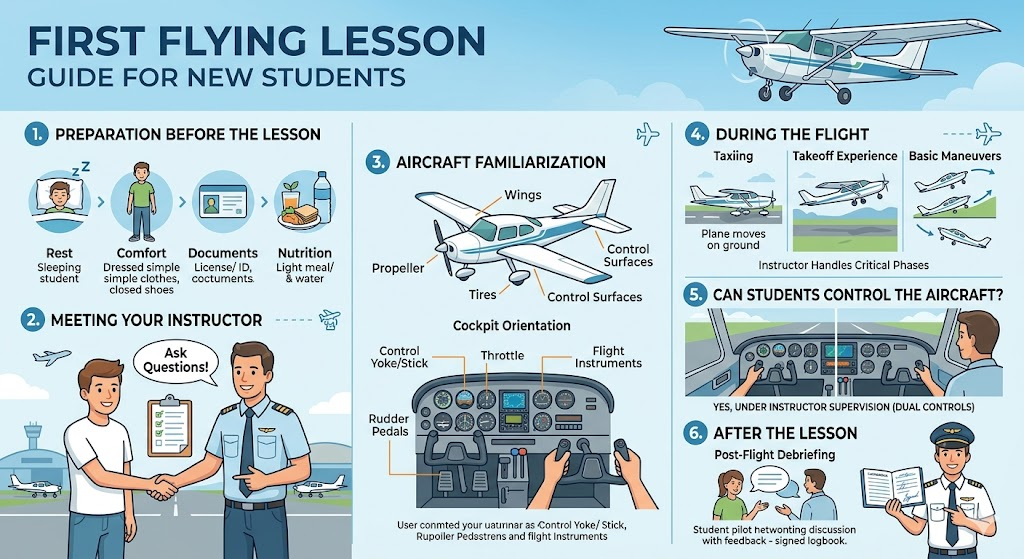
A first flying lesson usually starts with a short introduction at the flight school. You meet your flight instructor, discuss your goals, and learn what the lesson will include. The instructor may explain basic aircraft safety, weather conditions, route planning, and what you can expect during the flight.
Before flying, you may walk around the aircraft with your instructor. This is called a pre-flight inspection. The instructor checks the aircraft and explains important parts such as wings, propeller, tires, fuel, control surfaces, and lights.
Inside the cockpit, you learn about basic instruments, controls, headsets, seatbelts, and communication. During the flight, the instructor handles the main responsibilities, but you may be allowed to hold the controls and feel how the aircraft responds.
After landing, the instructor gives feedback and explains what you learned.
Why the First Flying Lesson Matters
The first flying lesson is important because it gives students a real understanding of aviation. Reading about flying is useful, but sitting in an aircraft and experiencing flight is completely different.
This lesson helps you:
- Build confidence
- Understand basic aircraft movement
- Learn how instructors teach flying
- Experience cockpit communication
- See whether aviation feels right for you
- Start your journey toward pilot training
For many students, the first lesson confirms their passion for flying.
Preparing Before Your First Flying Lesson
Good preparation can make your first flying lesson smoother and more enjoyable.
Get Enough Rest
Sleep well before your lesson. Flying requires attention, listening skills, and quick understanding. If you arrive tired, it may be harder to focus and enjoy the experience.
Dress Comfortably
Wear comfortable clothes suitable for sitting in a small cockpit. Avoid loose accessories or heavy clothing. Closed shoes are best because they help you use the rudder pedals safely.
Bring Required Documents
Carry any required identification or documents requested by the flight school. If you are already enrolled in training, bring your student paperwork, medical documents, or logbook if applicable.
Eat Light and Stay Hydrated
Eat a light meal before flying. Avoid heavy food, too much caffeine, or anything that may make you uncomfortable in the air. Drinking enough water is helpful, but avoid overdoing it before the flight.
Meeting Your Flight Instructor
Your flight instructor is your guide throughout the lesson. They will explain the aircraft, answer your questions, and make sure the flight is safe.
Do not hesitate to ask questions. New students are not expected to know aviation terms or procedures. A good instructor will explain things in a simple and friendly way.
Building trust with your instructor is important because flying is a learning process. You should feel comfortable listening, asking, and learning from feedback.
Aircraft Familiarization
Before takeoff, your instructor may introduce you to the aircraft.
External Aircraft Inspection
The instructor may show you how pilots inspect the aircraft before flight. This may include checking:
- Wings
- Tires
- Fuel level
- Oil level
- Propeller
- Lights
- Control surfaces
- Doors and windows
This inspection helps ensure the aircraft is ready and safe for flying.
Cockpit Orientation
Inside the cockpit, your instructor may explain:
- Seat adjustment
- Seatbelt use
- Headset use
- Radio communication
- Control yoke or stick
- Rudder pedals
- Throttle
- Basic instruments
You do not need to remember everything on the first day. The goal is to become familiar with the cockpit environment.
Understanding Basic Flight Controls
New students often feel overwhelmed when they first see the cockpit, but the basic controls can be understood step by step.
Control Yoke or Stick
The control yoke or stick helps move the aircraft up, down, left, and right. It is one of the main controls used during flight.
Rudder Pedals
Rudder pedals are controlled by your feet. They help control the aircraft’s direction, especially during taxiing and coordinated turns.
Throttle Control
The throttle controls engine power. More power helps the aircraft accelerate or climb, while less power helps slow down or descend.
Flight Instruments
Flight instruments show important information such as altitude, speed, direction, and aircraft attitude. Your instructor will explain the most basic instruments during the lesson.
Pre-Flight Briefing
Before taking off, your instructor gives a pre-flight briefing. This briefing may include:
- Lesson objectives
- Safety instructions
- Weather conditions
- Route plan
- Communication rules
- What to do during takeoff and landing
- Emergency information
This briefing helps you understand the plan and feel more relaxed.
During the Flight
The flight itself is the most exciting part of the lesson.
Taxiing
Taxiing means moving the aircraft on the ground before takeoff. Your instructor may explain how pilots use pedals, brakes, and power to move safely.
Takeoff Experience
During takeoff, the aircraft accelerates along the runway and gradually lifts into the air. This may feel exciting and powerful. Your instructor controls the aircraft and explains what is happening.
Straight and Level Flight
Once in the air, the instructor may demonstrate straight and level flight. This means keeping the aircraft steady at a fixed altitude and direction.
Basic Turns
You may learn how the aircraft turns using gentle control movements. The instructor may show how small inputs create smooth turns.
Climbing and Descending
The instructor may explain how aircraft climb to gain altitude and descend to prepare for landing. You may feel small changes in engine power and aircraft attitude.
Viewing the World from the Air
For many students, seeing the ground from above is unforgettable. It helps them feel the beauty and responsibility of flying.
Can Students Control the Aircraft?
Yes, many first flying lessons allow students to handle the controls for a short time under instructor supervision. Training aircraft usually have dual controls, meaning both the student and instructor can control the aircraft.
The instructor remains fully responsible for safety and can take control at any moment. You may be allowed to try simple movements such as gentle turns or keeping the aircraft level.
This experience helps students understand how sensitive and responsive an aircraft can be.
Common Feelings During the First Flight
It is normal to feel many emotions during your first flying lesson.
Excitement
Most students feel excited when the aircraft takes off and they see the world from above.
Nervousness
Feeling nervous is completely normal. Your instructor is trained to help beginners feel safe and comfortable.
Information Overload
There may be many new things to see and hear. Do not worry if you cannot remember everything. Learning happens gradually.
Sense of Achievement
After landing, many students feel proud and motivated. Completing your first lesson is a major step forward.
Safety During Flight Training
Safety is the most important part of flight training. Flight schools follow strict procedures to ensure each lesson is planned carefully.
Safety depends on:
- Aircraft maintenance
- Weather checks
- Instructor experience
- Pre-flight inspection
- Proper communication
- Student briefing
- Emergency planning
If weather conditions are not suitable, the flight may be delayed or rescheduled. This is normal in aviation and shows that safety comes first.
Mistakes New Students Should Avoid
New students should avoid a few common mistakes before their first flying lesson.
- Arriving tired or unprepared
- Wearing uncomfortable clothes
- Eating too much before flying
- Being afraid to ask questions
- Expecting to master everything immediately
- Ignoring instructor advice
- Overthinking small mistakes
- Not listening during the briefing
Your first lesson is about learning, not perfection.
What Happens After the Flight?
After landing, your instructor may conduct a post-flight debriefing. This is a short discussion about what happened during the lesson.
The instructor may explain:
- What you learned
- What you did well
- What needs improvement
- How the aircraft handled
- What future lessons may include
You may also receive an entry in your training record or logbook if the lesson counts toward formal training.
Tips to Get the Most from Your First Flying Lesson
To make your first lesson better, follow these simple tips:
- Arrive early
- Stay calm and open-minded
- Listen carefully
- Ask questions
- Focus on the experience
- Do not worry about mistakes
- Take notes after the flight
- Review what you learned
- Discuss next steps with your instructor
A positive learning attitude is one of the best qualities of a student pilot.
How the First Lesson Fits into Pilot Training
Your first flying lesson is only the beginning. If you decide to continue, future lessons will teach more detailed flying skills.
You may learn:
- Aircraft control
- Takeoff and landing
- Navigation
- Radio communication
- Weather understanding
- Emergency procedures
- Solo flight preparation
- Pilot license requirements
The first lesson helps you understand what pilot training feels like and whether you want to continue.
Benefits of Taking a Discovery Flight
A discovery flight is often the first flying experience for new students. It is a short introductory lesson designed to help beginners explore aviation.
Benefits include:
- Understanding the training environment
- Meeting a flight instructor
- Experiencing real flying
- Learning basic aircraft controls
- Building confidence
- Exploring aviation as a career
- Deciding whether pilot training is right for you
A discovery flight can be a helpful first step before enrolling in a full pilot training program.
FAQs
1- What should I wear for my first flying lesson?
Wear comfortable clothes and closed shoes. Avoid sandals, high heels, loose scarves, or heavy accessories. You should wear something that allows you to sit comfortably and move your feet easily because you may use rudder pedals during the lesson.
2- Will I get to fly the aircraft?
In many first flying lessons, the instructor may allow you to control the aircraft for a short time. This usually happens in a safe flight area and under close supervision. The instructor remains in full control and can take over whenever needed.
3- How long does a first flying lesson usually last?
A first flying lesson may last around one to two hours in total, including briefing, aircraft inspection, flying time, and post-flight discussion. Actual flying time may be shorter depending on the school, weather, and lesson plan.
4- Is it normal to feel nervous before flying?
Yes, it is completely normal to feel nervous before your first flying lesson. Many students feel the same way. A trained instructor will explain everything clearly and help you feel safe and comfortable throughout the lesson.
5- Do I need aviation knowledge before my first lesson?
No, you do not need prior aviation knowledge for your first flying lesson. The instructor will explain the basics in simple language. However, reading about basic aircraft controls and flight training can help you feel more prepared.
6- What if I get airsick?
Some students may feel slight discomfort during their first flight, especially if the weather is bumpy. Eat light before flying, stay hydrated, and tell your instructor if you feel uncomfortable. Instructors can adjust the flight to help you feel better.
7- Can anyone take a discovery flight?
Most healthy individuals can take a discovery flight, but requirements may vary by flight school. Some schools may have age, weight, or safety requirements. It is best to check with the school before booking the lesson.
8- What happens if the weather is bad?
If weather conditions are not safe, the flight may be delayed or rescheduled. This is a normal part of aviation. Flight schools always prioritize safety over schedules, especially for new students.
9- How much flying will I actually do?
The amount of flying you do depends on the instructor, aircraft, weather, and lesson plan. You may be allowed to try simple controls during the flight, but the instructor will handle critical parts such as takeoff and landing unless appropriate.
10- What should I do after my first lesson?
After your lesson, take notes about what you learned and how you felt. Ask your instructor about the next steps if you want to continue training. You can also review basic aviation topics before your next lesson.
Conclusion
Your first flying lesson is a special experience that introduces you to the world of aviation in a real and practical way. It helps you understand aircraft controls, cockpit procedures, instructor guidance, safety practices, and the feeling of flying above the ground. You do not need to know everything before your first lesson; you only need curiosity, preparation, and a willingness to learn. Some nervousness is normal, but with a supportive instructor and proper guidance, the experience can become exciting and confidence-building. Whether you want to become a pilot or simply explore aviation, your first flying lesson is the first step toward understanding the sky. Enjoy the journey, stay open to learning, and let this first flight inspire your future in aviation.

