
Introduction
Choosing the right flight training school is one of the most critical steps in becoming a professional pilot. Your training institute directly shapes your flying skills, safety awareness, licensing success, and long-term career opportunities. A poor choice can lead to financial loss, incomplete training, and serious delays in your aviation journey.
This guide highlights the most important red flags you should never ignore when selecting a flight training school.
Why Identifying Red Flags Matters in Pilot Training
Flight training is a high-investment, high-responsibility career path where mistakes can be costly. A low-quality institute can negatively impact:
- Safety awareness and cockpit discipline
- Ability to clear DGCA or FAA examinations
- Total cost of training due to hidden fees
- Quality and number of flying hours
- Future airline job opportunities
Because aviation is safety-driven, even small compromises in training quality can create long-term consequences.
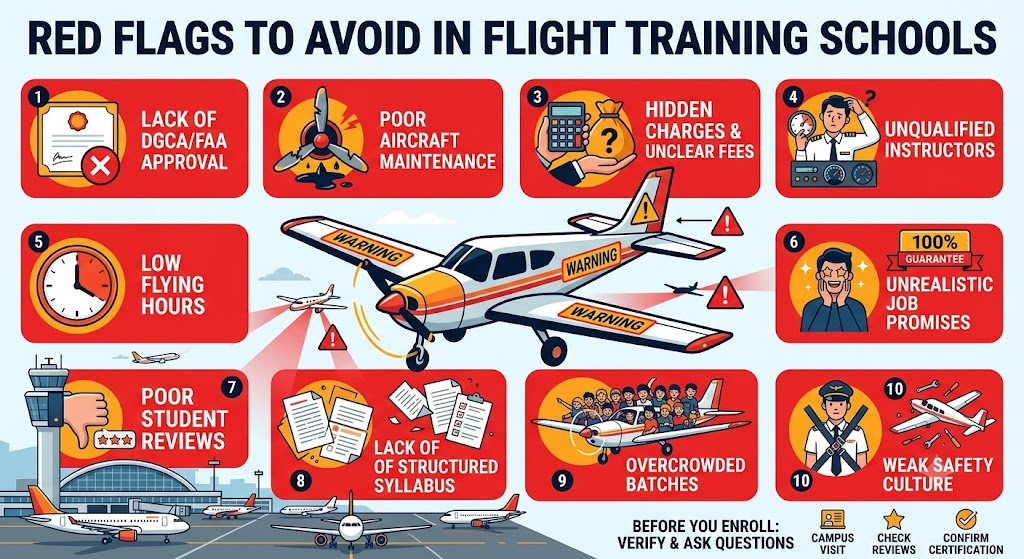
Major Red Flags in Flight Training Schools
Below are the most common warning signs students should carefully evaluate before enrolling.
1. Lack of Official DGCA or FAA Approval
A legitimate flight school must have valid certification from aviation authorities.
Be cautious if:
- Approval documents are missing or unclear
- Certification details cannot be verified
- School avoids showing regulatory compliance
Without proper approval, your license may not be recognized.
2. Poor Aircraft Maintenance Standards
Aircraft condition reflects the school’s commitment to safety.
Warning signs include:
- Old or visibly worn-out aircraft
- Frequent technical breakdowns
- No visible maintenance tracking system
- Limited operational aircraft availability
Safe training requires well-maintained, regularly inspected aircraft.
3. Hidden Charges and Unclear Fee Structure
Transparency in pricing is essential for pilot training.
Red flags:
- No written breakdown of total cost
- Sudden additional charges during training
- Fuel, exam, or flying hour costs not clearly explained
- Pressure to pay large upfront fees
A reliable institute always provides full financial clarity.
4. Unqualified or Inexperienced Instructors
Instructors play a key role in shaping your aviation skills.
Be alert if:
- Instructor qualifications are unclear
- High staff turnover is observed
- Limited real-world flying experience among trainers
- Lack of structured teaching approach
Experienced instructors ensure strong foundational learning.
5. Low Flying Hours or Over-Reliance on Simulators
Practical flying experience is essential for licensing.
Warning signs:
- Excessive simulator use instead of real flying
- Irregular flying schedules for students
- Long waiting periods for flight slots
- Overcrowded batches reducing flight time
Insufficient flying exposure can delay your pilot certification.
6. Unrealistic Job Placement Promises
No flight school can guarantee airline jobs.
Be cautious if:
- “100% job guarantee” is advertised
- No verified airline partnerships exist
- Alumni success records are missing
- Placement claims sound exaggerated
Airline hiring depends on performance, not guarantees.
7. Poor Student Reviews and Reputation
Student feedback reflects real training quality.
Red flags include:
- Repeated complaints about delays
- Poor communication or management issues
- Negative feedback about safety or training quality
- Lack of active alumni network
Consistent negative feedback should not be ignored.
8. Lack of Structured Training Syllabus
A professional flight school follows a clear curriculum.
Warning signs:
- No defined training progression
- Unclear ground school and flight integration
- Absence of structured lesson plans
- Frequent changes in training schedule
A structured syllabus ensures steady skill development.
9. Overcrowded Training Batches
Too many students can reduce training quality.
Problems include:
- Limited aircraft availability
- Reduced individual instructor attention
- Long waiting time for flight hours
- Delayed course completion
Balanced student-to-aircraft ratio is essential.
10. Weak Safety Culture and Operations Management
Safety is the foundation of aviation training.
Red flags:
- Poor operational discipline
- Lack of emergency procedures
- Informal training environment
- Weak airport coordination
A safe training environment is non-negotiable.
How to Verify a Flight Training School
Before making a decision, follow these steps:
- Check official DGCA or FAA certification status
- Visit the campus and inspect aircraft
- Speak with current students and instructors
- Review alumni career paths
- Ask for complete fee structure in writing
- Observe safety practices and operational discipline
Proper verification reduces the risk of poor decisions.
Smart Tips for Choosing the Right Flight School
Instead of focusing on marketing claims, prioritize:
- Strong safety standards and discipline
- Transparent fee structure with no hidden costs
- Adequate real flying hours per student
- Experienced and certified instructors
- Well-maintained aircraft fleet
- Proven student success record
- Clear and structured training program
A good aviation school focuses on quality training, not just admissions.
Common Mistakes Students Make
Many aspiring pilots make avoidable mistakes such as:
- Choosing a school only based on low fees
- Ignoring official certification checks
- Believing job guarantee advertisements
- Not visiting the training center physically
- Overlooking student feedback and reviews
- Rushing the enrollment decision
Careful research can prevent costly errors.
Frequently Asked Questions (FAQs)
1. What is the biggest red flag in a flight training school?
The biggest red flag is lack of official certification like DGCA or FAA approval. Without it, your training may not be valid for licensing or employment.
2. Are job guarantees in flight schools real?
No, genuine airlines do not offer guaranteed jobs through flight schools. These claims are usually marketing tactics and should be verified carefully.
3. How important is aircraft condition in training?
Very important. Poorly maintained aircraft can affect safety, reduce learning quality, and delay flight hours required for licensing.
4. Why are flying hours so important?
Flying hours build real-world experience. Without sufficient flight time, students may struggle during licensing exams and airline assessments.
5. Can simulator training replace real flying?
No, simulators are helpful for practice but cannot replace actual flying experience, which is mandatory for pilot certification.
6. How can I verify a flight school’s reputation?
Check student reviews, talk to alumni, and visit the institute to understand training quality and safety standards.
7. What should be included in a proper fee structure?
A transparent fee structure should include tuition, flying hours, simulator costs, exam fees, and additional charges if any.
8. Why is instructor experience important?
Experienced instructors provide better guidance, real-world aviation insights, and safer training practices for students.
9. What happens if a school is overcrowded?
Overcrowding leads to limited aircraft availability, reduced flight time, and less individual attention from instructors.
10. What is the safest way to choose a flight school?
Verify certification, visit the campus, check aircraft condition, review student feedback, and ensure transparent pricing before enrolling.
Conclusion
Selecting the right flight training school is a defining step in your aviation career. The wrong choice can delay your progress, increase costs, and compromise your safety training. By identifying red flags such as lack of certification, hidden fees, poor aircraft maintenance, and unrealistic job promises, you can make a more informed decision.
A good flight school focuses on safety, structured learning, experienced instructors, and transparent operations. Always take time to research and verify before enrolling, because in aviation, the quality of your training determines the quality of your future.

