
Introduction
The DevSecOps Certified Professional (DSOCP) certification is designed to teach professionals how to integrate security seamlessly into their DevOps workflows. It’s an important certification for anyone wanting to ensure that security vulnerabilities are caught early and continuously managed, without slowing down the development process.
This guide will walk you through everything you need to know about the DSOCP certification. Whether you’re a developer, IT manager, or security professional, this certification will help you gain the skills needed to secure your software development pipeline. By the end, you’ll understand why this certification is so valuable and how it can help you advance in the growing field of DevSecOps.
What is the DevSecOps Certified Professional (DSOCP)?
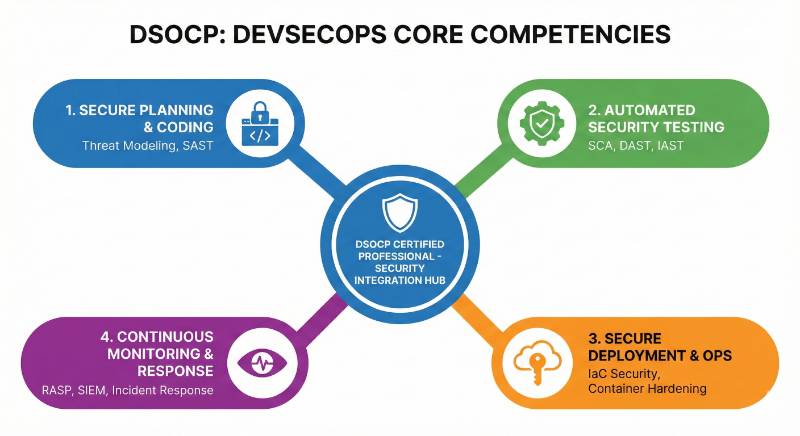
The DevSecOps Certified Professional (DSOCP) certification is an advanced credential that focuses on integrating security practices into the DevOps pipeline. Unlike traditional approaches where security is introduced at the end of the development process, DevSecOps emphasizes incorporating security from the very beginning of the lifecycle. The DSOCP certification covers essential aspects such as secure coding, vulnerability management, security testing, and automated compliance within the CI/CD pipeline.
By earning the DSOCP certification, you demonstrate your ability to ensure security is integrated seamlessly into DevOps, making it easier to detect, mitigate, and prevent security vulnerabilities early in the development process.
Who Should Take the DSOCP Certification?
The DSOCP certification is ideal for professionals who want to specialize in securing the DevOps pipeline. Specifically, it is suited for:
- DevOps Engineers looking to integrate security practices into their existing DevOps workflows.
- Security Engineers who want to focus on automation and integration of security into CI/CD pipelines.
- Cloud Engineers aiming to enhance security in cloud-based environments and deployments.
- Software Engineers who want to build secure software and integrate security measures into their development lifecycle.
- Engineering Managers who wish to oversee secure DevOps processes and guide teams in implementing security from the beginning.
- IT professionals who have a background in security and want to specialize in DevSecOps practices.
Skills You’ll Gain
After completing the DSOCP certification, you will acquire the following skills:
- Security Integration in CI/CD: Learn how to automate security checks and testing throughout the software development pipeline.
- Vulnerability Management: Gain expertise in detecting, managing, and remediating vulnerabilities early in the development process.
- Secure Software Development: Understand secure coding practices, code analysis, and security testing techniques.
- Security Automation Tools: Master tools like Snyk, SonarQube, OWASP ZAP, and Checkmarx for automating security testing and vulnerability scanning.
- Compliance Automation: Learn to automate compliance checks to ensure that software meets regulatory standards like GDPR, HIPAA, and PCI DSS.
- Incident Response: Understand how to respond to and mitigate security incidents in DevOps environments.
Real-World Projects You Should Be Able to Do After It
Upon completing the DSOCP certification, you will be equipped to handle various real-world projects such as:
- Integrating Security into CI/CD Pipelines: Set up security testing tools within the CI/CD pipeline for automatic vulnerability scans and security checks during each build.
- Implementing Security in Cloud Platforms: Apply security practices to cloud environments (AWS, Azure) and container orchestration platforms like Kubernetes.
- Automating Security Scans: Automate static and dynamic code analysis using tools like SonarQube and Snyk to find and fix vulnerabilities during development.
- Managing Vulnerabilities and Compliance: Create systems for continuous monitoring of security issues and automated compliance testing for security policies.
- Incident Response and Remediation: Set up an incident response plan and mitigate vulnerabilities when detected in production environments.
Preparation Plan
The DSOCP certification can be achieved with focused preparation and planning. Below is a structured preparation plan based on your experience level. Whether you’re a beginner, intermediate, or an experienced professional, this plan will help guide you through the necessary steps to succeed.
7-14 Days Preparation Plan (For Professionals with Prior Experience)
For professionals who already have a foundational understanding of DevOps and security concepts, this plan will help you focus on integrating security practices.
- Day 1-3: Review DevOps principles and familiarize yourself with security tools like SonarQube, Snyk, and OWASP ZAP.
- Day 4-7: Dive into integrating security into CI/CD pipelines. Set up automated security scans and vulnerability checks.
- Day 8-10: Learn how to manage vulnerabilities and secure cloud platforms.
- Day 11-14: Practice applying security and compliance automation to real-world projects.
30 Days Preparation Plan (For Intermediate Professionals)
For professionals with some experience in DevOps but limited exposure to security, this plan offers a structured approach.
- Day 1-7: Refresh your understanding of DevOps tools and CI/CD practices. Study secure coding practices.
- Day 8-14: Study security testing and automation tools, focusing on vulnerability scanning and secure software development.
- Day 15-21: Learn how to apply security practices to cloud environments (AWS, Azure).
- Day 22-30: Focus on compliance automation and incident response, and practice securing cloud infrastructures and applications.
60 Days Preparation Plan (For Beginners)
For beginners in DevOps and security, this plan provides a comprehensive overview.
- Day 1-15: Learn the basics of DevOps, including CI/CD, cloud computing, and automation tools.
- Day 16-30: Study security fundamentals such as encryption, secure coding, and security best practices.
- Day 31-45: Dive into DevSecOps tools, focusing on automated security testing and vulnerability management.
- Day 46-60: Implement hands-on projects related to security automation, vulnerability management, and compliance checks within DevOps environments.
Common Mistakes to Avoid
- Skipping Hands-on Practice: DevSecOps is highly practical, and simply reading about tools or security practices won’t suffice. Ensure you get hands-on experience with real-world applications.
- Neglecting Security Testing: In DevSecOps, security should be integrated into every phase of development. Don’t overlook security testing in CI/CD pipelines.
- Focusing Only on Tools: While tools are crucial, DevSecOps is more about the culture of integrating security practices into the development process.
- Ignoring Compliance: Security isn’t just about vulnerabilities; ensure your DevOps practices are also compliant with regulatory standards.
Best Next Certification After DSOCP
After earning the DSOCP certification, consider pursuing the following certifications to continue expanding your skills:
- Certified Kubernetes Security Specialist (CKS): Specialize in securing containerized applications using Kubernetes.
- Certified Cloud Security Professional (CCSP): Focus on securing cloud infrastructures and applications.
- AWS Certified Security Specialty: Learn advanced security practices for AWS cloud environments.
Choose Your Path: DevOps Learning Paths
After completing the DSOCP certification, you can choose one of the following specialized learning paths:
DevOps
Master the entire DevOps lifecycle, from coding to deployment and monitoring, with a focus on automation and collaboration.
DevSecOps
Integrate security practices into DevOps pipelines to ensure secure software delivery and proactive vulnerability management.
Site Reliability Engineering (SRE)
Focus on system reliability, availability, and performance, ensuring that applications run smoothly at scale with minimal downtime.
AIOps/MLOps
Combine AI and machine learning with DevOps to optimize automation, improve monitoring, and enhance decision-making processes.
DataOps
Automate and manage data workflows and pipelines to ensure efficient data processing and support data-driven decision-making.
FinOps
Optimize cloud costs and manage financial operations while integrating DevOps practices, ensuring efficient cloud resource utilization.
Role → Recommended Certifications
| Role | Recommended Certifications |
|---|---|
| DevOps Engineer | DSOCP, Certified Kubernetes Administrator (CKA), AWS Certified DevOps Engineer |
| SRE (Site Reliability Engineer) | DSOCP, Google Cloud Professional Cloud Architect, SRE Certification |
| Platform Engineer | DSOCP, AWS Solutions Architect, HashiCorp Certified Terraform Associate |
| Cloud Engineer | DSOCP, AWS Certified DevOps Engineer, Google Cloud Professional Cloud Architect |
| Security Engineer | DSOCP, CISSP (Certified Information Systems Security Professional) |
| Data Engineer | DSOCP, Microsoft Azure Data Engineer Associate |
| FinOps Practitioner | DSOCP, Certified FinOps Practitioner |
| Engineering Manager | DSOCP, Leadership in DevOps, Certified ScrumMaster (CSM) |
Certification Table
| Certification Name | Track | Level | Who it’s for | Prerequisites | Skills Covered | Recommended Order | Link |
|---|---|---|---|---|---|---|---|
| DevSecOps Certified Professional (DSOCP) | DevSecOps | Advanced | DevOps Engineers, Security Engineers, Cloud Engineers | Knowledge of DevOps principles and practices | DevSecOps integration, CI/CD automation, security testing, vulnerability management | DSOCP first, then Certified Kubernetes Security Specialist (CKS), AWS Certified Security Specialty | DevSecOps Certified Professional (DSOCP) |
Top Institutions Offering DSOCP Certification Training
- DevOpsSchool: Offers expert-led training with hands-on labs, focusing on integrating security into the DevOps lifecycle.
- Cotocus: Provides practical DevSecOps training, covering tools for security automation and vulnerability management.
- Scmgalaxy: Specializes in DevOps and DevSecOps training with a hands-on, project-driven approach.
- BestDevOps: Focuses on secure DevOps practices, offering training on security tools and compliance integration.
- devsecopsschool.com: Provides in-depth DevSecOps training, ensuring professionals are equipped to secure DevOps pipelines.
- sreschool.com: Offers training for Site Reliability Engineers with a focus on security and system reliability.
- aiopsschool.com: Focuses on AIOps, using AI to optimize security and automation in DevOps environments.
- dataopsschool.com: Specializes in DataOps, automating data pipelines while ensuring secure data management in DevOps.
- finopsschool.com: Focuses on FinOps, ensuring financial transparency and security in cloud and DevOps environments.
FAQs About DevSecOps Certified Professional (DSOCP)
- What is the DSOCP certification?
The DSOCP certification focuses on integrating security into DevOps processes and automating security tasks in the CI/CD pipeline. - How difficult is the DSOCP exam?
The exam is moderately difficult, requiring a combination of theoretical knowledge and practical experience with DevOps tools and security practices. - How long does it take to prepare for the DSOCP certification?
Preparation time typically ranges from 7–60 days, depending on your prior knowledge of DevOps and security practices. - What are the prerequisites for DSOCP?
While there are no formal prerequisites, understanding DevOps principles and basic security concepts will be helpful. - What real-world skills will I gain from DSOCP?
You will gain skills in automating security in DevOps pipelines, vulnerability management, and ensuring compliance in the software development lifecycle. - What is the format of the DSOCP exam?
The DSOCP exam includes multiple-choice questions and practical exercises that assess your ability to integrate security into DevOps processes. - Is the DSOCP certification recognized globally?
Yes, the DSOCP certification is recognized worldwide and is highly valued by employers looking for professionals with expertise in DevSecOps. - What are the next certifications to pursue after DSOCP?
After DSOCP, consider pursuing Certified Kubernetes Security Specialist (CKS) or AWS Certified Security Specialty to specialize further in security and cloud environments.
General FAQs about DevSecOps
- What tools are used in DevSecOps?
Popular tools in DevSecOps include SonarQube for static code analysis, Snyk for vulnerability management, OWASP ZAP for dynamic security testing, and Checkmarx for code scanning. - How does DevSecOps improve collaboration between teams?
DevSecOps fosters collaboration by involving security teams early in the development process, ensuring that development, operations, and security teams work together to build secure applications. - How does automation play a role in DevSecOps?
Automation helps ensure that security checks, vulnerability scans, and compliance checks are seamlessly integrated into the CI/CD pipeline, making security testing efficient and consistent. - Can DevSecOps be applied to existing DevOps workflows?
Yes, DevSecOps can be integrated into existing DevOps workflows by adding security tools and practices, such as automated security testing, code scanning, and compliance monitoring. - What challenges come with implementing DevSecOps?
Some challenges include overcoming cultural resistance, integrating security tools with existing DevOps processes, and ensuring that teams have the right skills to manage security within DevOps. - What industries benefit the most from DevSecOps?
Industries like finance, healthcare, government, and e-commerce benefit most from DevSecOps due to the critical need for data protection, regulatory compliance, and secure software delivery. - How do you measure success in DevSecOps?
Success can be measured through reduced security incidents, faster vulnerability remediation, more efficient deployments, and continuous compliance with industry regulations. - Is DevSecOps a one-time implementation?
No, DevSecOps is a continuous process. Security should be integrated into every phase of the development lifecycle, and monitoring must be ongoing to address new threats and vulnerabilities. - What real-world projects should I expect to work on after the DSOCP certification?
You will be able to work on projects such as automating security in CI/CD pipelines, vulnerability scanning, compliance checks, incident response, and securing cloud environments. - What’s the next certification after DSOCP?
After DSOCP, you can pursue certifications such as Certified Kubernetes Security Specialist (CKS), AWS Certified Security Specialty, or Certified Cloud Security Professional (CCSP) to deepen your knowledge of security in cloud and containerized environments. - What is the difference between DevOps and DevSecOps?
While DevOps focuses on automating the software development lifecycle, DevSecOps goes a step further by embedding security into every stage of development, ensuring security is a continuous, integrated practice. - What are the main benefits of implementing DevSecOps?
The main benefits include reduced security risks, faster delivery times, improved collaboration between teams, and better compliance with regulatory standards.
Conclusion
The DevSecOps Certified Professional (DSOCP) certification is a powerful credential for professionals looking to integrate security seamlessly into DevOps pipelines. With the growing emphasis on secure software delivery, earning the DSOCP certification will help you build a career in DevSecOps, cloud security, and IT operations. Whether you’re a DevOps engineer or a manager, this certification will enhance your skills and open doors to new opportunities in the ever-evolving field of secure software development.

