
Introduction
Choosing a flying school is one of the most important decisions in an aspiring pilot’s journey. It directly impacts your training quality, safety standards, financial investment, and even your future career opportunities in aviation. Many students rush into admission based on advertisements, low fees, or peer suggestions, without properly comparing multiple schools.
However, not all flying schools offer the same level of training, aircraft quality, instructor experience, or career support. A careful comparison before admission can save you from financial loss, training delays, and long-term regret.
This guide will help you understand exactly how to compare flying schools before admission so you can make a smart, informed, and career-safe decision.
Why Comparing Flying Schools is Important
Comparing flying schools is not optional—it is essential for every serious aviation student.
1. Large Financial Investment
Flight training is expensive, and costs vary significantly between schools. Comparing helps you avoid overpaying or hidden charges.
2. Training Quality Differences
Not all schools follow the same standards. Some offer better aircraft, instructors, and structured learning.
3. Career Impact
The quality of your training influences your confidence, skill level, and job opportunities in aviation.
A well-informed comparison ensures your investment leads to a strong pilot career foundation.
Key Factors to Compare Flying Schools
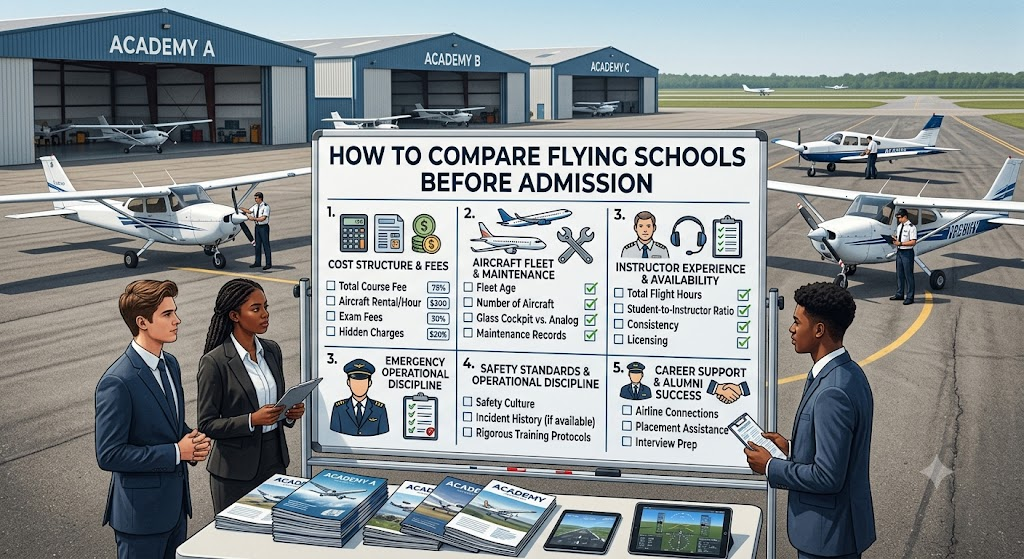
1. Total Cost Structure and Hidden Charges
Always compare the full cost breakdown, not just the advertised fee.
Check for:
- Aircraft rental per hour
- Fuel surcharges
- Exam and licensing fees
- Simulator charges
- Landing and airport fees
- Study material costs
A transparent school will clearly explain all expenses upfront.
2. Aircraft Fleet Quality and Maintenance
Aircraft quality is critical for both safety and learning experience.
Compare:
- Age and condition of aircraft
- Number of available aircraft
- Maintenance schedule and records
- Type of aircraft used for training
Well-maintained, modern aircraft improve learning efficiency and safety.
3. Instructor Experience and Availability
Instructors shape your entire training journey.
Evaluate:
- Instructor qualifications and licenses
- Total flying experience
- Instructor-to-student ratio
- Consistency of assigned instructors
Experienced instructors provide better guidance and faster skill development.
4. Approvals and Certifications
A legitimate flying school must be approved by the aviation authority.
Compare:
- Regulatory approval status
- Validity of training programs
- Recognition of issued licenses
Without proper approval, your license may not be valid for professional aviation careers.
5. Training Structure and Curriculum
A structured training system ensures smooth learning progression.
Compare:
- Ground school syllabus
- Flight hour requirements
- Exam preparation support
- Step-by-step licensing path (PPL → CPL → IR)
A well-organized curriculum reduces confusion and delays.
6. Location, Weather, and Flying Opportunities
Weather conditions affect your training speed.
Compare:
- Number of flying days per month
- Weather stability in the region
- Air traffic congestion
- Airport accessibility
Better weather means more flying hours and faster completion.
7. Simulator Usage and Training Technology
Modern training tools improve learning quality.
Check:
- Availability of flight simulators
- Type and quality of simulators
- Integration with real flight training
Simulators help students practice safely before real flights.
8. Safety Standards and Operational Discipline
Safety is the most important factor in aviation.
Compare:
- Maintenance standards
- Safety protocols
- Emergency training procedures
- Accident or incident history (if available)
A strong safety culture reflects a professional training environment.
9. Student Reviews and Alumni Feedback
Real experiences matter more than advertisements.
Compare:
- Student satisfaction levels
- Alumni success stories
- Honest feedback about training quality
- Common complaints or issues
Talking to current and past students gives real insight.
10. Career Support and Job Assistance
Flight training should connect to your career goals.
Compare:
- Airline interview preparation support
- Placement assistance programs
- Industry partnerships
- Alumni network strength
While no school can guarantee a job, strong support improves opportunities.
Step-by-Step Flying School Comparison Checklist
Step 1: Shortlist Multiple Schools
Select at least 3–5 flying schools for comparison.
Step 2: Visit Each School
Check aircraft, classrooms, simulators, and infrastructure in person.
Step 3: Compare Cost Transparently
Ask for full fee structure and identify hidden charges.
Step 4: Talk to Students and Instructors
Understand real training experience beyond marketing claims.
Step 5: Verify Certifications
Confirm official approval from aviation authorities.
Step 6: Evaluate Training Environment
Assess discipline, safety standards, and operational quality.
Red Flags When Comparing Flying Schools
1. Unrealistic Job Guarantees
No legitimate school can guarantee airline placement.
2. Lack of Cost Transparency
Hidden fees indicate poor financial clarity.
3. Poor Aircraft Maintenance
Unsafe or outdated aircraft are a major warning sign.
4. Pressure-Based Admissions
High-pressure sales tactics often indicate unreliable institutions.
5. No Clear Certification Details
If approval status is unclear, avoid the school.
Final Decision Tips
Before final admission, keep these important tips in mind:
- Always prioritize safety over cost
- Choose quality training over cheaper options
- Verify all claims independently
- Never rush into enrollment decisions
- Focus on long-term career outcomes
A careful comparison today can prevent major problems in your aviation journey later.
FAQs
1. Why is it important to compare flying schools before admission?
Comparing flying schools helps you understand differences in cost, training quality, safety standards, and career support, ensuring you choose the best option for your goals.
2. What should I compare first when selecting a flying school?
Start by comparing total cost, aircraft quality, and official approvals, as these directly impact your training experience and license validity.
3. How many flying schools should I compare before deciding?
It is recommended to compare at least 3–5 flying schools before making a final admission decision.
4. Is the cheapest flying school always the best option?
No, cheaper schools may have hidden costs or lower training quality. Always focus on value, safety, and reputation rather than price alone.
5. How can I verify if a flying school is genuine?
Check official aviation authority approvals, visit the campus, and speak to current students for confirmation.
6. Do flying schools guarantee job placement?
No, no legitimate flying school can guarantee a job. However, some provide career guidance and interview preparation support.
7. What is the most important factor in choosing a flying school?
Safety standards, instructor quality, and regulatory approval are the most important factors when selecting a flying school.
Conclusion
Comparing flying schools before admission is one of the most important steps in becoming a successful pilot. It ensures that you choose the right environment for training, avoid unnecessary financial risks, and build a strong foundation for your aviation career.
By evaluating factors such as cost structure, instructor quality, aircraft condition, certifications, and student feedback, you can make a confident and informed decision. Remember, the right flying school doesn’t just teach you how to fly—it shapes your entire future in aviation.

