
Introduction
Flight training can cost a lot of money. Aircraft choice plays a big role in that cost.
Different aircraft have different running costs. Some use more fuel. Others need more maintenance. Some have advanced cockpit systems. These factors can change the hourly rental price.
The aircraft type can also affect how many hours a student needs. So, students should look beyond the hourly rate. They should compare the full training cost before choosing a flight school.
Why Aircraft Type Matters in Flight Training
Flight schools spend money to operate every aircraft. They pay for fuel, maintenance, insurance, parts, and inspections. They also manage engine and equipment costs.
These costs affect the aircraft rental price. A school may charge more for an aircraft with higher operating costs.
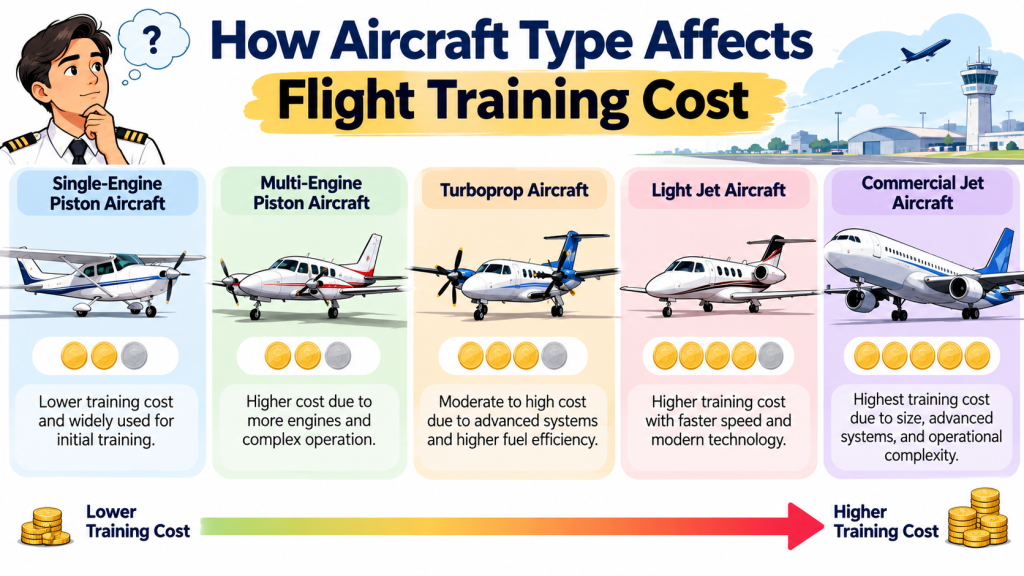
Aircraft size also matters. A small trainer needs fewer resources than a larger aircraft. A multi-engine aircraft needs two engines and more fuel. This usually raises its operating cost.
Aircraft age can also affect costs. Older aircraft may have lower rental rates. However, they may need more maintenance.
Newer aircraft may cost more to rent. They may offer newer equipment and improved cockpit systems.
Because of this, students should compare the full picture. A low hourly rate does not always mean a lower final training bill.
Common Aircraft Types Used for Pilot Training
Flight schools use different aircraft for different training needs.
Single-engine piston aircraft are common for basic training. They help students learn core flying skills. These aircraft often have simple systems and smaller engines.
Modern trainers may include digital displays and advanced navigation systems. These features can increase aircraft costs.
Multi-engine aircraft support advanced training. Students learn how to manage two engines and more complex systems. These aircraft usually cost more to operate.
Some schools also use older aircraft. These can provide effective training at different rental rates.
The aircraft’s condition, equipment, location, and maintenance program all affect the price.
How Single-Engine Aircraft Affect Training Cost
Many students begin flight training in a single-engine aircraft. These aircraft often provide a practical platform for basic lessons.
A single engine usually means fewer engine-related operating costs. Fuel use may also stay lower than in larger aircraft.
The aircraft rental rate still depends on several factors. These include the aircraft model, engine, age, equipment, and maintenance history.
For example, two single-engine aircraft may have different hourly rates. One may have a newer engine and modern avionics. The other may use older equipment.
Students should also check what the rental price includes. Some schools include fuel in the rate. Others may charge fuel separately.
Instructor fees may also come separately. Landing fees and other airport charges may apply as well.
So, students should never compare aircraft prices using only one number.
How Multi-Engine Aircraft Increase Training Costs
Multi-engine training usually costs more than basic single-engine training.
A multi-engine aircraft has two engines. That means the school must maintain two powerplants. The aircraft can also use more fuel.
The aircraft itself may have more complex systems. It may also require more expensive parts and inspections.
Students also need special training for multi-engine operations. They must learn how to manage engine failures and other aircraft systems.
The higher aircraft rate can therefore affect the total training budget.
Students should ask for a clear breakdown of multi-engine training costs. This helps them understand the aircraft charge and other related fees.
New Aircraft vs Older Training Aircraft
Aircraft age can influence training costs in different ways.
Older aircraft may have lower rental rates. Many have simple systems that work well for basic training.
However, older aircraft can require more maintenance. Maintenance downtime may also affect training schedules.
Newer aircraft may have higher rental rates. They may include modern avionics and improved cockpit systems.
New aircraft can also offer useful training on newer technology. This can matter for students who later move to more advanced aircraft.
Still, newer does not always mean better for every student. The right choice depends on training goals, aircraft condition, availability, and total cost.
Students should ask about maintenance records and aircraft availability. They should also ask how the school handles aircraft downtime.
How Avionics and Aircraft Equipment Affect Cost
Avionics refers to the electronic systems used in an aircraft.
Basic trainers may use traditional instruments. Other aircraft may use digital displays and advanced navigation systems.
Modern avionics can increase the aircraft purchase and maintenance cost. These costs can affect the rental rate.
Advanced equipment can also give students useful experience. For example, a student may learn to use GPS navigation or electronic flight displays.
However, students should understand their training needs first. They should not pay extra simply because an aircraft has more equipment.
The best approach involves comparing the equipment with the training syllabus. Students should know what systems they actually need for their course.
Aircraft Type and Hourly Rental Rates
Flight schools often advertise aircraft prices by the hour. Students should understand exactly what that rate covers.
Some schools use a wet rental rate. This usually includes fuel.
Other schools may use a dry rate. In that case, the student may pay separately for fuel.
Instructor charges may also come separately. Some schools may add landing fees or other airport charges.
For example, an aircraft may have a low hourly rental rate. But fuel and instructor costs may increase the final lesson price.
Students should always ask for a complete cost breakdown.
This makes it easier to compare two flight schools fairly.
Aircraft Type and Total Training Hours
The hourly aircraft rate is only one part of the final cost.
Students also need enough flight hours to meet their training requirements. Individual students may need different amounts of practice.
Aircraft availability can affect this process. A student may need to wait if the school has too few aircraft.
Maintenance can also cause delays. Weather can affect flight schedules as well.
Aircraft handling can influence the learning process too. Different aircraft have different performance and handling characteristics.
However, students should not assume that one aircraft will always reduce training hours.
Training time depends on the student, instructor, syllabus, weather, aircraft availability, and other factors.
A Simple Aircraft Cost Example
Consider two hypothetical training aircraft.
Aircraft A costs $150 per flight hour. Aircraft B costs $190 per hour.
A student completes 100 hours on Aircraft A.
The aircraft rental cost would be:
100 × $150 = $15,000
Now assume the student uses Aircraft B for 90 hours.
The aircraft rental cost would be:
90 × $190 = $17,100
This example shows why hourly price alone can be misleading.
Aircraft B has a higher hourly rate. The student also flies fewer hours. Yet the aircraft rental cost remains higher in this example.
These figures are only illustrations. Actual prices vary by country, aircraft, school, fuel costs, and operating conditions.
Other Costs Students Should Consider
Aircraft rental does not cover every flight training expense.
Students may also pay for instructor time. Ground lessons can create additional costs.
Other possible expenses include:
- Medical examinations
- Flight tests
- Written examinations
- Study materials
- Flight equipment
- Headsets
- Landing fees
- Airport charges
- Accommodation
- Transportation
- Additional training hours
- Retest fees
Some schools include certain costs in their packages. Others charge them separately.
Students should ask for a complete fee structure before starting training.
This helps reduce unexpected expenses later.
Common Mistakes Students Make
Students often focus only on the advertised aircraft rate. This can create an incomplete cost estimate.
Another mistake involves ignoring fuel charges. A dry aircraft rate may look low at first.
Some students also forget instructor fees. These fees can add a significant amount to the total training cost.
Aircraft availability also matters. A school with limited aircraft may create scheduling delays.
Students should also ask about maintenance. Frequent downtime can affect the training schedule.
Another common mistake involves assuming that newer aircraft always cost more overall. Aircraft costs depend on many factors.
Students should compare aircraft rates, fuel, instructor charges, availability, and other fees together.
Important Considerations Before Choosing an Aircraft
Before selecting a flight school, ask clear questions about its aircraft.
Start by asking which aircraft you will use during training.
Then ask for the hourly rental rate. Find out whether fuel comes with that rate.
Ask whether instructor charges are separate. Also ask about landing and airport fees.
Check the aircraft’s age and general condition. Ask how the school handles scheduled maintenance.
Aircraft availability also deserves attention. Ask how many aircraft the school has for your course.
You should also ask whether you will change aircraft during training.
Some students may train on one aircraft type first. They may later move to another type for advanced training.
A clear cost plan can help you avoid surprises.
Questions to Ask Your Flight School
Before paying for training, consider asking these questions:
- What aircraft will I use for basic training?
- What is the aircraft’s hourly rental rate?
- Does the rate include fuel?
- Is the instructor fee separate?
- Are landing fees included?
- How often does the aircraft undergo maintenance?
- What happens when an aircraft becomes unavailable?
- Will I use more than one aircraft type?
- What equipment comes with the aircraft?
- What costs could increase my final training bill?
Clear answers can help you build a more realistic budget.
FAQs
1. Does aircraft type affect flight training cost?
Yes. Aircraft type affects fuel use, maintenance, insurance, and rental rates. These factors can change the overall training cost.
2. Are single-engine aircraft cheaper to train on?
They often have lower operating costs than multi-engine aircraft. However, actual prices vary by aircraft, school, and location.
3. Why does multi-engine training cost more?
Multi-engine aircraft have two engines and more complex systems. They can also use more fuel and require additional maintenance.
4. Are older training aircraft always cheaper?
No. Older aircraft may have lower rental rates. But higher maintenance costs can affect the total cost.
5. Do modern avionics increase training costs?
They can increase aircraft costs and rental rates. However, they can also provide useful training on modern cockpit systems.
6. Does aircraft fuel consumption affect training costs?
Yes. Fuel forms part of the aircraft’s operating cost. Higher fuel use can increase the cost of each flight.
7. Can aircraft choice affect total training hours?
Aircraft choice can affect the training experience. However, total hours depend on many factors, including student progress and weather.
8. What should students check in an aircraft rental rate?
Check whether the rate includes fuel, instructor time, taxes, landing fees, and other charges.
9. Is the cheapest aircraft always the best choice?
Not necessarily. Students should compare the complete training cost, aircraft condition, availability, and training needs.
10. What other costs should students include?
Students should consider medical fees, exams, equipment, instructor charges, landing fees, accommodation, and possible extra training.
Conclusion
Aircraft type can have a major effect on flight training cost.
Single-engine aircraft often support basic training at lower operating costs. Multi-engine aircraft usually cost more because they use more resources.
Aircraft age and equipment can also change the hourly rate. Maintenance and fuel costs add another layer to the final bill.
Students should therefore avoid choosing a flight school based only on its advertised aircraft price.
Instead, compare the complete cost of training. Look at aircraft rates, fuel, instructors, availability, maintenance, and other fees.
A clear cost comparison can help students plan their flight training budget with fewer surprises.

