
Introduction
Flight training is a demanding process that requires students to develop much more than aircraft-handling skills. Along with learning navigation, communication, procedures, and decision-making, student pilots need to maintain the physical and mental fitness required to perform their duties effectively.
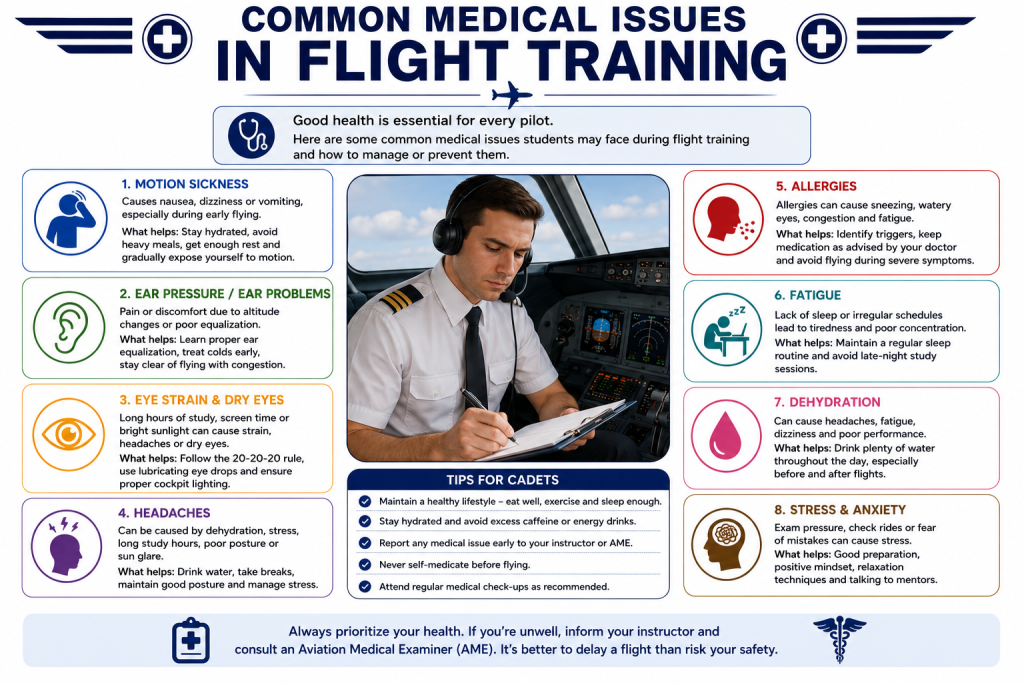
During flight training, students may experience common health concerns such as motion sickness, fatigue, dehydration, headaches, ear and sinus problems, vision difficulties, stress, sleep problems, and minor illnesses. Some of these issues may be temporary, while others may require further medical evaluation.
Having a medical issue does not automatically mean that someone cannot become a pilot. Its significance depends on the nature and severity of the condition, its effect on performance, and the medical standards applicable to the student’s intended license.
Understanding these issues early can help aspiring pilots make responsible decisions about their health and know when professional medical advice may be necessary.
Understanding Medical Fitness in Flight Training
Medical fitness in aviation refers to the physical and psychological capability required to safely perform the duties associated with flying.
Depending on the type of operation, pilots may need appropriate levels of:
- Vision
- Hearing
- Concentration
- Alertness
- Coordination
- Cognitive function
- Physical capability
- Emotional stability
Medical requirements are not identical everywhere. They can vary according to the country, aviation authority, pilot license, and type of operation.
For this reason, students should learn about the medical requirements that apply to their specific training pathway rather than assuming that the requirements of another pilot automatically apply to them.
An appropriately qualified aviation medical examiner can help students understand their individual medical situation and the relevant certification requirements.
Common Medical Issues in Flight Training
Motion Sickness
Motion sickness is one of the common difficulties that some students experience when they first begin flying.
The movement of an aircraft can feel unfamiliar, especially during turns, climbs, descents, and other maneuvers.
Possible symptoms include:
- Nausea
- Dizziness
- Sweating
- Headache
- General discomfort
- Loss of appetite
Some students find that symptoms become less troublesome as they become more accustomed to flying.
Students experiencing persistent or severe motion sickness should discuss it with an appropriate healthcare professional. They should also avoid taking medication on their own simply because another pilot has recommended it, as some medicines can affect alertness or coordination.
Fatigue
Fatigue is an important issue during flight training because students often have demanding schedules.
A typical student may need to balance flight lessons with ground school, examinations, self-study, travel, and other responsibilities. Early morning flights and irregular schedules can also affect sleep.
Fatigue may affect:
- Concentration
- Reaction time
- Memory
- Decision-making
- Situational awareness
- Learning ability
A student who is extremely tired may not perform at their normal level, even if they believe they can complete the lesson.
Recognizing fatigue and discussing fitness to fly when necessary is therefore an important part of responsible flight training.
Dehydration
Dehydration can become a concern during long training sessions, particularly in hot weather.
Students may spend time outdoors around aircraft before and after a flight, making adequate hydration particularly relevant.
Possible symptoms include:
- Thirst
- Headache
- Weakness
- Dizziness
- Tiredness
- Difficulty concentrating
Students should pay attention to their physical condition and maintain appropriate hydration throughout their training day.
Headaches
Headaches can occur for many different reasons and are not necessarily related to aviation itself.
Possible contributors include:
- Lack of sleep
- Dehydration
- Stress
- Eye strain
- Illness
- Environmental factors
An occasional mild headache may have a simple cause, but frequent, severe, unusual, or unexplained headaches should be discussed with a healthcare professional.
Students should also consider whether a headache is affecting their ability to concentrate or perform flight-related tasks.
Ear and Sinus Problems
Ear and sinus health can be particularly relevant to pilots because pressure changes occur during climb and descent.
When the pressure inside the aircraft changes, the body normally equalizes pressure within the ears and surrounding areas. Congestion or certain ear and sinus conditions can make this process uncomfortable or difficult.
Possible symptoms include:
- Ear pressure
- Ear pain
- Reduced hearing
- Sinus discomfort
- Difficulty equalizing pressure
Students with significant or persistent ear or sinus symptoms should seek appropriate medical advice before continuing flight training.
Vision Problems
Vision is an important part of flying because pilots need to interpret instruments, observe the external environment, identify runway markings, and monitor other visual information.
Common vision-related concerns may include:
- Refractive errors
- Difficulty seeing distant objects
- Difficulty reading instruments
- Eye strain
- Changes in vision
Wearing glasses or contact lenses does not automatically prevent someone from becoming a pilot. Whether a student’s vision meets the required standard depends on the applicable aviation medical requirements.
Any significant or unexplained change in vision should be appropriately evaluated.
Hearing Difficulties
Hearing is important for effective communication during flight operations.
Pilots may need to hear:
- Air traffic control transmissions
- Other crew members
- Ground personnel
- Warning sounds
- Other relevant cockpit audio
Temporary hearing difficulties can occur with congestion, sinus problems, or respiratory illness. Persistent changes in hearing should be evaluated by an appropriate professional.
Clear hearing is particularly important when radio communication is part of the training environment.
Stress and Anxiety
Flight training can be challenging, and students may experience stress at different stages.
Common sources include:
- Flight examinations
- Instructor feedback
- Solo flights
- Academic workload
- Weather
- Training progress
- Fear of making mistakes
- Career uncertainty
Some nervousness before an important flight or examination can be a normal response to a challenging situation.
However, persistent or severe anxiety that interferes with daily life or flight training should be discussed with an appropriate professional. Students should not feel that they need to hide significant difficulties because they are worried about their aviation career.
Sleep Problems
Adequate sleep is essential for learning and alertness.
Students may experience sleep difficulties because of:
- Irregular schedules
- Late-night studying
- Stress
- Early flight lessons
- Travel
- Poor sleep routines
Insufficient sleep can affect:
- Attention
- Memory
- Reaction time
- Decision-making
- Alertness
Developing a consistent sleep routine can support both academic performance and flight training.
Minor Illnesses and Infections
Students can become ill with common conditions such as colds, fever, or respiratory infections.
Even a relatively minor illness can affect flight performance through:
- Fatigue
- Congestion
- Headache
- Reduced concentration
- Ear discomfort
- General weakness
Students should assess whether they are genuinely fit to participate in a flight lesson rather than feeling obligated to fly simply because a lesson has been scheduled.
Medication-Related Concerns
Medication is another important consideration in aviation medical fitness.
Some medications can cause effects such as:
- Drowsiness
- Dizziness
- Reduced alertness
- Impaired coordination
- Difficulty concentrating
Students should not assume that a prescription or over-the-counter medicine is automatically suitable for flying.
When medication or a medical condition could affect fitness to fly, students should obtain appropriate guidance from a qualified aviation medical professional or healthcare provider.
Temporary Medical Issues vs Ongoing Concerns
Not every symptom experienced during flight training indicates a long-term medical condition.
| Temporary Issue | Potential Ongoing Concern |
|---|---|
| Short-term fatigue | Persistent sleep problems |
| Temporary congestion | Recurrent or significant sinus problems |
| Occasional headache | Frequent or unexplained severe headaches |
| Temporary motion sickness | Persistent difficulty tolerating flight |
| Temporary eye strain | Significant or changing vision problems |
| Temporary ear blockage | Persistent hearing difficulties |
This comparison is only a general way of understanding the difference. Recurring, severe, unusual, or persistent symptoms should be evaluated appropriately by a qualified healthcare professional.
How Medical Issues Can Affect Flight Performance
A health problem can affect flying even when it does not appear to be serious.
Concentration
Pain, fatigue, illness, and stress may make it more difficult for a student to maintain attention on flight tasks.
Situational Awareness
Pilots need to continuously process information from the aircraft, instruments, outside environment, and communication systems.
Physical discomfort or reduced alertness may make this process more difficult.
Reaction Time
Fatigue and some medical conditions or medication effects may affect how quickly a person responds to information.
Decision-Making
Students make decisions throughout a flight. Significant illness, exhaustion, stress, or discomfort may interfere with this ability.
Communication
Hearing problems, fatigue, or severe discomfort can make communication with instructors, controllers, or other crew members more difficult.
The effect of a medical issue varies from one person to another, which is why individual evaluation is important.
When Should a Student Pilot Avoid Flying?
Students should take their fitness seriously before every flight.
They should consider discussing their condition with their instructor or an appropriate medical professional when experiencing:
- Significant illness
- Severe fatigue
- Unexplained dizziness
- Significant vision changes
- Significant hearing changes
- Severe or unusual headaches
- Persistent ear or sinus pain
- Medication side effects
- Any condition that makes them feel unable to perform safely
Students should never feel pressured to fly simply because a lesson has already been scheduled.
Missing a training flight because of illness or significant fatigue is preferable to attempting to fly when a student is not fit to perform the required tasks.
Preparing for a Pilot Medical Examination
A pilot medical examination can be an important step in the training process.
Students can prepare by understanding their medical history and having relevant information available.
Know Your Medical History
Students should be familiar with significant previous illnesses, injuries, surgeries, and other relevant medical conditions.
Provide Accurate Medication Information
Current medications should be disclosed accurately to the appropriate medical professional.
Bring Relevant Medical Records
When requested or appropriate, previous medical reports, prescriptions, examination results, or other documentation may help provide a clearer medical history.
Be Honest About Medical Conditions
Students should answer medical questions accurately rather than attempting to hide a condition.
A medical condition does not automatically produce the same certification outcome for every person. Its assessment can depend on its severity, stability, treatment, functional impact, and the applicable aviation medical standard.
Ask Questions
Students should ask the medical examiner to explain anything they do not understand about the examination or relevant requirements.
Importance of Honest Medical Disclosure
Honest medical disclosure is an important part of responsible aviation.
Students may sometimes worry that reporting a medical condition will automatically end their aviation plans. However, medical conditions can be evaluated according to their individual circumstances and applicable standards.
Relevant considerations may include:
- Severity
- Stability
- Treatment
- Functional impact
- Medical history
- Type of pilot license
Trying to hide a medical condition can create additional complications.
Students should discuss their concerns with an aviation medical examiner rather than relying on assumptions, internet discussions, or informal advice from other pilots.
How Student Pilots Can Maintain Good Health During Training
Maintain a Consistent Sleep Routine
Regular sleep can support concentration, memory, learning, and alertness.
Students should avoid making severe sleep deprivation a normal part of their training routine.
Stay Appropriately Hydrated
Maintaining appropriate hydration is particularly important during hot weather and long training days.
Eat Regularly and Sensibly
A demanding training schedule can make it easy to skip meals.
Students should maintain a sensible eating routine that supports their energy and comfort throughout the day.
Manage Training Stress
Students can reduce unnecessary training stress through preparation, time management, communication with instructors, and maintaining a balanced routine.
If stress becomes persistent or overwhelming, professional support may be appropriate.
Protect Hearing
Aircraft and airport environments can be noisy.
Students should follow appropriate hearing-protection practices when required or recommended.
Look After Eye Health
Students should pay attention to changes in their vision and obtain appropriate eye examinations when necessary.
Avoid Flying When Unfit
One of the most important habits a student pilot can develop is recognizing when they are not fit to fly.
Being honest about illness, fatigue, medication effects, or significant symptoms is part of responsible aviation behavior.
Medical Fitness and Different Pilot Licenses
Medical requirements are not identical for every pilot.
They can vary depending on:
- Pilot license
- Country
- Aviation authority
- Type of operation
- Aircraft operation
- Professional responsibilities
A student pursuing one type of license may therefore have different medical requirements from someone pursuing another.
Students should identify the requirements applicable to their intended license early in the training process.
Current information should be obtained from the relevant aviation authority or an appropriately qualified aviation medical examiner.
Common Mistakes Student Pilots Make About Medical Issues
Ignoring Symptoms
Students may sometimes assume that recurring discomfort will disappear on its own.
Significant or recurring symptoms should not simply be ignored.
Self-Medicating Without Guidance
A medicine that appears harmless in everyday life may have side effects that matter during flight operations.
Students should seek appropriate professional guidance before flying when medication is involved.
Hiding Medical Problems
Some students may fear that reporting a health problem will affect their training.
However, hiding relevant medical information is not a responsible approach to aviation medical fitness.
Flying While Extremely Fatigued
Students can feel pressure to complete every scheduled flight.
However, severe fatigue can affect concentration, reaction time, and decision-making.
Assuming Glasses Automatically Prevent Pilot Training
Wearing corrective lenses does not automatically mean that a person cannot pursue pilot training.
The applicable medical standard determines whether the individual’s vision meets the required criteria.
Waiting Until the Last Minute for Medical Certification
Students should understand applicable medical requirements early in their aviation journey.
This can help identify whether additional medical documentation or evaluation may be required.
Role of the Aviation Medical Examiner
An aviation medical examiner is an appropriately authorized medical professional who assesses applicants according to relevant aviation medical standards.
Depending on the applicable requirements, an examination may consider:
- Medical history
- Vision
- Hearing
- General physical health
- Relevant medical conditions
- Medications
- Other aviation-related medical factors
The purpose of the assessment is to determine medical fitness according to the applicable standard.
Students should treat the medical examination as an opportunity to discuss genuine health concerns rather than something they need to pass by withholding information.
Frequently Asked Questions
1. What are the most common medical issues during flight training?
Common issues may include motion sickness, fatigue, dehydration, headaches, ear and sinus problems, vision concerns, hearing difficulties, stress, sleep problems, and minor illnesses. Their frequency and impact vary between individuals.
2. Can motion sickness prevent someone from becoming a pilot?
Not necessarily. Some students become more comfortable with aircraft movement as they gain experience. Persistent or severe symptoms should be discussed with an appropriate medical professional.
3. Does wearing glasses prevent pilot training?
No, not automatically. Many pilots use corrective lenses. Whether a student’s vision meets the applicable standard depends on the medical requirements for their particular license and operation.
4. Can a student pilot fly while taking medication?
Students should not assume that medication is suitable for flying. Some medicines can cause drowsiness, dizziness, or other effects that may affect performance. Appropriate professional guidance should be obtained.
5. Why is sleep important for student pilots?
Sleep supports concentration, memory, alertness, reaction time, and decision-making. These abilities are important during both ground training and flight operations.
6. What should a student do if they feel unwell before a flight?
Students should honestly assess their condition and communicate appropriately with their instructor. If the condition could affect fitness to fly, appropriate medical advice may be necessary.
7. Can stress affect flight training?
Yes. Significant stress can affect concentration, sleep, decision-making, and overall performance. Normal nervousness is different from persistent or severe difficulties that interfere with daily functioning.
8. Why are hearing and ear health important for pilots?
Pilots need to hear radio transmissions, crew communication, and relevant cockpit sounds. Ear and sinus problems can also make pressure changes during climb and descent uncomfortable.
9. Should students disclose previous medical conditions during a pilot medical examination?
Students should provide accurate information as required during the medical examination. Relevant medical history should not be deliberately hidden.
10. Can medical requirements differ between pilot licenses?
Yes. Medical requirements can differ according to the pilot license, aviation authority, country, and type of operation. Students should verify the requirements applicable to their intended aviation pathway.
Conclusion
Medical fitness is an important part of responsible flight training. Student pilots may experience common issues such as motion sickness, fatigue, dehydration, headaches, ear and sinus problems, vision concerns, hearing difficulties, stress, sleep problems, and minor illnesses.
These issues do not automatically prevent someone from pursuing a career or training as a pilot. Their significance depends on the individual’s circumstances, the effect on flight performance, and the medical requirements applicable to the intended license.
Students can support their training by maintaining healthy routines, getting adequate rest, staying appropriately hydrated, paying attention to changes in their health, and avoiding flight when they are clearly unfit.
Most importantly, students should be honest about medical concerns and seek guidance from appropriately qualified aviation medical professionals when needed. Understanding medical fitness early can help aspiring pilots approach flight training with greater awareness, responsibility, and preparedness.

