
Introduction
Becoming a pilot requires more than learning how to control an aircraft. Student pilots also need to understand the importance of physical health, mental alertness, sleep, nutrition, and overall medical fitness. These factors can influence concentration, coordination, decision-making, communication, and the ability to respond appropriately during flight training.
The good news is that aspiring pilots do not generally need to be elite athletes. Pilot fitness is primarily about being medically fit and capable of performing the responsibilities associated with flight safely. The exact medical standards, examinations, and certification requirements depend on the country, aviation authority, licence category, and type of flying a student intends to pursue.
For this reason, students should understand the applicable requirements before investing heavily in flight training. A proper aviation medical examination can identify whether additional assessment is needed and can help students understand their individual medical situation.
This guide explains the major fitness considerations for student pilots, including vision, hearing, sleep, nutrition, exercise, mental readiness, medication awareness, medical examinations, and practical ways to maintain fitness throughout flight training.
Why Fitness Matters for Student Pilots
Flying requires a pilot to process information continuously. Even during a routine training flight, students may need to monitor instruments, communicate with instructors or Air Traffic Control, maintain aircraft control, navigate, observe the surrounding environment, and make decisions.
Physical and mental fitness can support:
- Concentration
- Situational awareness
- Coordination
- Communication
- Decision-making
- Reaction to changing conditions
- Workload management
- Learning during training
- Consistent flight performance
A student who arrives for a lesson exhausted, dehydrated, ill, or significantly distracted may not perform at their normal level.
Fitness should therefore be considered part of flight preparation rather than something separate from pilot training.
Understanding Pilot Medical Fitness
Pilot medical fitness is not the same thing as being physically fit in the athletic sense.
Someone does not necessarily need exceptional strength, endurance, or athletic ability to become a pilot. Instead, the relevant question is whether the individual meets the applicable medical standards and can safely perform the duties associated with the intended licence and operation.
Medical fitness may involve assessment of areas such as:
- General medical history
- Vision
- Hearing
- Cardiovascular health
- Neurological health
- Musculoskeletal function
- Mental health considerations
- Medication use
- Previous medical conditions
The exact requirements vary between aviation authorities and licence categories.
A person who holds a medical certificate should also understand that certification does not mean they are automatically fit for every flight on every day. Temporary illness, significant fatigue, medication effects, or other circumstances may make someone temporarily unfit to fly.
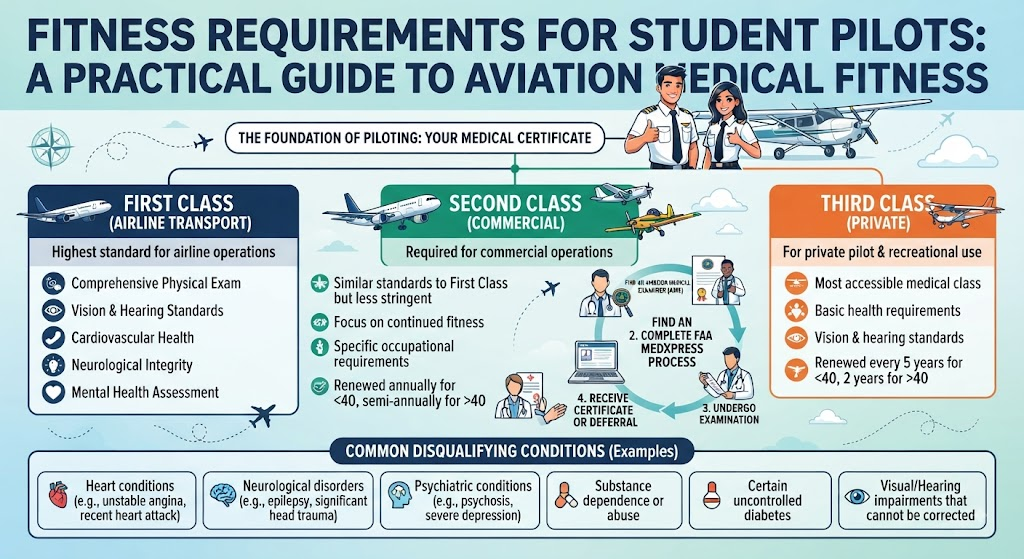
Medical Examination for Student Pilots
Depending on the country and intended pilot licence, students may need to complete an aviation medical examination before or during flight training.
The examination is intended to determine whether the applicant meets the relevant medical standards.
Depending on the applicable requirements, an aviation medical assessment may involve:
- Medical history
- General physical examination
- Vision assessment
- Hearing assessment
- Blood pressure or cardiovascular evaluation
- Relevant neurological assessment
- Review of medications
- Review of previous medical conditions
Students should provide complete and accurate information during the examination. Withholding relevant medical information can create problems later and may affect the medical certification process.
If an examiner requests additional tests or specialist reports, students should follow the appropriate process rather than assuming that an additional examination means they cannot pursue aviation.
Vision Requirements for Student Pilots
Good vision is important because pilots rely heavily on visual information.
During flight, pilots may need to read instruments, identify aircraft and landmarks, monitor the runway environment, observe weather conditions, and maintain visual awareness of their surroundings.
Vision assessment may consider factors such as:
- Distance vision
- Near vision
- Corrected vision
- Colour perception
- Visual fields
- General eye health
Wearing glasses or contact lenses does not automatically mean a person cannot become a pilot. Many pilots use corrective lenses.
However, the specific visual standards depend on the applicable aviation authority and licence category.
Students should therefore have their vision assessed through the appropriate aviation medical process instead of assuming that a particular eyesight measurement automatically determines eligibility.
Hearing Requirements for Student Pilots
Hearing is another important part of aviation communication.
Pilots need to understand radio transmissions, communicate with other crew members, listen to instructors, and remain aware of relevant sounds in the operating environment.
Hearing assessments may therefore form part of an aviation medical examination.
A student with concerns about hearing should discuss them with the appropriate aviation medical examiner. Hearing ability and medical eligibility should be evaluated according to the standards applicable to the student’s intended licence.
It is not appropriate to assume that every hearing difficulty automatically prevents someone from becoming a pilot.
Physical Fitness and General Health
Student pilots generally do not need to follow an extreme fitness program.
Instead, maintaining good general health can make the physical and mental demands of training easier to manage.
Useful areas to consider include:
Cardiovascular Health
Good cardiovascular health contributes to overall physical wellbeing and endurance.
Musculoskeletal Health
Pilots need sufficient mobility and coordination to operate aircraft controls and perform normal cockpit tasks.
Coordination
Flight training involves coordinating visual information, physical control inputs, communication, and decision-making.
General Endurance
Long training days can be tiring. Maintaining reasonable physical conditioning may help students handle demanding schedules.
General Health Management
Regular medical care and responsible management of existing health conditions can help students remain aware of their fitness status.
Students should not attempt to self-diagnose whether a medical condition affects their eligibility. Aviation medical questions should be discussed with qualified professionals familiar with the applicable standards.
Sleep and Fatigue Management
Sleep is one of the most important fitness considerations for student pilots.
A lack of adequate sleep can affect:
- Attention
- Reaction time
- Memory
- Concentration
- Decision-making
- Learning
- Situational awareness
- Communication
Flight training requires students to process large amounts of information. Fatigue can make this more difficult.
Student pilots should develop healthy sleep habits by:
- Maintaining a consistent sleep schedule
- Getting adequate rest before flight lessons
- Avoiding unnecessary late nights before training
- Recognizing signs of excessive fatigue
- Planning study time responsibly
- Allowing sufficient recovery after demanding training
A student should not attempt to fly simply because a lesson has already been scheduled if they are too fatigued to perform safely.
Discussing fatigue with a flight instructor is a responsible part of pilot self-awareness.
Nutrition and Hydration for Student Pilots
Nutrition can also influence energy and concentration during training.
Student pilots should focus on a balanced and sustainable eating pattern rather than extreme diets.
Useful habits include:
- Eating regular balanced meals
- Including appropriate sources of protein, carbohydrates, fruits, and vegetables
- Staying adequately hydrated
- Avoiding excessive caffeine
- Avoiding very heavy meals immediately before demanding activities
- Carrying water during longer training periods
Dehydration can contribute to tiredness and discomfort, which may interfere with concentration.
Students should also be cautious about unverified supplements marketed for energy, focus, or performance. Any supplement or medication that could affect health or alertness should be discussed with an appropriate healthcare professional.
Exercise and Physical Activity
Regular physical activity can support general health and wellbeing.
Student pilots can choose activities that are practical and sustainable, such as:
- Walking
- Running
- Cycling
- Swimming
- Strength training
- Mobility exercises
- Recreational sports
The objective is not to build an extreme physique. It is to maintain a healthy level of physical activity that supports general wellbeing.
Students should also avoid exercising excessively immediately before demanding flight activities if they are unusually fatigued, dehydrated, or physically uncomfortable.
A balanced routine is generally more useful than short periods of extreme exercise followed by inactivity.
Mental Fitness and Emotional Readiness
Pilot fitness includes mental readiness as well as physical health.
Students need to manage information, follow procedures, make decisions, communicate effectively, and respond to changing situations.
Important aspects of mental readiness include:
- Concentration
- Self-awareness
- Emotional regulation
- Decision-making
- Stress management
- Professional judgment
- Ability to learn from mistakes
Flight training can sometimes be challenging. Students may experience anxiety before their first solo, pressure during examinations, frustration after a difficult lesson, or concerns about performance.
Experiencing normal training stress does not mean someone is unsuitable for aviation.
However, persistent or severe mental health difficulties should be addressed appropriately with qualified healthcare professionals. Students should not rely on internet advice to determine whether a particular mental health condition or treatment affects aviation medical eligibility.
Stress Management for Student Pilots
Stress can affect concentration, memory, communication, and decision-making.
Student pilots may experience stress because of:
- Flight examinations
- Academic requirements
- Financial pressure
- Performance expectations
- Difficult weather conditions
- New flight environments
- Training setbacks
- Career uncertainty
Healthy strategies can include:
- Planning training activities in advance
- Maintaining adequate sleep
- Exercising regularly
- Taking appropriate breaks
- Preparing thoroughly for flights
- Discussing training concerns with instructors
- Maintaining supportive relationships
- Seeking professional support when needed
Students should remember that asking for help is part of responsible self-management.
Medication and Flying
Medication requires particular attention in aviation.
Some medicines may affect:
- Alertness
- Reaction time
- Coordination
- Vision
- Judgment
- Concentration
- Sleepiness
This can include both prescription and non-prescription medicines.
Students should never assume that a medication is safe for flying simply because it is commonly available.
They should:
- Inform the appropriate aviation medical professional about relevant medications
- Follow applicable aviation authority guidance
- Understand potential side effects
- Ask about alternative treatments when appropriate
- Avoid flying if medication effects make them unfit
Students should not stop prescribed medication simply to meet perceived aviation requirements. Medication decisions should be made with a qualified healthcare professional and, where appropriate, an aviation medical examiner.
Alcohol, Tobacco, and Recreational Substances
Substances that affect alertness, coordination, judgment, or consciousness can create serious safety concerns in aviation.
Alcohol can impair performance, while its effects may continue after a person no longer feels intoxicated.
Recreational drugs can also affect judgment, reaction time, perception, and coordination. Some medications may interact with other substances and create additional risks.
Student pilots should:
- Follow all applicable aviation rules
- Avoid flying while impaired
- Understand that feeling normal does not necessarily mean being fit to fly
- Discuss relevant substance or medication concerns with an appropriate professional
Students should never use informal timing formulas from the internet as a substitute for aviation regulations and professional guidance.
Temporary Conditions That Can Affect Fitness to Fly
A student may meet the requirements for a medical certificate and still be temporarily unfit for a particular flight.
Examples can include:
- Fever
- Significant illness
- Severe sleep deprivation
- Acute injury
- Medication side effects
- Significant dehydration
- Severe stress
- Certain gastrointestinal illnesses
- Any condition that affects alertness or aircraft-handling ability
Students should develop the habit of asking themselves before each flight:
“Am I genuinely fit to perform safely today?”
If the answer is uncertain, the appropriate response is to discuss the situation with the flight instructor and seek medical guidance when necessary.
Cancelling or postponing a lesson because of genuine fitness concerns is a responsible decision, not a sign of weakness.
Fitness Considerations at Different Stages of Pilot Training
| Training Stage | Fitness Considerations | What Students Should Focus On |
|---|---|---|
| Before flight school | Medical eligibility | Understand applicable medical requirements |
| Ground training | Concentration and routine | Sleep, nutrition, hydration, and study habits |
| Initial flight training | Alertness and coordination | Rest and physical readiness |
| Solo training | Self-awareness and judgment | Recognize personal limitations |
| Advanced flight training | Workload management | Fatigue and stress management |
| Commercial preparation | Consistency and discipline | Sustainable health and fitness habits |
These are general considerations rather than universal regulatory requirements. The actual medical requirements depend on the student’s country, aviation authority, licence, and intended operation.
Common Fitness Mistakes Student Pilots Should Avoid
Ignoring Sleep Before a Flight
Staying awake late to study or socialize can reduce alertness during training.
Better approach: Prioritize adequate rest before important flight activities.
Flying While Sick
Students sometimes feel pressure to attend a scheduled lesson even when they are unwell.
Better approach: Inform the instructor and determine whether the lesson should be postponed.
Taking Unfamiliar Medication Before Flying
A new medicine may cause unexpected side effects.
Better approach: Check its aviation relevance with an appropriate healthcare professional or aviation medical examiner before flying.
Skipping Meals
Going through a long training session without appropriate food can contribute to discomfort and reduced energy.
Better approach: Plan balanced meals and suitable snacks around the training schedule.
Becoming Dehydrated
Busy students may forget to drink enough water.
Better approach: Maintain appropriate hydration throughout the day.
Relying on Excessive Caffeine
Large amounts of caffeine may affect sleep, anxiety, or physical comfort.
Better approach: Use caffeine moderately and avoid allowing it to replace adequate sleep.
Ignoring Stress
Unmanaged stress can affect concentration and decision-making.
Better approach: Recognize stress early and use healthy coping strategies.
Hiding Health Concerns
Students may worry that reporting a health problem will affect their aviation career.
Better approach: Discuss relevant concerns honestly with qualified aviation medical professionals.
Assuming a Medical Certificate Means Permanent Fitness
A medical certificate does not eliminate the need for daily self-assessment.
Better approach: Evaluate your condition before each flight.
How to Prepare for a Pilot Medical Examination
Students can make the medical examination process easier by preparing relevant information in advance.
Before an examination, consider:
Review Your Medical History
Be familiar with previous significant illnesses, surgeries, injuries, and medical conditions.
Prepare Medication Information
Keep an accurate list of current prescription and non-prescription medications.
Bring Relevant Medical Records
If additional medical reports or previous examination results are relevant, keep them available.
Be Honest With the Examiner
Accurate information helps the aviation medical examiner make an appropriate assessment.
Ask Questions
If you do not understand a requirement, ask the examiner for clarification.
Check Current Requirements
Medical standards can change. Always verify the current requirements of the aviation authority responsible for your intended licence.
Questions to Ask an Aviation Medical Examiner
Students may find it useful to ask:
- What medical certificate is appropriate for my intended licence?
- What examinations are required?
- Are corrective lenses acceptable under the applicable standards?
- Are any current medications relevant to my medical assessment?
- What should I do if I become temporarily unwell?
- When should I report a change in health?
- Are additional medical tests necessary?
- How frequently does the medical certificate need to be renewed?
- What official medical guidance should I review?
- What should I do if I am uncertain about my fitness before a flight?
Fitness Areas Student Pilots Should Monitor
| Fitness Area | Why It Matters | What Students Can Do |
| Vision | Supports visual scanning and aircraft operation | Complete required eye examinations |
| Hearing | Supports radio and crew communication | Complete required hearing assessments |
| Sleep | Supports attention and decision-making | Maintain a consistent sleep routine |
| Nutrition | Supports energy and concentration | Eat balanced meals |
| Hydration | Supports general wellbeing | Drink sufficient fluids |
| Exercise | Supports general health | Maintain regular physical activity |
| Mental readiness | Supports judgment and concentration | Manage stress and seek appropriate support |
| Medication awareness | Some medicines can affect performance | Check with qualified professionals |
| Substance awareness | Impairment can compromise safety | Follow applicable rules and avoid flying impaired |
Student Pilot Fitness Checklist
Before and during flight training, students can use the following checklist:
- Complete the required aviation medical examination
- Understand the medical standards applicable to the intended licence
- Maintain adequate sleep
- Stay appropriately hydrated
- Eat balanced meals
- Maintain regular physical activity
- Monitor stress and mental readiness
- Understand the potential effects of medications
- Avoid flying while impaired
- Recognize temporary health limitations
- Communicate relevant concerns with the instructor
- Follow aviation medical guidance
- Keep important medical information organized
- Seek professional advice when uncertain about fitness to fly
Frequently Asked Questions
1. What are the basic fitness requirements for student pilots?
Student pilot medical requirements depend on the country, aviation authority, licence category, and intended operation. Generally, applicants need to meet applicable medical standards relating to areas such as vision, hearing, general health, and functional capability.
2. Do student pilots need to be physically fit?
Student pilots do not generally need to be elite athletes. They should, however, maintain sufficient physical and mental fitness to safely perform flight-related duties and meet the applicable medical standards.
3. Can someone who wears glasses become a pilot?
Wearing glasses or contact lenses does not automatically prevent someone from becoming a pilot. The relevant question is whether the person’s vision meets the applicable aviation medical standards, including any requirements concerning corrected vision.
4. Is a medical examination required before flight training?
The requirements depend on the country, licence, and training pathway. Students should determine which medical certificate or examination is required before beginning the relevant stage of flight training.
5. Why is hearing important for student pilots?
Hearing supports communication with instructors, Air Traffic Control, other crew members, and aviation personnel. Hearing requirements are assessed according to the applicable aviation medical standards.
6. Can medication affect a pilot’s fitness to fly?
Yes. Some medications can affect alertness, coordination, reaction time, vision, or judgment. Students should consult an appropriate aviation medical professional before flying while using medication that may affect performance.
7. How important is sleep for student pilots?
Adequate sleep is extremely important because fatigue can affect concentration, memory, reaction time, decision-making, and situational awareness. Students should avoid flying when excessively fatigued.
8. Can stress affect pilot performance?
Yes. Significant stress can affect concentration, communication, decision-making, and situational awareness. Students should develop healthy stress-management strategies and seek appropriate professional support when needed.
9. What should a student pilot do when feeling unwell before a flight?
The student should inform the flight instructor and assess whether they are genuinely fit to participate. If there is uncertainty about a medical condition, medication, or symptoms, appropriate medical advice should be obtained.
10. How can student pilots maintain good fitness throughout training?
Students can focus on consistent sleep, balanced nutrition, hydration, regular physical activity, stress management, responsible medication use, and appropriate medical care. They should also develop the habit of assessing their fitness before every flight.
Key Takeaways
- Student pilots need medical fitness rather than exceptional athletic ability.
- Exact medical requirements vary by aviation authority, licence category, and operation.
- Vision and hearing are important parts of pilot medical fitness.
- Adequate sleep supports concentration, reaction time, and decision-making.
- Balanced nutrition and hydration can support training performance.
- Regular physical activity can contribute to overall health.
- Mental readiness and stress management are important aspects of pilot fitness.
- Some medications can affect alertness and may have aviation implications.
- A medical certificate does not mean a pilot is automatically fit for every flight.
- Students should never fly when illness, fatigue, medication effects, or other circumstances make them unfit.
- Individual medical questions should be discussed with an appropriately qualified aviation medical professional.
Conclusion
Fitness requirements for student pilots are about much more than physical strength or athletic performance. Successful flight training requires a combination of appropriate medical fitness, alertness, concentration, sound judgment, and responsible lifestyle habits.
Aspiring pilots should understand the medical requirements that apply to their intended licence and complete the appropriate aviation medical examination through the relevant process. They should also recognize that daily fitness matters even after receiving medical certification. Poor sleep, illness, medication effects, severe stress, dehydration, or impairment can affect a person’s ability to fly safely.
Maintaining healthy routines can make the demands of flight training easier to manage. Adequate rest, balanced nutrition, hydration, regular physical activity, stress management, and honest communication with qualified professionals all contribute to responsible pilot preparation.
Most importantly, students should avoid making assumptions about their medical eligibility based on general online information. Aviation medical standards can vary and change, so individual questions should be discussed with an appropriate aviation medical examiner and the relevant aviation authority.
Medical Disclaimer: This article provides general educational information about fitness considerations for student pilots. It does not replace an aviation medical examination, professional medical advice, or the current regulations and medical standards of the applicable aviation authority.

