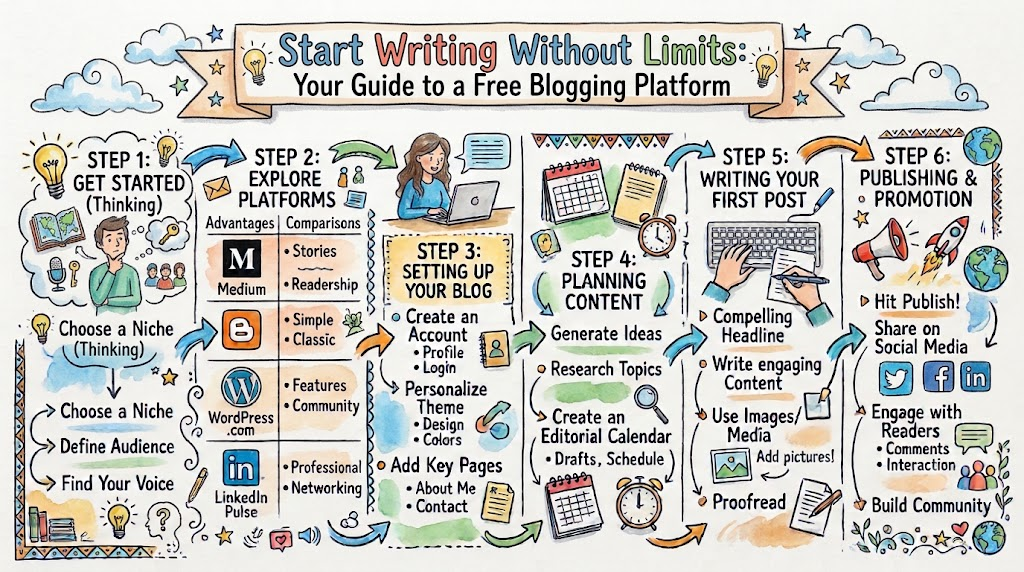
Introduction
Every great blog starts with one simple idea. You may want to share your knowledge, tell stories, or teach something new. But where should you publish your first article?
A Free Blogging Platform gives you a simple place to begin. You do not need to spend money on separate hosting right away. You can focus on writing and sharing useful information.
Blogging also helps you build an online identity. Over time, your articles can show your interests, skills, and knowledge. The first step is to choose a platform that matches your goals.
This guide explains how to start, write, and manage a blog. It also explores how BlogOrbix supports different types of writers.
1. Turn Your Ideas Into a Blog
You do not need to be a professional writer to start blogging. You only need a topic that you want to discuss.
Think about the subjects you enjoy. You may know a lot about technology, travel, education, food, or business.
Start by writing down a few ideas. Then choose one subject for your first article.
Here are some topics you can explore:
- Technology: Explain apps, software, tools, and digital skills.
- Education: Share study tips, lessons, and learning guides.
- Travel: Write about places, trips, and personal experiences.
- Business: Explain useful ideas for business owners.
- Lifestyle: Share hobbies, routines, and everyday knowledge.
- Creativity: Publish stories, poems, and original ideas.
Choose a topic that you can discuss with interest. This makes it easier to plan future articles.
2. Understand How Blogging Platforms Work
A blogging platform helps you create and publish articles. It gives your content an online home.
Most hosted platforms manage the basic technical setup. You can write your content without building a website from scratch.
A platform may offer:
- A writing editor.
- An online publishing option.
- A blog address.
- Hosting for your content.
- Basic content management tools.
- Options for different types of posts.
The exact features depend on the service. Read the current terms before you create your blog.
3. Choose a Platform That Fits Your Needs
Do not select a platform only because it offers a free plan. Think about what you want to achieve.
A personal writer may need a simple publishing space. A business may need a place to share guides and updates.
Use these points when comparing platforms:
- Simple setup: You should understand how to create a blog.
- Writing experience: The editor should feel easy to use.
- Hosting options: Check whether hosting comes with the free plan.
- Blog address: Understand the subdomain and domain choices.
- Content support: Check whether the platform suits your topics.
- Author options: Review whether it supports multiple contributors.
- Service limits: Read the rules about available features.
A good choice should meet your current needs. You can review other options as your goals change.
4. Compare Blogging Platforms by Purpose
Different people use blogs for different reasons. Your main goal can help you choose the right publishing setup.
| Blog Type | Main Goal | Example Content |
|---|---|---|
| Personal blog | Share personal interests | Stories and experiences |
| Educational blog | Help people learn | Lessons and study tips |
| Business blog | Share business knowledge | Guides and updates |
| Professional blog | Show skills and expertise | Tutorials and case studies |
| Creative blog | Share original work | Poems, stories, and art |
You do not need to cover every subject. Start with one clear direction and build from there.
5. Create a Blog for Free in Simple Steps
Starting a blog becomes easier when you follow a clear process. Take your time with each step.
Step 1: Decide Your Blog’s Purpose
Ask yourself why you want to start writing. Do you want to teach, inform, entertain, or share experiences?
Your answer will guide your content choices.
Step 2: Pick a Blog Name
Choose a name that relates to your main topic. Keep it short and easy to understand.
Avoid names that are difficult to spell. A clear name helps readers remember your blog.
Step 3: Select Your Publishing Platform
Compare the available free options. Review their hosting, address, writing tools, and terms.
Choose a platform that supports your basic needs.
Step 4: Set Up Your Blog
Follow the platform’s account setup process. Add the details it requests and choose your available blog address.
Keep your blog information clear and accurate.
Step 5: Prepare Your First Article
Choose one useful topic. Write a title that tells readers what they will learn.
Divide the article into short sections. Use simple words and helpful examples.
Step 6: Review and Publish
Read your article before publishing. Correct spelling mistakes and unclear sentences.
Check whether the article answers its main question. Then publish it through your platform.
6. Why Free Blog Hosting Matters
Hosting gives your blog a place on the internet. It helps readers open your published pages.
Many beginners do not want to pay for hosting at the start. A platform with Free Blog Hosting can reduce this initial cost.
Before selecting a free hosting service, check these details:
- Does the free plan include hosting?
- Does it provide a blog address?
- Are there storage or publishing limits?
- Does the platform explain its service rules?
- Can you understand the upgrade options?
- Does the service meet your current publishing needs?
Free hosting can help you test your ideas. However, always keep copies of your important writing.
7. Free Subdomains and Custom Web Addresses
Your blog needs an address that readers can open. Some platforms provide a free subdomain.
A subdomain includes the platform’s main domain in your blog address. A custom domain uses a separate name that you choose and register.
| Detail | Free Subdomain | Custom Domain |
|---|---|---|
| Address style | Includes platform name | Uses your chosen domain |
| Starting cost | May come with a free plan | Usually needs registration payment |
| Setup | Often simpler | May need DNS settings |
| Common use | New blogs and practice | Personal or business branding |
Check the platform’s current domain rules. Some services limit custom domains to paid plans.
8. Write Better Articles With a Blogging Platform for Writers
A Blogging Platform for Writers should make writing feel simple. You should spend more time developing ideas than handling technical tasks.
Use a basic writing routine:
- Choose one clear subject.
- Write down the main points.
- Create a useful headline.
- Arrange your ideas in order.
- Use short paragraphs.
- Add examples when needed.
- Check your facts.
- Review the final draft.
You do not need complex words to explain a subject. Clear writing helps readers understand your message.
9. Publish Useful Content Through an Online Publishing Platform
An Online Publishing Platform helps writers share articles with readers. It can support different subjects and writing styles.
You may publish:
- How-to guides.
- Learning resources.
- Personal stories.
- Product or service information.
- Industry explanations.
- Creative writing.
- Professional advice.
Focus on the reader’s needs. Explain the topic in a clear and honest way.
10. Build a Simple Article Publishing Routine
Writing becomes easier when you follow the same basic process. A routine also helps you avoid missing important details.
Use these steps when you Publish Articles Online:
- Find a useful topic.
- Understand the reader’s main question.
- Research the subject.
- Prepare a short outline.
- Write a clear introduction.
- Explain each point in its own section.
- Add examples or useful details.
- Check facts and spelling.
- Review the article on screen.
- Publish when the draft feels ready.
Do not rush just to publish more articles. Give each post enough attention.
11. Personal Blogging Platform: Keep Your Voice Original
A Personal Blogging Platform gives you space to share your own ideas. You can write about your interests and experiences.
You may start with simple subjects:
- Your learning journey.
- Books you enjoy.
- Places you have visited.
- Skills you want to develop.
- Lessons from daily life.
- Creative projects.
- Personal opinions and reflections.
Use your own words. Do not copy another writer’s work.
You can also create a simple writing plan. Choose a few topics each month and work through them at your own pace.
12. Business Blogging Platform: Share Information With Customers
A Business Blogging Platform helps companies publish useful information. It gives them a place to explain their work and answer common questions.
A business blog may include:
- Service explanations.
- Product updates.
- Customer education guides.
- Industry information.
- Company news.
- Frequently asked questions.
- Practical tips for customers.
Keep your information accurate. Avoid making promises that you cannot support.
Useful articles can help people understand your business. They do not guarantee traffic, leads, or sales.
13. Work Together With a Multi-Author Blogging Platform
Some blogs need contributions from different people. A Multi-Author Blogging Platform can support content from several writers.
For example, an education blog may include teachers and students. A technology blog may include developers and other experts.
A team can share writing responsibilities:
- One writer can explain a topic.
- Another contributor can cover a different subject.
- A reviewer can check facts and clarity.
- An editor can prepare the final article.
Set clear rules before accepting contributions. Decide who reviews content and who publishes each post.
14. Connect With a Blogging Community for Writers
Writing can feel easier when you learn from other people. A Blogging Community for Writers gives readers and writers a way to explore different ideas.
You can learn by reading articles from other creators. You may also discover subjects that you had not considered before.
A healthy writing community can support:
- Knowledge sharing.
- Different viewpoints.
- Creative ideas.
- Helpful discussions.
- Learning from experience.
- Discovery of independent writers.
Respect every creator’s original work. Give credit when you use information from another source.
15. How BlogOrbix Supports Online Publishing
BlogOrbix gives writers, creators, professionals, and businesses a place to share content.
It supports people who want to publish stories, tutorials, knowledge, and experiences. Its publishing space focuses on a simple writing experience.
Here are some key points about BlogOrbix:
- Free hosting: Start without buying separate web hosting.
- Personal subdomains: Use a BlogOrbix subdomain for your blog.
- Simple writing space: Focus on creating and sharing articles.
- Different topics: Write about technology, business, education, travel, lifestyle, and creativity.
- Multi-author contributions: Support content from different contributors.
- Business publishing: Share useful information about your work.
- Content discovery: Help readers explore content from independent publishers.
BlogOrbix can support personal and professional publishing. Review its current terms to understand its available features and limits.
Visit BlogOrbix.com to explore the platform.
16. Mistakes New Bloggers Should Avoid
A new blog does not need to look perfect. However, a few common mistakes can make content harder to read.
Avoid these problems:
- Unclear topics: Give each article one main purpose.
- Long paragraphs: Break large text into smaller sections.
- Weak headlines: Use titles that explain the article.
- Copied writing: Create original content in your own words.
- Poor research: Check facts before sharing information.
- No proofreading: Read every article before publishing.
- Unrealistic expectations: Give your blog time to develop.
- Ignoring service terms: Understand the platform’s rules.
Focus on improving one part of your blog at a time. Small changes can make your content more useful.
17. A Quick Checklist for Your First Blog Post
Before publishing, review this simple checklist:
- Choose a clear topic.
- Write a helpful title.
- Understand your target reader.
- Prepare a short outline.
- Use simple words.
- Add useful headings.
- Keep paragraphs short.
- Check facts and examples.
- Correct spelling mistakes.
- Avoid copied content.
- Review the final article.
- Follow the platform’s publishing rules.
This checklist can help you prepare each article with care.
18. Frequently Asked Questions
1. What is a Free Blogging Platform?
A Free Blogging Platform lets people create and publish blog posts without paying for basic access. Some platforms also include hosting and a free subdomain. Each service has its own rules and limits. Check those details before creating an account. Beginners can use free platforms to learn writing and share their first articles.
2. Can I Create a Blog for Free without technical skills?
Yes. Many hosted platforms offer a simple setup process. You can choose a name, create an account, and start writing. You do not need to build a website from scratch. Read the platform’s instructions and terms before publishing. Start with a short article and learn each feature as you go.
3. Which Blogging Platform for Writers should I choose?
Choose a platform with a clear editor and an easy publishing process. Check its hosting and domain options. Make sure it supports the subjects you want to write about. Also review its free plan limits. Your choice should match your writing goals, budget, and plans for future content.
4. What does an Online Publishing Platform do?
An Online Publishing Platform helps people publish written content on the internet. Writers can share guides, stories, tutorials, and professional knowledge. Some services also provide hosting and blog addresses. Compare their features before choosing one. Select a platform that makes your writing and publishing process simple.
5. How can I Publish Articles Online?
Start with a topic that answers a useful question. Prepare a title and organize your ideas into sections. Write in simple language and check your facts. Correct spelling and grammar mistakes before publishing. Then use your platform’s publishing option. Share the article with readers who may find the information helpful.
6. Is Free Blog Hosting enough for a beginner?
Free Blog Hosting may suit someone who wants to start without separate hosting costs. It can help you test your ideas and learn online publishing. However, free services may include limits on features or storage. Review the current terms before choosing a service. Keep backup copies of your important articles.
7. What is a Multi-Author Blogging Platform?
A Multi-Author Blogging Platform supports contributions from more than one writer. It can help teams publish content across different subjects. For example, teachers, students, and professionals may contribute articles. Set clear writing and review rules before working with other authors. This helps your blog maintain a consistent style.
8. Why should I use a Personal Blogging Platform?
A Personal Blogging Platform gives you a place to share your interests and experiences. You can write about travel, books, hobbies, learning, and daily life. It can also help you practice writing and organize your ideas. Start with subjects you enjoy. Use your own voice and publish at a comfortable pace.
9. How can a Business Blogging Platform help a company?
A Business Blogging Platform gives companies space to share useful information. They can publish service guides, product updates, and answers to common questions. Clear articles help readers understand what a business offers. However, blogging does not guarantee customers or sales. Focus on honest information that answers real questions.
10. What should I look for before choosing a free blog service?
Check the editor, hosting, blog address, and publishing options. Read the rules for storage and other features. Find out whether the service supports your content needs. Also review its terms and upgrade options. A careful comparison can help you avoid choosing a platform that does not fit your goals.
11. Can a Blogging Community for Writers help me improve?
Yes. Reading other writers can expose you to new subjects and writing styles. You may learn how people explain ideas and organize articles. A community can also help you discover different viewpoints. Keep practicing your own writing. Respect original work and give credit whenever you use outside information.
12. Is BlogOrbix useful for new bloggers?
BlogOrbix supports writers, creators, professionals, and businesses. It offers free hosting, personal subdomains, and a simple writing space. Users can share stories, tutorials, and knowledge across different topics. New bloggers should review the current platform terms and features. This helps them decide whether BlogOrbix suits their needs.
Final Thoughts
A blog gives your ideas a place to reach readers. You do not need a large budget to begin. Choose a subject you enjoy and find a platform that meets your needs. Write clear articles, check your facts, and publish with care. BlogOrbix offers free hosting, personal subdomains, and a space for different kinds of content. You can use it to share personal stories, professional knowledge, and useful guides. Start with one article and improve your writing step by step. Good content grows from useful ideas, honest information, and steady effort.